20:4-NAPE induced changes of mechanical sensitivity and DRG neurons excitability are concentration dependent and mediated via NAPE-PLD
Anirban Bhattacharyya, Daniel Vasconcelos, Diana Spicarova, Jiri Palecek

TL;DR
A compound called 20:4-NAPE can either reduce or increase pain sensitivity depending on its concentration, acting through specific brain receptors.
Contribution
The study reveals that 20:4-NAPE's dual effects on pain are concentration-dependent and mediated by CB1 and TRPV1 receptors.
Findings
Low concentrations of 20:4-NAPE reduce DRG neuron excitability via CB1 receptor activation.
High concentrations of 20:4-NAPE increase DRG neuron excitability via TRPV1 receptor activation.
Inhibiting NAPE-PLD blocks both effects of 20:4-NAPE in vitro and in vivo.
Abstract
Alterations in the excitability of dorsal root ganglion (DRG) neurons are critical in the pathogenesis of acute and chronic pain. Neurotransmitter release from the terminals of DRG neurons is regulated by cannabinoid receptor 1 (CB1) and transient receptor potential vanilloid 1 (TRPV1), both activated by anandamide (AEA). In our experiments, the AEA precursor N-arachidonoylphosphatidylethanolamine (20:4-NAPE) was used to study the modulation of nociceptive DRG neurons excitability using K+-evoked Ca2+ transients. Intrathecal administration was used to evaluate in vivo effects. Application of 20:4-NAPE at lower concentrations (10 nM − 1 µM) decreased the excitability of DRG neurons, whereas the higher (10 µM) increased it. Both effects of 20:4-NAPE were blocked by the N-acylphosphatidylethanolamine phospholipase D (NAPE-PLD) inhibitor LEI-401. Similarly, lower concentrations of…
Genes, proteins, chemicals, diseases, species, mutations and cell lines named across the full text — each resolved to its canonical identifier and authoritative record.
Click any figure to enlarge with its caption.
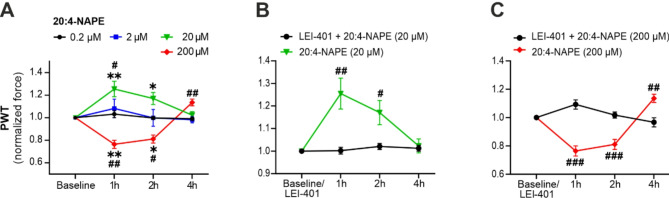 Figure 1
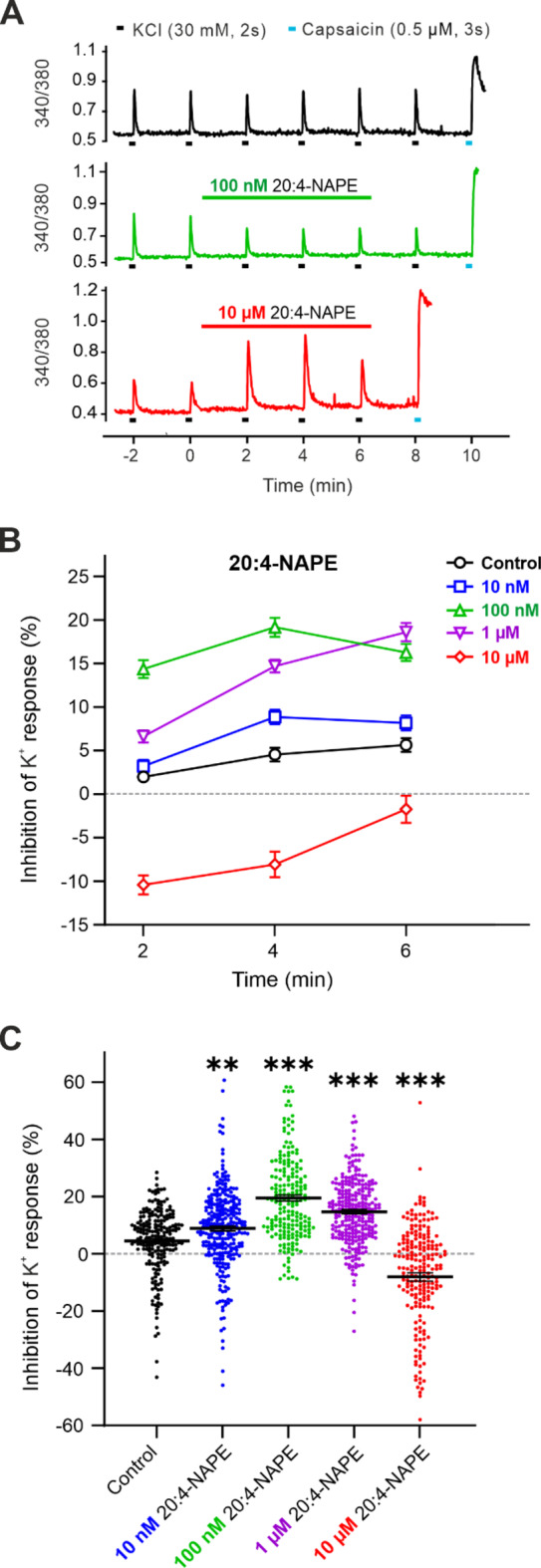 Figure 2
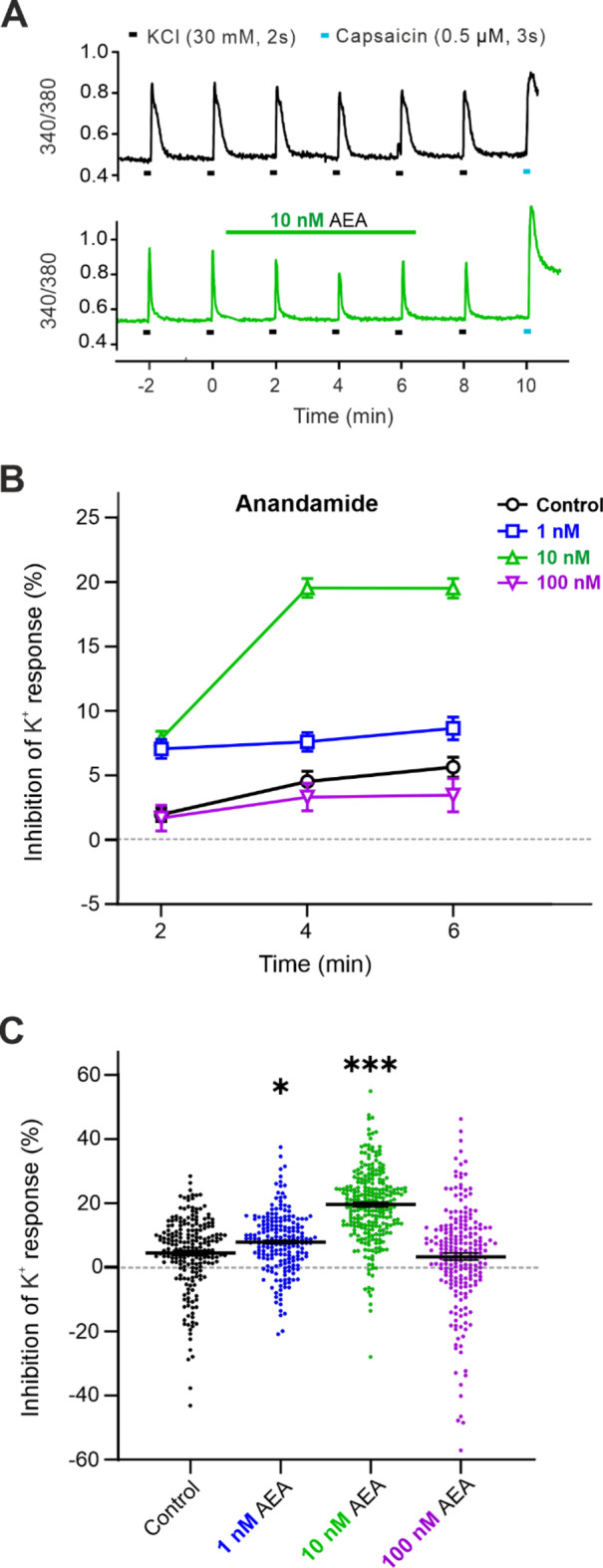 Figure 3
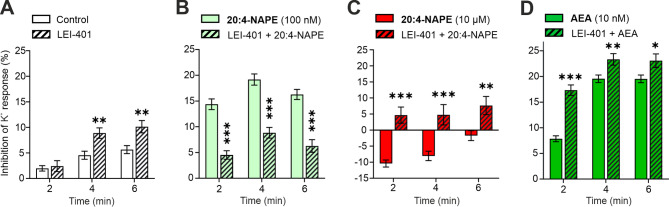 Figure 4
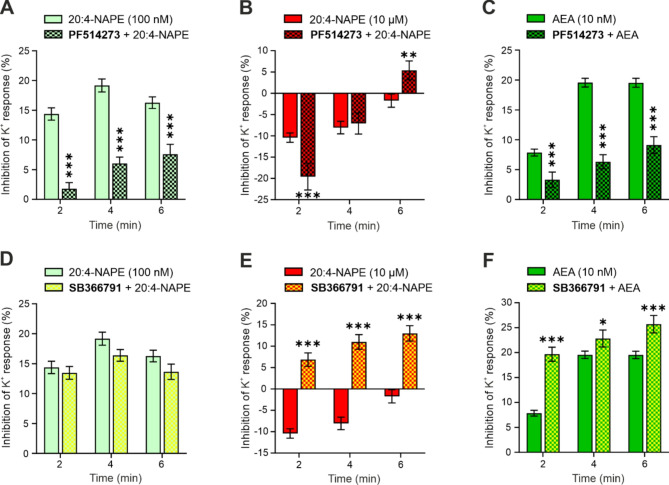 Figure 5
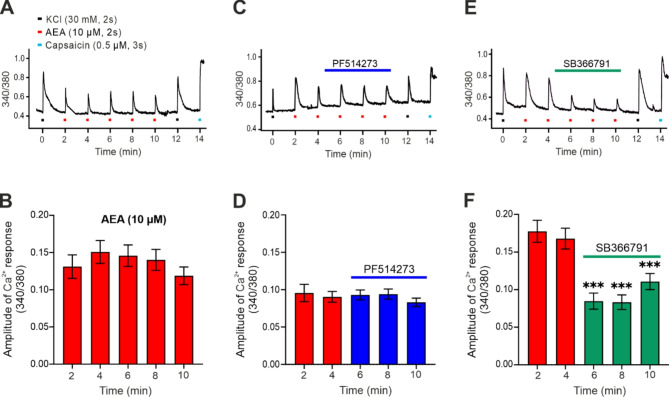 Figure 6
Peer Reviews
No public reviews on file for this paper yet. If you reviewed it on a platform where reviews are public (OpenReview, ICLR, NeurIPS, ICML), you can paste yours below so the community can read it here.
Videos
No videos yet. Explain this paper in a talk, walkthrough, or lecture? Add one.
Taxonomy
TopicsCannabis and Cannabinoid Research · Pain Mechanisms and Treatments · Neurotransmitter Receptor Influence on Behavior