K+-H+ coupling strategy for immune regulation and bone defect repair
Lintao Hu, Ke Yang, Yiyu Chen, Haoli Wang, Zezhou Fu, Lejian Jiang, Jiachen Xu, Hongsen Tian, Yiwei Zhu, Zhanqiu Dai, Yijun Li, Xianhua Chen, Xianfeng Lin, Pengfei Chen, Chenhui Gu, Shunwu Fan

TL;DR
This study introduces a new strategy using potassium ions to regulate immune responses and promote tissue repair after severe injuries.
Contribution
A novel K+-H+ coupling strategy is proposed to modulate macrophage metabolism and tissue regeneration through extracellular K+ elevation.
Findings
Elevated extracellular K+ induces intracellular pH changes, activating the AMPK/Nrf2 axis in macrophages.
KHCO3@PLV enables precise delivery and ultrasound-triggered K+ release at injury sites.
The K+-H+ coupling strategy effectively resolves chronic inflammation and promotes tissue repair.
Abstract
Ion homeostasis is crucial for maintaining cell function. Potassium ion (K+) is one of the most important cations in the human body, and it plays key role in maintaining biological activities and cellular functions, including the intricate balance of ion homeostasis that underpins both physiological and pathological processes. This study explored a novel role of K+ ions in regulating immune cell function and promoting tissue repair, especially in macrophage-mediated environments after severe tissue injury. We designed and synthesized a platelet-liposome vesicles loaded KHCO3 (KHCO3@PLV) that precisely delivered potassium bicarbonate to the site of injury extracellular after intravenous injection; then, precise ultrasound-triggered K+ release regulated extracellular K+ concentrations in the local macrophage environment. These effects collectively validate the K+-H+ coupling strategy - a…
Genes, proteins, chemicals, diseases, species, mutations and cell lines named across the full text — each resolved to its canonical identifier and authoritative record.
Click any figure to enlarge with its caption.
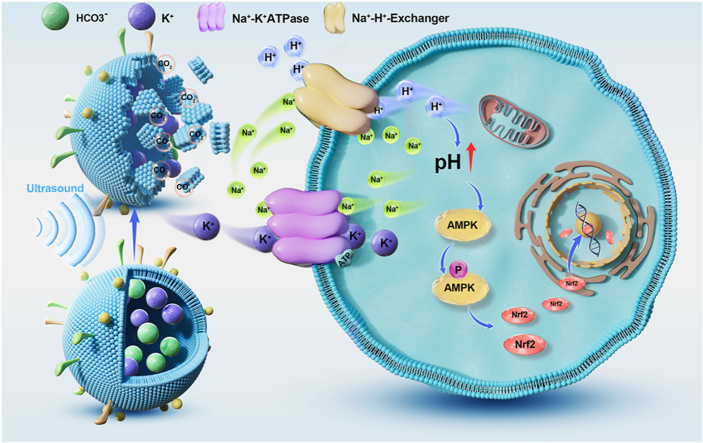 Figure 1
 Figure 2
 Figure 3
 Figure 4
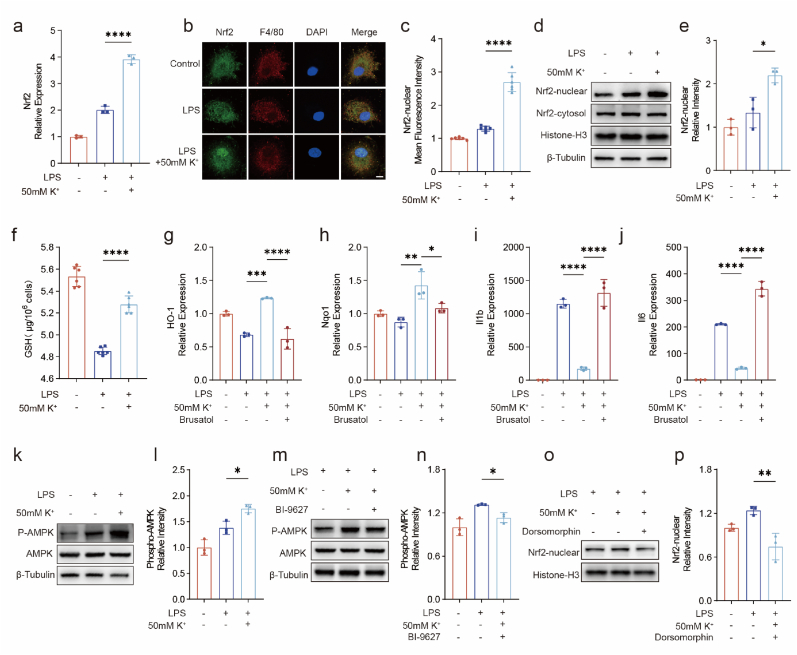 Figure 5
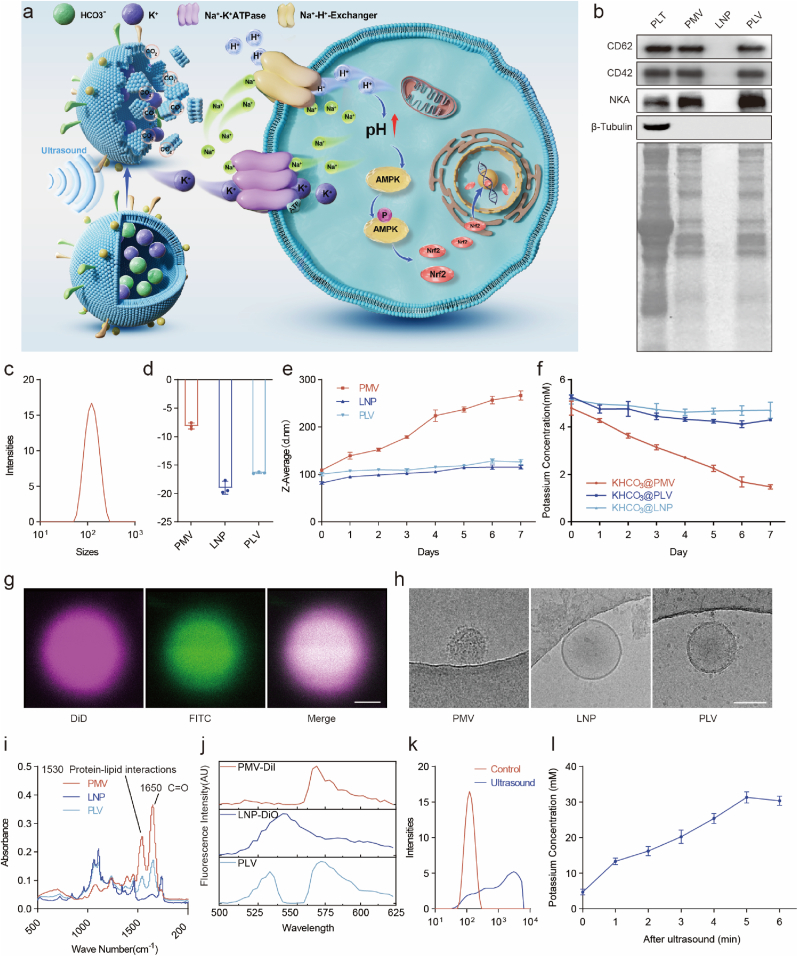 Figure 6
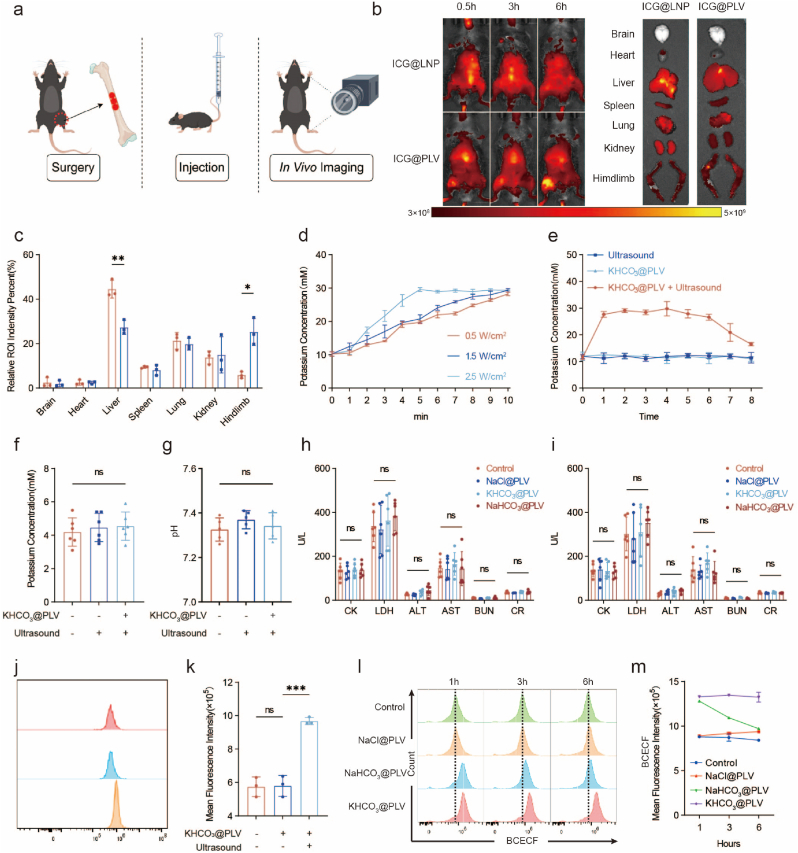 Figure 7
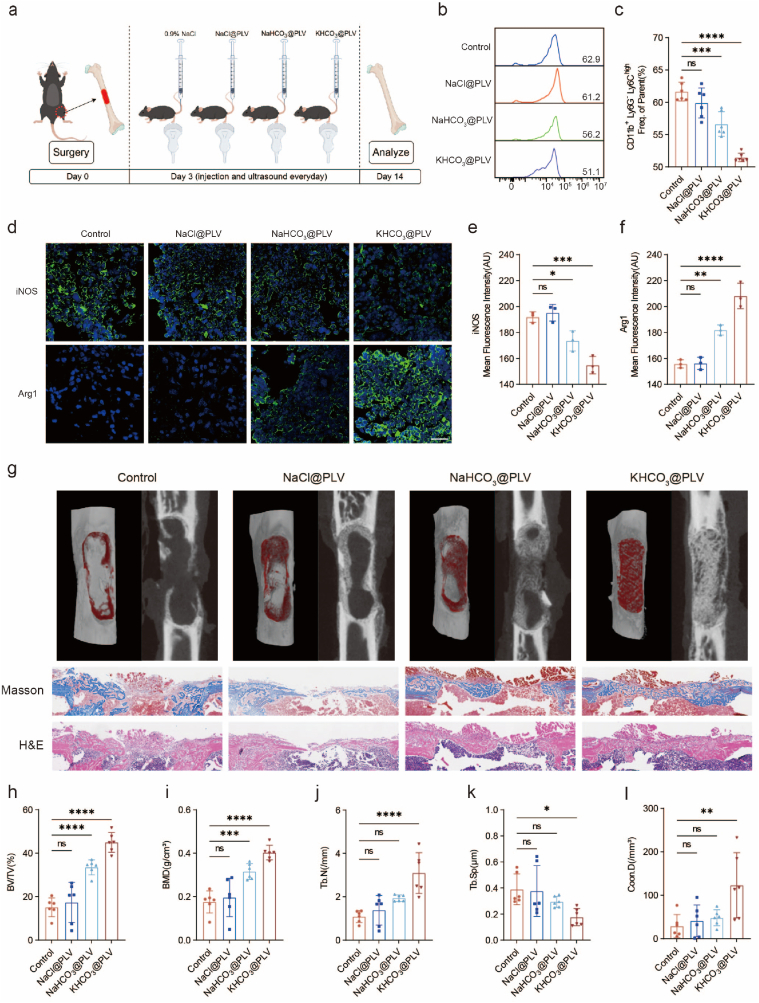 Figure 8
Peer Reviews
No public reviews on file for this paper yet. If you reviewed it on a platform where reviews are public (OpenReview, ICLR, NeurIPS, ICML), you can paste yours below so the community can read it here.
Videos
No videos yet. Explain this paper in a talk, walkthrough, or lecture? Add one.
Taxonomy
TopicsRadiopharmaceutical Chemistry and Applications · Peptidase Inhibition and Analysis · Bone health and treatments