Exploring Fatigue in Parkinson’s Disease: A Comprehensive Literature Review
Jamir Pitton Rissardo, Maleesha Jayasinghe, Masoumeh Rashidi, Fatemeh Rashidi, Hania Moharam, Ibrahim Khalil, Ali Dway, Wael A Elhassan, Mohamed H Elbadawi, Asad UR Rehman, Meryem Bahar, Yixuan Li, Ana Leticia Fornari Caprara, Omesh Prathiraja

TL;DR
This paper reviews how fatigue affects Parkinson’s disease patients, its causes, diagnosis, and treatment options.
Contribution
The paper offers a comprehensive literature review on PD-related fatigue, emphasizing the need for standardized assessment and better treatments.
Findings
Fatigue affects up to two-thirds of Parkinson’s disease patients and is linked to multiple pathophysiological factors.
Current management includes methylphenidate, rasagiline, exercise, and cognitive behavioral therapy.
Standardized assessment tools and objective biomarkers are needed for accurate diagnosis and treatment.
Abstract
Fatigue is one of the most prevalent and debilitating non-motor symptoms of Parkinson’s disease (PD), affecting up to two-thirds of patients and significantly impacting quality of life. This review provides a comprehensive analysis of its complex pathophysiology, prevalence, clinical presentation, assessment methods, and current management strategies. Fatigue in PD is linked to dysfunction in dopaminergic and non-dopaminergic pathways, neuroinflammation, genetic predispositions, and metabolic dysregulation. Reported prevalence rates range from 36% to 60%, highlighting the need for standardized assessment tools and a universally accepted definition. Clinically, fatigue is characterized by an overwhelming and abnormal sense of exhaustion, often preceding motor symptoms by years. Distinguishing it from sleepiness, apathy, and depression is crucial for accurate diagnosis and treatment.…
Genes, proteins, chemicals, diseases, species, mutations and cell lines named across the full text — each resolved to its canonical identifier and authoritative record.
Click any figure to enlarge with its caption.
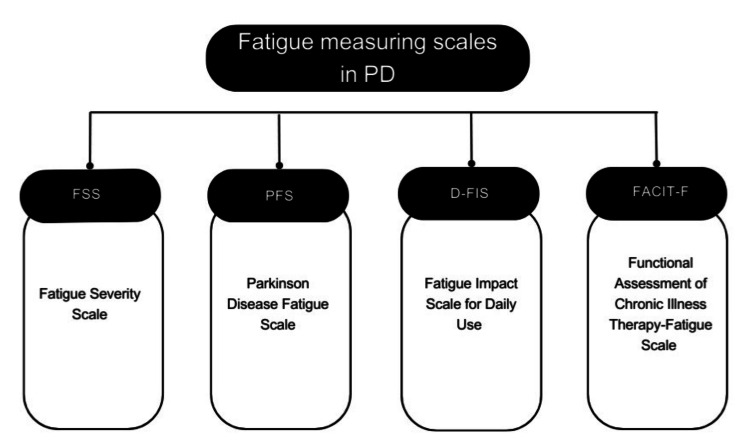 Figure 1
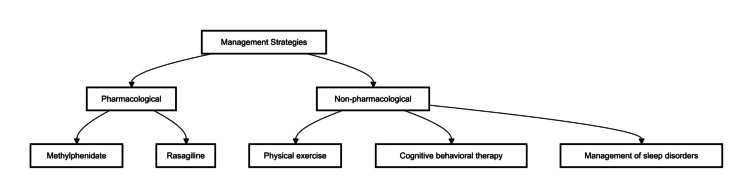 Figure 2
Peer Reviews
No public reviews on file for this paper yet. If you reviewed it on a platform where reviews are public (OpenReview, ICLR, NeurIPS, ICML), you can paste yours below so the community can read it here.
Videos
No videos yet. Explain this paper in a talk, walkthrough, or lecture? Add one.
Taxonomy
TopicsParkinson's Disease Mechanisms and Treatments · Fibromyalgia and Chronic Fatigue Syndrome Research · Restless Legs Syndrome Research