Rational design of FVIII sialylated peptides to target Siglec-3 and Siglec-9 and improve peptide formulations for reverse vaccines
Eleonora Nardini, Brigitte-Carole Keumatio Doungstop, Tania Gerpe-Amor, Aram M. de Haas, Mike de Kok, Evert Peterse, Hakan Kalay, Rui-Jún E. Li, Fabrizio Chiodo, Alba Silipo, Jan Voorberg, Yvette van Kooyk

TL;DR
This study shows that adding sialic acid to FVIII peptides can help induce tolerance in immune cells, potentially improving treatments for allergies and hemophilia A.
Contribution
The paper introduces a novel method for designing sialylated FVIII peptides to target Siglec receptors and enhance tolerogenic immune responses.
Findings
Sialic acid modification of FVIII peptides targets Siglec-3 and -9 on dendritic cells.
Modified peptides increase IL-10 secretion, promoting tolerogenic responses.
The approach may help re-establish tolerance in hemophilia A patients with anti-FVIII antibodies.
Abstract
Reverse vaccine formulations have shown their potential for the treatment of allergies and other autoimmune diseases by the design of antigens that modify dendritic cell function towards tolerogenic responses. We here demonstrate that modification of an immunodominant peptide from factor VIII (FVIII) with a tolerizing molecule, sialic acid, improves existing peptide formulations towards the induction of tolerogenic cytokine secretion by DCs. Sialic acids are the end-standing moiety of mammalian N- and O- glycans, which are naturally recognized as self-associated molecular pattern. In this paper we show that sialic acid modified FVIII peptides target Siglec-3 and -9 on DCs and increase IL-10 secretion. Our work proposes a method to select, synthetize and test sialylated immunodominant peptides with the aim of ameliorating the efficacy of peptide immunotherapy. Based on our results, we…
Genes, proteins, chemicals, diseases, species, mutations and cell lines named across the full text — each resolved to its canonical identifier and authoritative record.
Click any figure to enlarge with its caption.
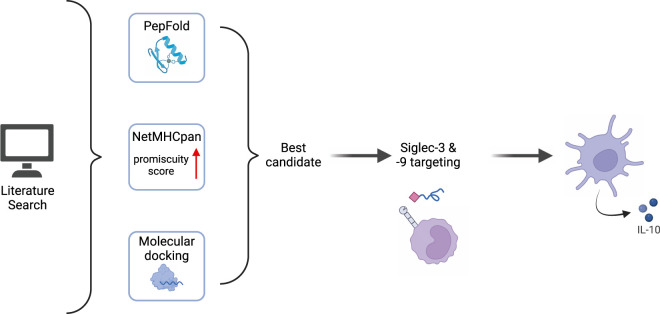 Figure 1
 Figure 2
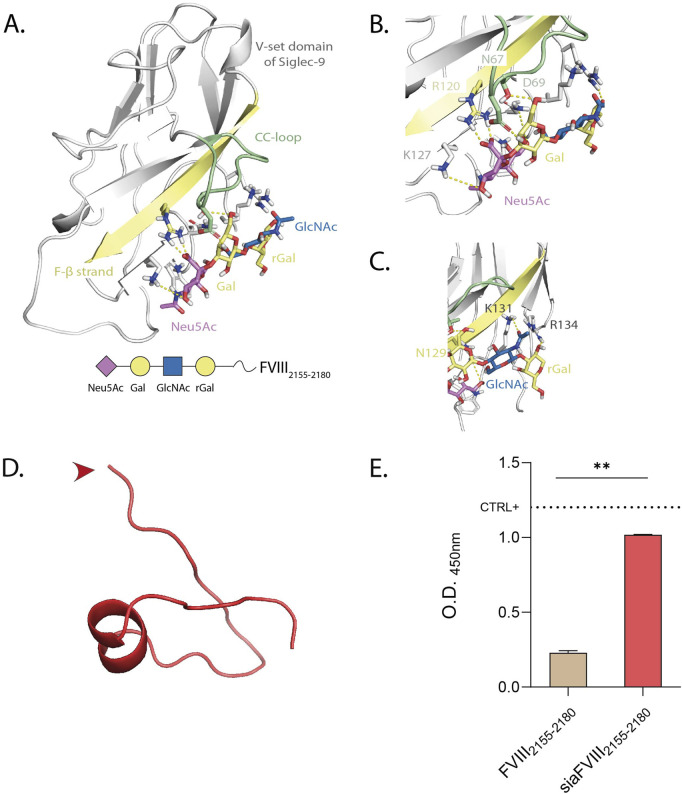 Figure 3
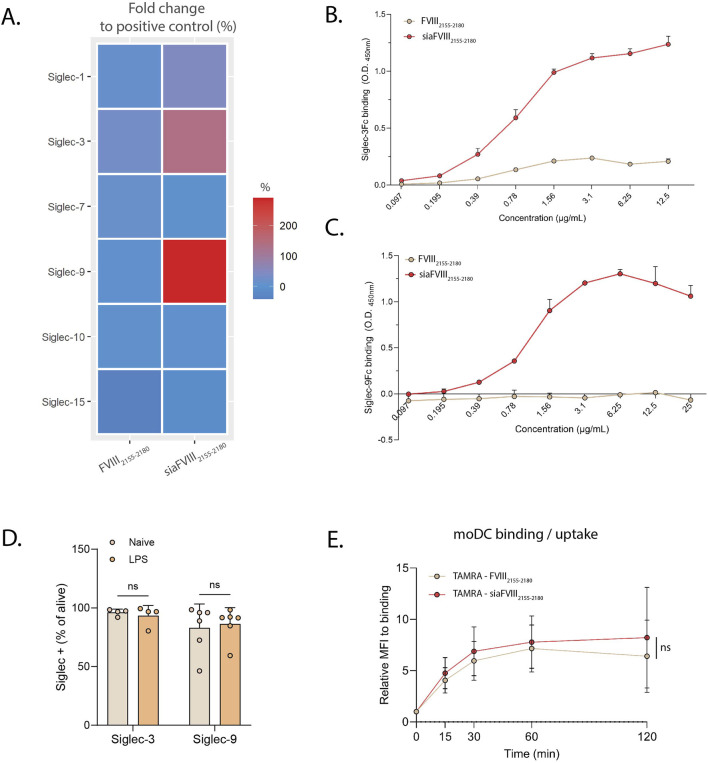 Figure 4
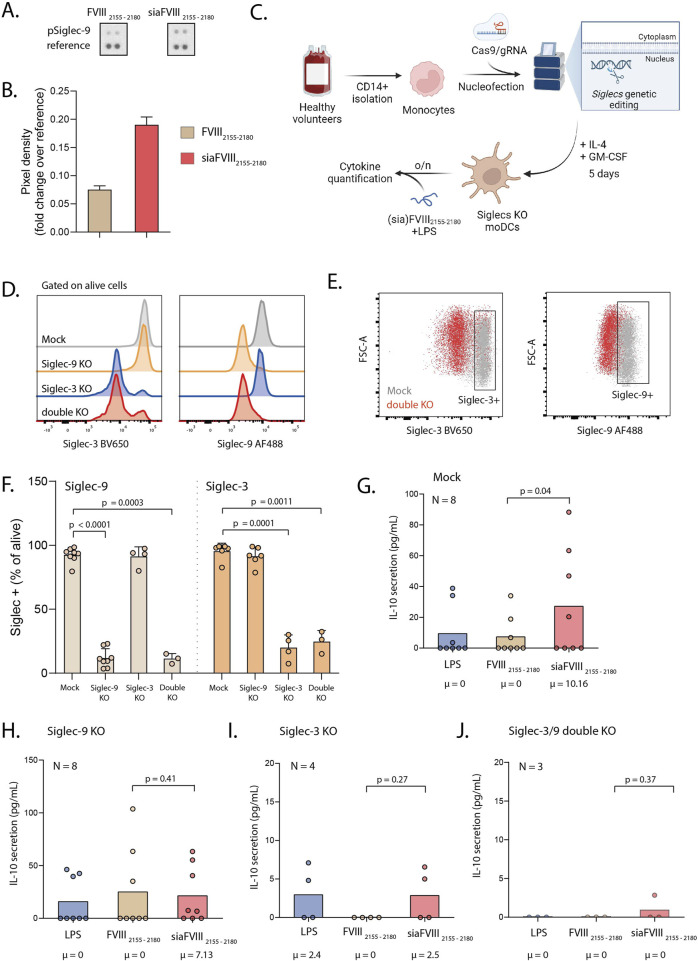 Figure 5
Peer Reviews
No public reviews on file for this paper yet. If you reviewed it on a platform where reviews are public (OpenReview, ICLR, NeurIPS, ICML), you can paste yours below so the community can read it here.
Videos
No videos yet. Explain this paper in a talk, walkthrough, or lecture? Add one.
Taxonomy
TopicsMonoclonal and Polyclonal Antibodies Research · Glycosylation and Glycoproteins Research · Galectins and Cancer Biology