Navigating prognostic strategies for GH- and PRL-secreting pituitary neuroendocrine tumors: key insights from a clinicopathological study
Roxana-Ioana Dumitriu-Stan, Iulia-Florentina Burcea, Ramona Dobre, Valeria Nicoleta Nastase, Raluca Amalia Ceausu, Catalina Gabriela Molnar, Marius Raica, Catalina Poiana

TL;DR
This study identifies key clinicopathological markers that predict outcomes for patients with GH- and PRL-secreting pituitary tumors.
Contribution
The study introduces a prediction model using clinicopathological factors to guide prognosis in GH- and PRL-secreting pituitary tumors.
Findings
Postoperative GH and PRL levels, ki-67 index, and SSTR expression are strong predictors of patient outcomes.
A prediction model combining these factors achieved an AUC of 0.924 with high sensitivity and specificity.
Most tumors were classified under the PIT-1 lineage, with significant associations found in multivariate Cox regression analysis.
Abstract
The classification of pituitary neuroendocrine tumors (PitNETs), also known as pituitary adenomas, has progressed significantly since 2004. The PitNET lineage now serves as the foundation of the classification. We investigated the prognostic value of clinicopathological markers in a cohort of patients diagnosed with acromegaly and prolactinomas who underwent transsphenoidal tumor resection. A total of 50 patients (45 patients with confirmed acromegaly and 5 with prolactinomas) in evidence at ‘C. I. Parhon National Institute of Endocrinology (Pituitary and Neuroendocrine Pathology Department, Bucharest, Romania), who underwent tumor resection between 2010 and 2023, was recruited, with a median follow-up time of 7.02 years (IQR: 3–10). Surgical samples were stained for anterior pituitary hormones, ki-67 labeling index, CAM 5.2 expression, and the following transcription factors (TFs):…
Genes, proteins, chemicals, diseases, species, mutations and cell lines named across the full text — each resolved to its canonical identifier and authoritative record.
Click any figure to enlarge with its caption.
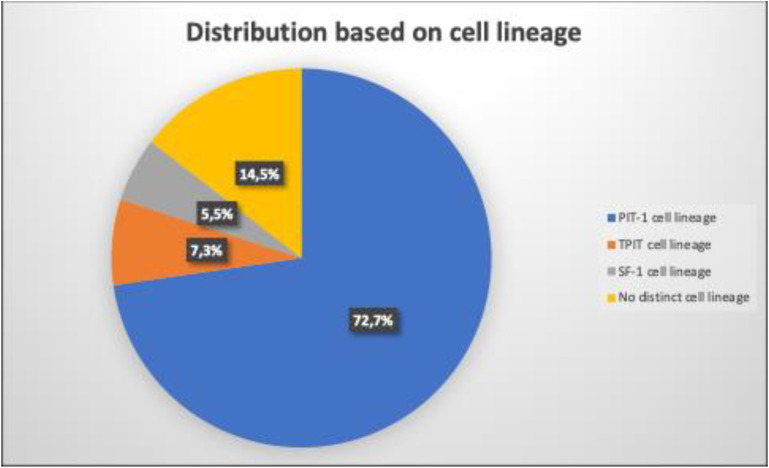 Figure 1
 Figure 2
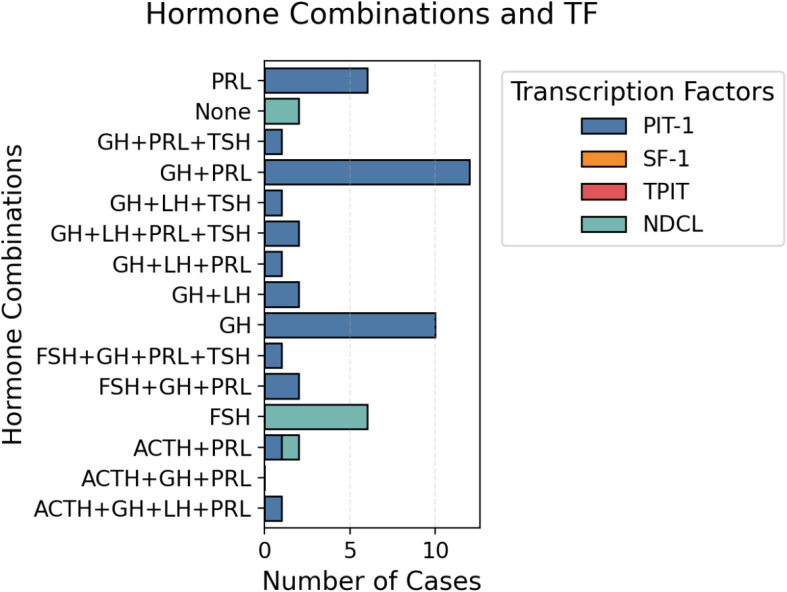 Figure 3
 Figure 4
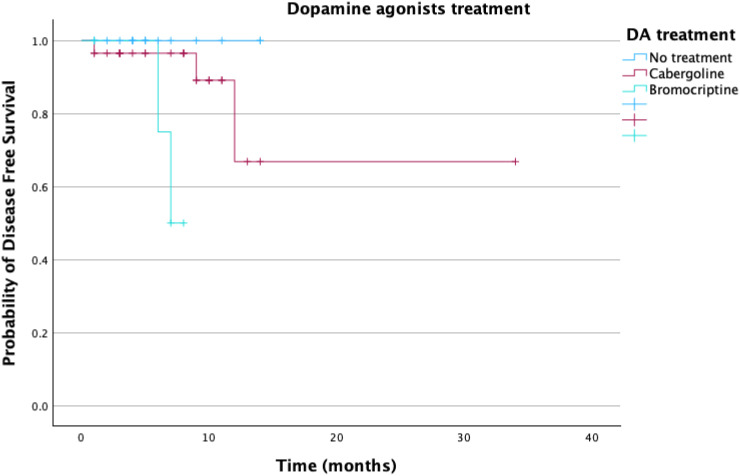 Figure 5
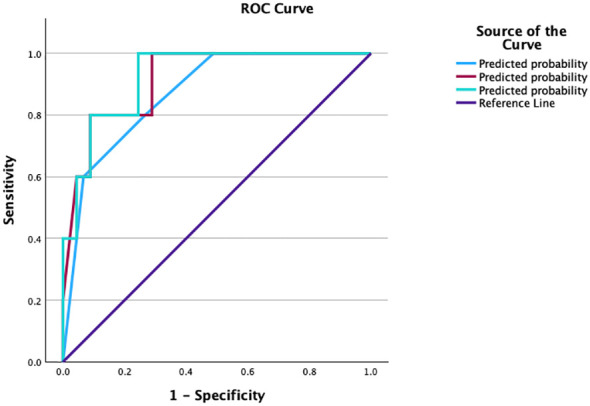 Figure 6
Peer Reviews
No public reviews on file for this paper yet. If you reviewed it on a platform where reviews are public (OpenReview, ICLR, NeurIPS, ICML), you can paste yours below so the community can read it here.
Videos
No videos yet. Explain this paper in a talk, walkthrough, or lecture? Add one.
Taxonomy
TopicsPituitary Gland Disorders and Treatments · Growth Hormone and Insulin-like Growth Factors · Neuroendocrine Tumor Research Advances