A Prospective Study on the Effectiveness of Sensory and Sub-sensory Stimulation Amplitudes Using eCoin® Implantable Tibial Nerve Stimulation in Reducing Urgency Urinary Incontinence Episodes and Enhancing Quality of Life
Vincent Lucente, Shelby Morrisroe, William Schiff, Nicole Barber

TL;DR
This study shows that both sensory and sub-sensory stimulation settings of an implantable tibial nerve stimulation device reduce urgency urinary incontinence episodes and improve quality of life.
Contribution
The study introduces evidence that sub-sensory stimulation settings can be as effective as sensory settings in treating urgency urinary incontinence.
Findings
Sensory and sub-sensory stimulation groups both reduced UUI episodes by an average of 2.1 and 2.73 per day.
Both groups reported improved health-related quality of life and patient satisfaction.
Sub-sensory stimulation may enhance patient comfort and device longevity.
Abstract
Introduction Urgency urinary incontinence (UUI), an important subset of overactive bladder (OAB), manifests with symptoms such as urgency, frequency, and incontinence, severely impacting quality of life. Neuromodulation therapies, including sacral nerve stimulation (SNM), percutaneous tibial nerve stimulation (PTNS), and implanted tibial nerve stimulation (ITNS), are FDA-approved for treating UUI. Traditional neuromodulation involves sensory and motor response evoking amplitudes, but emerging evidence suggests that sensory and sub-sensory settings might enhance treatment outcomes by influencing brain activation. Aim This study investigates the efficacy of sensory and sub-sensory programming of the eCoin® ITNS (Valencia Technologies Corporation, Valencia, California, USA) in reducing UUI episodes. The eCoin ITNS is a fully implantable device providing low-duty cycle tibial nerve…
Genes, proteins, chemicals, diseases, species, mutations and cell lines named across the full text — each resolved to its canonical identifier and authoritative record.
Click any figure to enlarge with its caption.
 Figure 1
 Figure 2
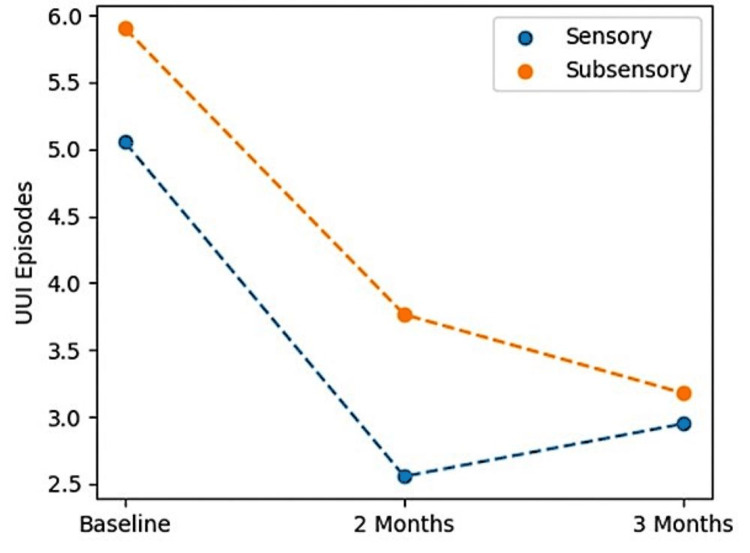 Figure 3
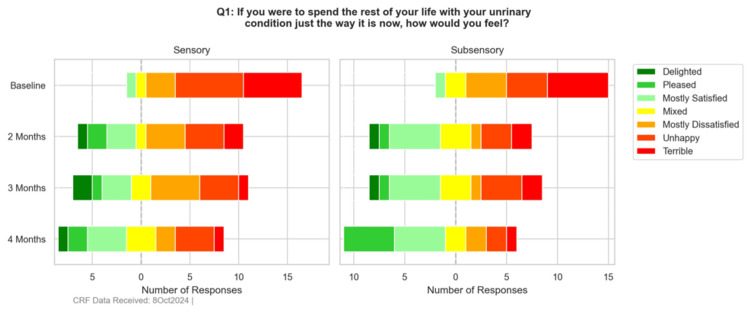 Figure 4
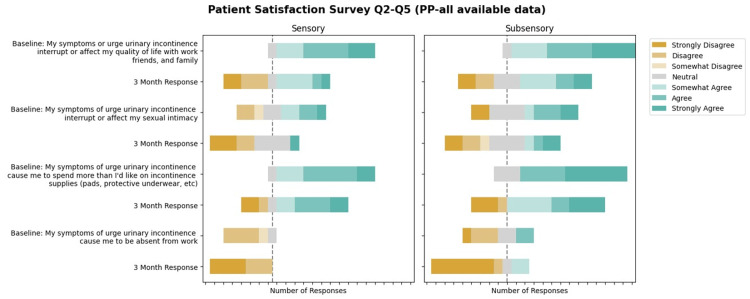 Figure 5
Peer Reviews
No public reviews on file for this paper yet. If you reviewed it on a platform where reviews are public (OpenReview, ICLR, NeurIPS, ICML), you can paste yours below so the community can read it here.
Videos
No videos yet. Explain this paper in a talk, walkthrough, or lecture? Add one.
Taxonomy
TopicsUrinary Bladder and Prostate Research · Pelvic floor disorders treatments · Urinary Tract Infections Management