The Complete Chloroplast Genome of Tornillo (Cedrelinga cateniformis Ducke 1922, Fabaceae)
Nora Scarcelli, Cédric Mariac, Marie Couderc, Diana Castro Ruiz, Guillain Estivals, Carlos Alberto Custodio Angulo Chavez, Hector Acho Vasquez, Jhon Gregory Alvarado Reategui, Tony Vizcarra Bentos, Carmen Garcia‐Davila

TL;DR
This study sequenced the complete chloroplast genome of Tornillo, a tropical tree, revealing its genetic structure and phylogenetic position within the Fabaceae family.
Contribution
The first complete chloroplast genome of Cedrelinga cateniformis is sequenced and analyzed, providing insights into its phylogenetic relationships.
Findings
The Tornillo chloroplast genome is 176,700 bp with 138 genes and a classic quadripartite structure.
The Inverted Repeats are expanded, and the Short Single Copy region is reduced, similar to other Ingeae species.
Phylogenetic analysis confirms the distinction of the Ingeae tribe from Acacieae and Mimoseae tribes.
Abstract
Tornillo (Cedrelinga cateniformis Ducke 1922) is a tropical tree of the Fabaceae family. It is commonly used in the lumber factory and is an interesting substitute to overexploited tropical timber species. We sequenced and assembled the first whole chloroplast genome of Tornillo, using Oxford Nanopore technology. The Tornillo's chloroplast is a circular molecule of 176,700 bp with 138 genes and a classic quadripartite structure. The Inverted Repeats present a huge expansion, combined to a strong reduction of the Short Single Copy. Similar results were previously observed in other species of the tribe Ingeae. A maximum likelihood phylogenetic tree reveals a clear distinction of the Ingeae tribe from other tribes (Acacieae and Mimoseae) of the Fabaceae family. Tornillo (Cedrelinga cateniformis) is a tropical tree from the Fabaceae family, valued as a substitute for overexploited timber…
Genes, proteins, chemicals, diseases, species, mutations and cell lines named across the full text — each resolved to its canonical identifier and authoritative record.
Click any figure to enlarge with its caption.
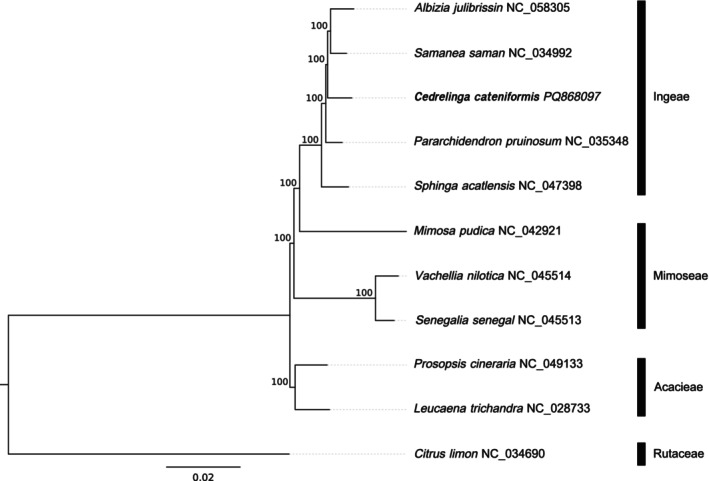 Figure 1
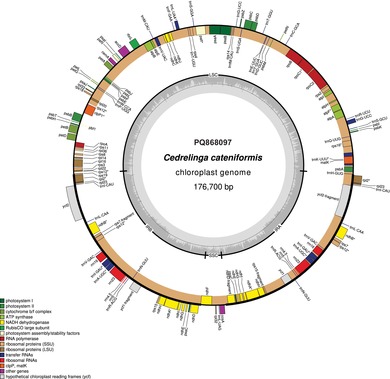 Figure 2
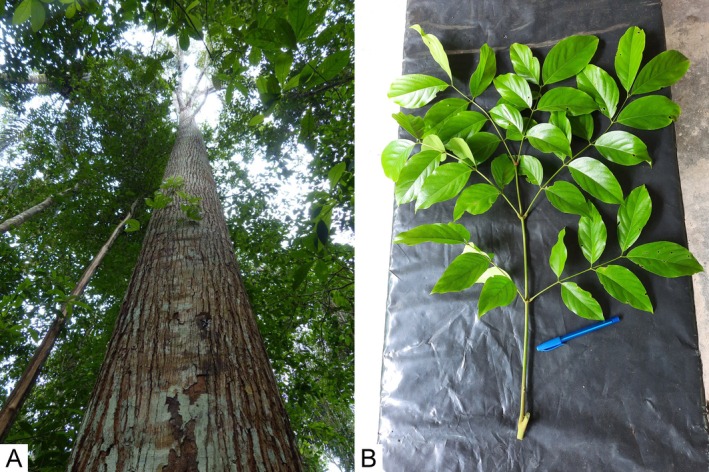 Figure 3
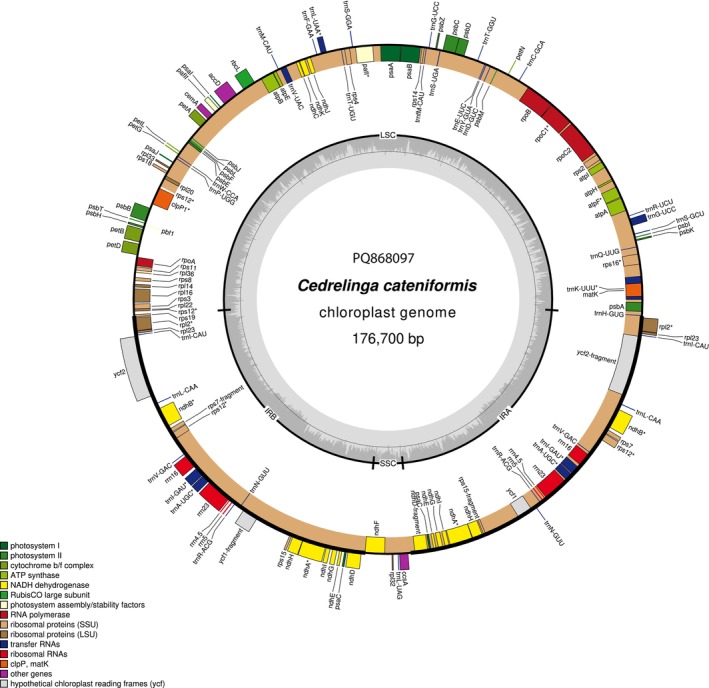 Figure 4
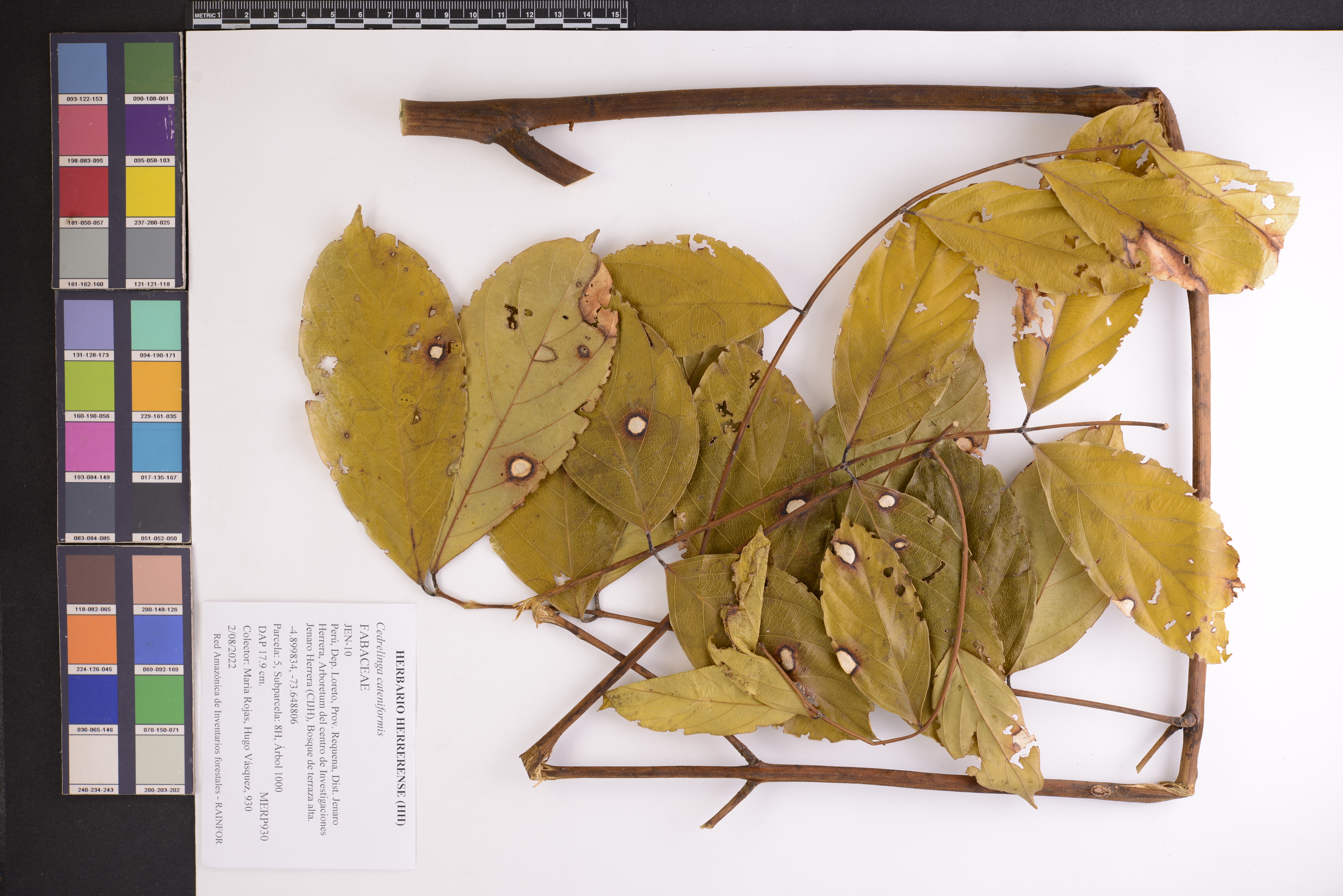 Figure 5
Peer Reviews
No public reviews on file for this paper yet. If you reviewed it on a platform where reviews are public (OpenReview, ICLR, NeurIPS, ICML), you can paste yours below so the community can read it here.
Videos
No videos yet. Explain this paper in a talk, walkthrough, or lecture? Add one.
Taxonomy
TopicsGenomics and Phylogenetic Studies · Plant and Fungal Species Descriptions · Plant Diversity and Evolution