Endothelial Cells Stably Infected with Recombinant Kaposi’s Sarcoma-Associated Herpesvirus Display Distinct Viscoelastic and Morphological Properties
Majahonkhe M. Shabangu, Melissa J. Blumenthal, Danielle T. Sass, Dirk M. Lang, Georgia Schafer, Thomas Franz

TL;DR
This study shows that Kaposi’s sarcoma-associated herpesvirus changes the shape and stiffness of infected endothelial cells, which could help diagnose or treat the disease.
Contribution
The study identifies specific morphological and viscoelastic changes in endothelial cells infected with KSHV, suggesting potential diagnostic and therapeutic applications.
Findings
rKSHV-infected cells showed increased deformability with higher mitochondrial MSD compared to uninfected cells.
Infected cells exhibited a spindloid shape with reduced roundness and circularity.
Cytosolic viscosity increased in rKSHV-infected cells, indicated by decreased MSD power law exponents.
Abstract
Kaposi’s sarcoma-associated herpesvirus (KSHV) is a γ-herpesvirus that has a tropism for endothelial cells and leads to the development of Kaposi’s sarcoma, especially in people living with HIV. The present study aimed to quantify morphological and mechanical changes in endothelial cells after infection with KSHV to assess their potential as diagnostic and therapeutic markers. Vascular (HuARLT2) and lymphatic endothelial cells (LEC) were infected with recombinant KSHV (rKSHV) by spinoculation, establishing stable infections (HuARLT2-rKSHV and LEC-rKSHV). Cellular changes were assessed using mitochondria-tracking microrheology and morphometric analysis. rKSHV infection increased cellular deformability, indicated by higher mitochondrial mean squared displacement (MSD) for short lag times. Specifically, MSD at τ = 0.19 s was 49.4% and 42.2% higher in HuARLT2-rKSHV and LEC-rKSHV,…
Genes, proteins, chemicals, diseases, species, mutations and cell lines named across the full text — each resolved to its canonical identifier and authoritative record.
Click any figure to enlarge with its caption.
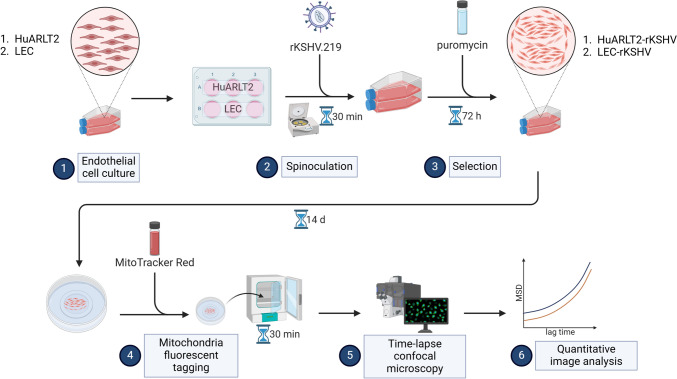 Figure 1
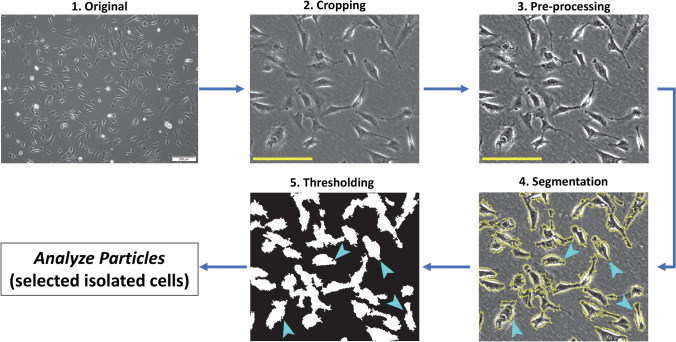 Figure 2
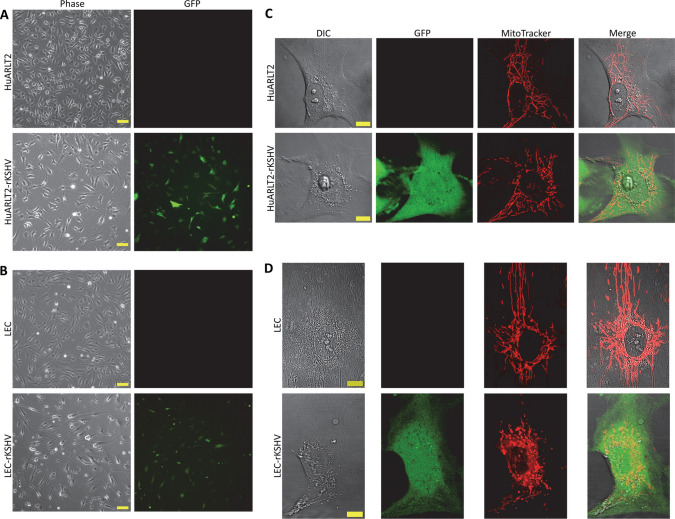 Figure 3
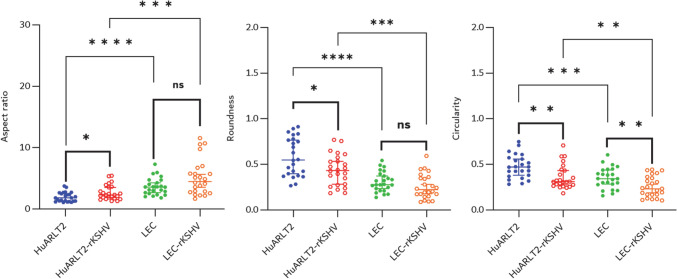 Figure 4
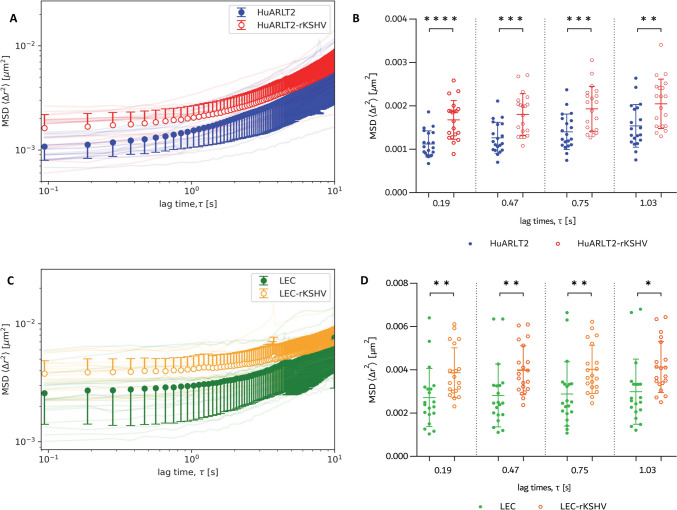 Figure 5
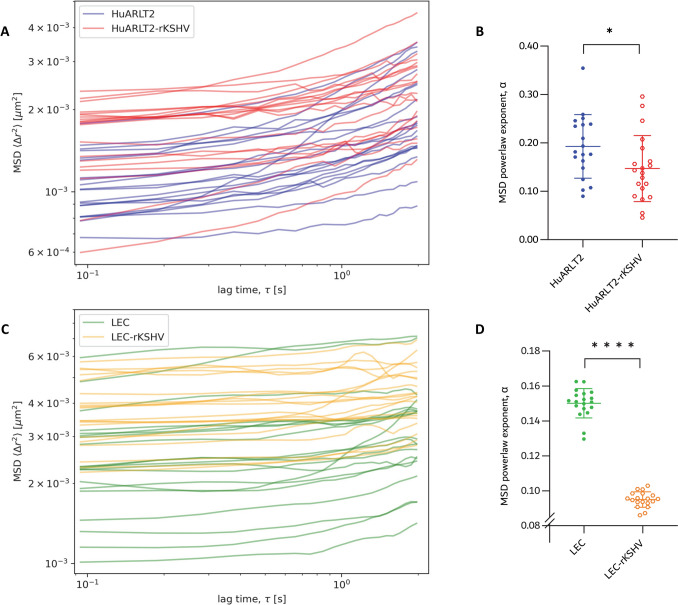 Figure 6
Peer Reviews
No public reviews on file for this paper yet. If you reviewed it on a platform where reviews are public (OpenReview, ICLR, NeurIPS, ICML), you can paste yours below so the community can read it here.
Videos
No videos yet. Explain this paper in a talk, walkthrough, or lecture? Add one.
Taxonomy
TopicsHematological disorders and diagnostics · Cytomegalovirus and herpesvirus research · CNS Lymphoma Diagnosis and Treatment