Pulmonary vein isolation durability with fluoroscopy or 3D mapping-guided radiofrequency balloon ablation: a mandated remap study
Alexandre Almorad, Alvise Del Monte, Domenico Giovanni Della Rocca, Luigi Pannone, Charles Audiat, Roberto Scacciavillani, Lorenzo Marcon, Kazutaka Nakasone, Giampaolo Vetta, Ingrid Overeinder, Gezim Bala, Antonio Sorgente, Erwin Ströker, Juan Sieira, Sahar Mouram

TL;DR
This study compares two methods for guiding radiofrequency balloon ablation during pulmonary vein isolation and finds both are effective, though 3D mapping reduces radiation exposure.
Contribution
Demonstrates that 3D mapping-guided ablation achieves similar durability to fluoroscopy-guided ablation with less radiation.
Findings
Both fluoroscopy and 3D mapping achieved high durable PVI rates (90% and 94%).
3D mapping reduced fluoroscopy time by 3.5 minutes compared to fluoroscopy alone.
No significant difference in procedure time or acute isolation success between the two methods.
Abstract
Effective balloon positionnking during pulmonary vein isolation (PVI) with a radiofrequency balloon (RFB) is crucial for optimal energy delivery, maximising lesion formation, and preventing gaps. Traditionally, fluoroscopy is used to guide pulmonary vein (PV) occlusion, however, this method exposes patients to radiation. Recently, RFBs equipped with 3D electroanatomical mapping (EAM) offer an alternative approach, potentially achieving the same results with reduced radiation exposure. Our main aim was to evaluate procedural characteristics, such as acute isolation and time-to-isolation (TTI), when the RFB is positioned based only on fluoroscopy feedback vs. fluoroscopy and a 3D-EAM. The secondary objective was to assess PVI durability through mandated remapping in asymptomatic patients from both groups. A total of 60 patients were enrolled and underwent either a fluoroscopy-guided…
Genes, proteins, chemicals, diseases, species, mutations and cell lines named across the full text — each resolved to its canonical identifier and authoritative record.
Click any figure to enlarge with its caption.
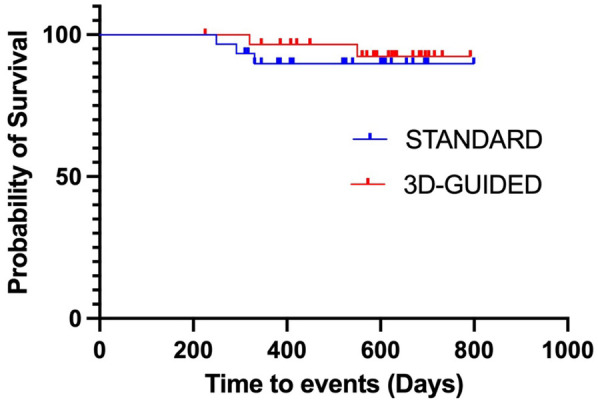 Figure 1
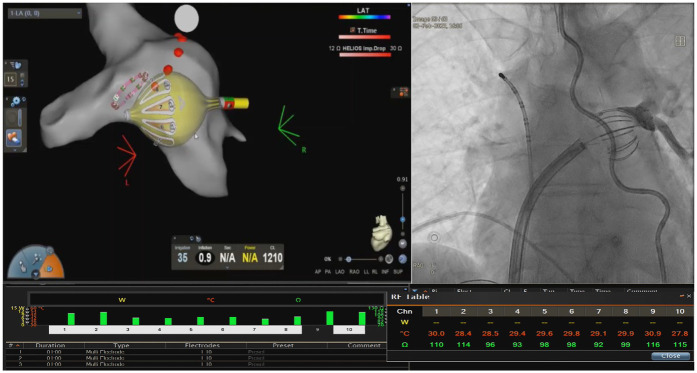 Figure 2
Peer Reviews
No public reviews on file for this paper yet. If you reviewed it on a platform where reviews are public (OpenReview, ICLR, NeurIPS, ICML), you can paste yours below so the community can read it here.
Videos
No videos yet. Explain this paper in a talk, walkthrough, or lecture? Add one.
Taxonomy
TopicsAtrial Fibrillation Management and Outcomes · Cardiac Arrhythmias and Treatments · Venous Thromboembolism Diagnosis and Management