Lipid and immunophenotypic profiles in hemodialysis patients with citrate vs. acetate dialysates
Diana Rodríguez-Espinosa, Elena Cuadrado-Payán, Laura Morantes, Miquel Gomez, Francisco Maduell, José Jesús Broseta

TL;DR
This study compares the effects of citrate and acetate dialysates on lipid and immune profiles in hemodialysis patients, finding differences that may impact cardiovascular risk.
Contribution
The study provides new insights into how citrate dialysate affects lipid and immunophenotypic profiles in dialysis patients compared to acetate dialysate.
Findings
Citrate dialysate significantly reduced triglycerides and remnant cholesterol compared to acetate dialysate.
Citrate dialysate increased C3 complement levels and decreased certain lymphocyte populations compared to acetate dialysate.
No significant differences in nutritional or inflammatory markers were observed except for higher ESR with citrate dialysate.
Abstract
Chronic kidney disease (CKD) is a significant cardiovascular (CV) risk factor, with dialysis-dependent CKD (DD-CKD) patients facing high mortality rates. Hypercholesterolemia is another crucial CV risk factor, typically managed with lipid-lowering therapy, though its efficacy in DD-CKD remains uncertain. Evidence shows mixed results regarding the benefits of statins in these patients. Citrate-based dialysates are known to reduce inflammatory biomarkers compared to acetate-based ones, potentially impacting lipid profiles and immune responses. This study aimed to determine the effects of citrate vs. acetate dialysate on lipid profiles and immunophenotypes in DD-CKD patients. This unicentric, cross-over, prospective study included 21 hemodialysis patients (10 males, 11 females, average age 62.25 years). Each patient underwent 24 dialysis sessions (12 with each dialysate) and acted as…
Genes, proteins, chemicals, diseases, species, mutations and cell lines named across the full text — each resolved to its canonical identifier and authoritative record.
Click any figure to enlarge with its caption.
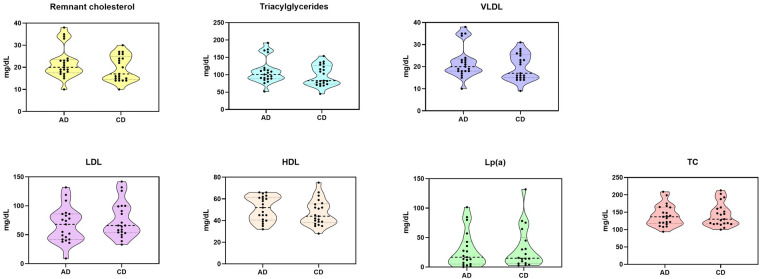 Figure 1
Peer Reviews
No public reviews on file for this paper yet. If you reviewed it on a platform where reviews are public (OpenReview, ICLR, NeurIPS, ICML), you can paste yours below so the community can read it here.
Videos
No videos yet. Explain this paper in a talk, walkthrough, or lecture? Add one.
Taxonomy
TopicsDialysis and Renal Disease Management · Muscle and Compartmental Disorders · Diabetes, Cardiovascular Risks, and Lipoproteins