Poly-symptomatology of chronic multi-canalicular benign paroxysmal positional vertigo: a deductive, inductive, and abductive narrative review
Carsten Tjell, Wenche Iglebekk, Peter Borenstein

TL;DR
This paper reviews the complex symptoms of chronic multi-canalicular benign paroxysmal positional vertigo and how they overlap with other chronic pain conditions.
Contribution
The paper introduces a novel perspective on mc-BPPV symptomatology using deductive, inductive, and abductive reasoning.
Findings
Symptoms of mc-BPPV can overlap with vestibular migraine and whiplash disorders.
Abnormal afferent and efferent signals in the vestibular system contribute to mc-BPPV symptoms.
mc-BPPV should be considered in patients with chronic pain and dizziness.
Abstract
This narrative review aims to present an overview of the symptomatology of chronic multi-canalicular benign paroxysmal positional vertigo (mc-BPPV) from deductive (what is believed to be known), inductive (what is likely), and abductive (hypothetical) perspectives. The purpose is to recognize these symptoms as expressions of an eventual mc-BPPV when they occur in patients with vestibular migraine, whiplash associated disorders (WAD) and other chronic pain disorders. These symptoms are often considered to be biopsychosocial conditions due to a lack of objective findings, that is, the absence of the findings one is looking for—not the absence of findings generally. The symptomatology of mc-BPPV follows a basic neurophysiologic principle: a disorder in one part of the vestibular system often affects the functions of other parts of the vestibular system. In patients with chronic mc-BPPV,…
Genes, proteins, chemicals, diseases, species, mutations and cell lines named across the full text — each resolved to its canonical identifier and authoritative record.
Click any figure to enlarge with its caption.
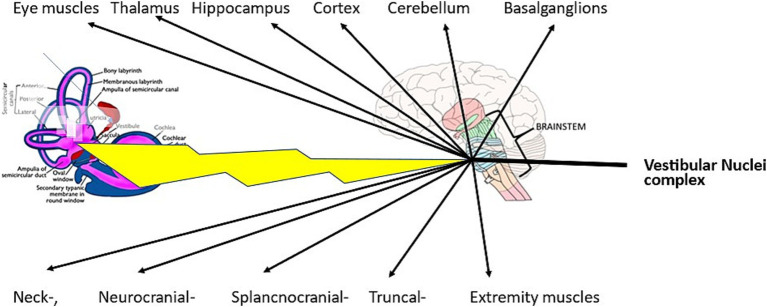 Figure 1
Peer Reviews
No public reviews on file for this paper yet. If you reviewed it on a platform where reviews are public (OpenReview, ICLR, NeurIPS, ICML), you can paste yours below so the community can read it here.
Videos
No videos yet. Explain this paper in a talk, walkthrough, or lecture? Add one.
Taxonomy
TopicsVestibular and auditory disorders · Ophthalmology and Eye Disorders · Hemispheric Asymmetry in Neuroscience