Dioxygenation of tryptophan residues by superoxide and myeloperoxidase
Nina Dickerhof, Louisa V. Ashby, Daniel Ford, Joshua J. Dilly, Robert F. Anderson, Richard J. Payne, Anthony J. Kettle

TL;DR
This study shows that superoxide and myeloperoxidase can chemically modify tryptophan in proteins during immune responses, potentially playing a role in fighting infections.
Contribution
The study identifies two new pathways by which myeloperoxidase and superoxide dioxygenate tryptophan residues independently of hypochlorous acid.
Findings
Superoxide and myeloperoxidase dioxygenate tryptophan residues via two hypochlorous acid-independent pathways.
N-formylkynurenine is the favored product of this reaction, formed through direct dioxygen transfer from MPO intermediates.
Tryptophan dioxygenation occurs on calprotectin and lactoferrin during phagocytosis of Staphylococcus aureus.
Abstract
When neutrophils ingest pathogens into phagosomes, they generate large amounts of the superoxide radical through the reduction of molecular oxygen. Superoxide is essential for effective antimicrobial defense, but the precise role it plays in bacterial killing is unknown. Within phagosomes, superoxide reacts with the heme enzyme myeloperoxidase (MPO) and is converted to hydrogen peroxide, then subsequently to the bactericidal oxidant hypochlorous acid. But other reactions of superoxide with MPO may also contribute to host defense. Here, we demonstrate that MPO uses superoxide to dioxygenate tryptophan residues within model peptides via two hypochlorous acid–independent pathways. Using mass spectrometry, we show that formation of N-formylkynurenine is the favored reaction. This reaction is consistent with a direct transfer of dioxygen from an intermediate of MPO, where superoxide is bound…
Genes, proteins, chemicals, diseases, species, mutations and cell lines named across the full text — each resolved to its canonical identifier and authoritative record.
Click any figure to enlarge with its caption.
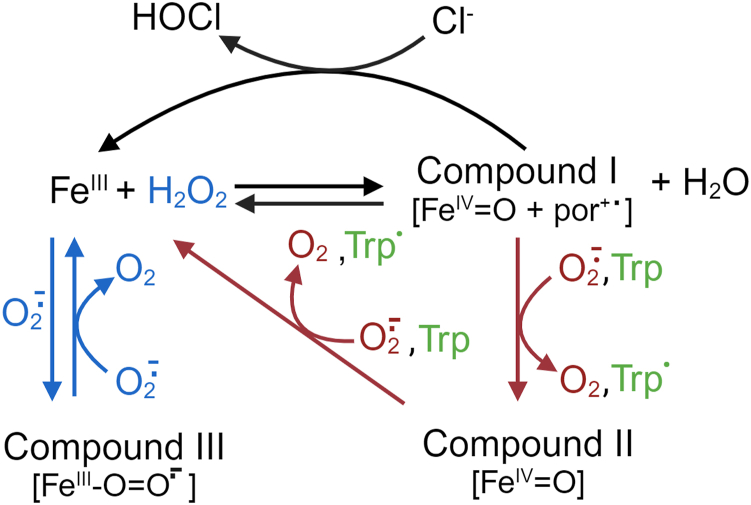 Figure 1
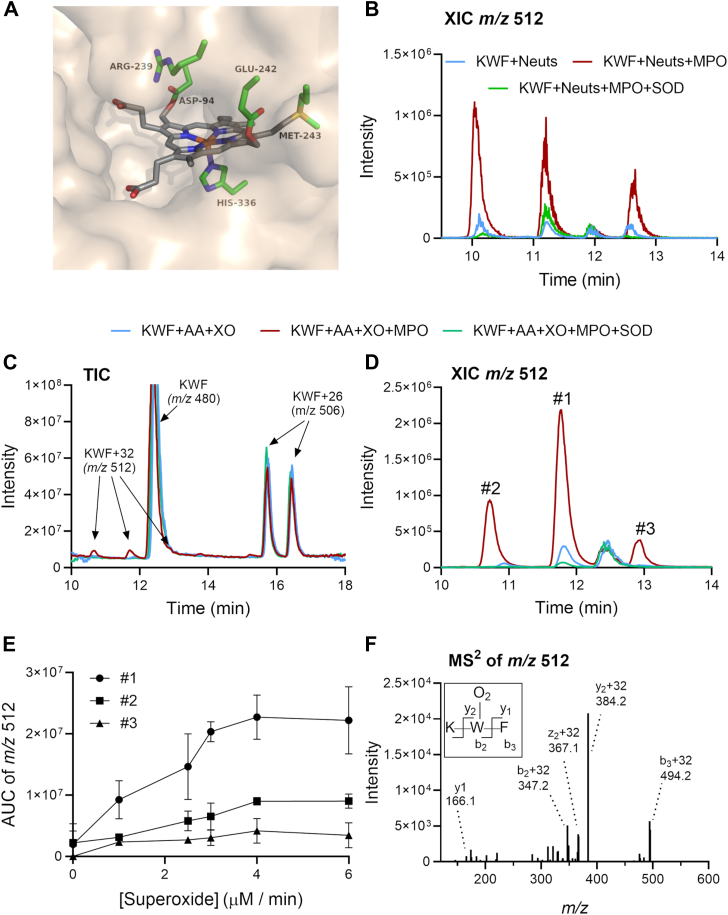 Figure 2
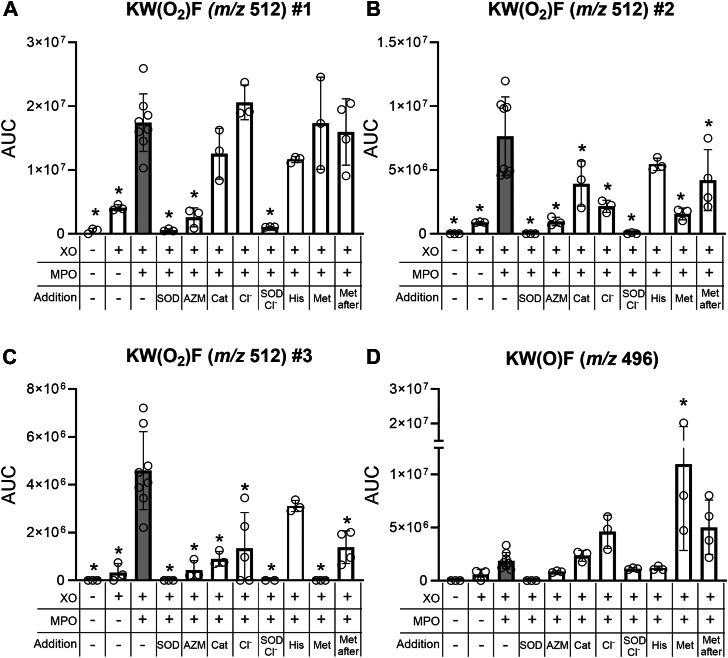 Figure 3
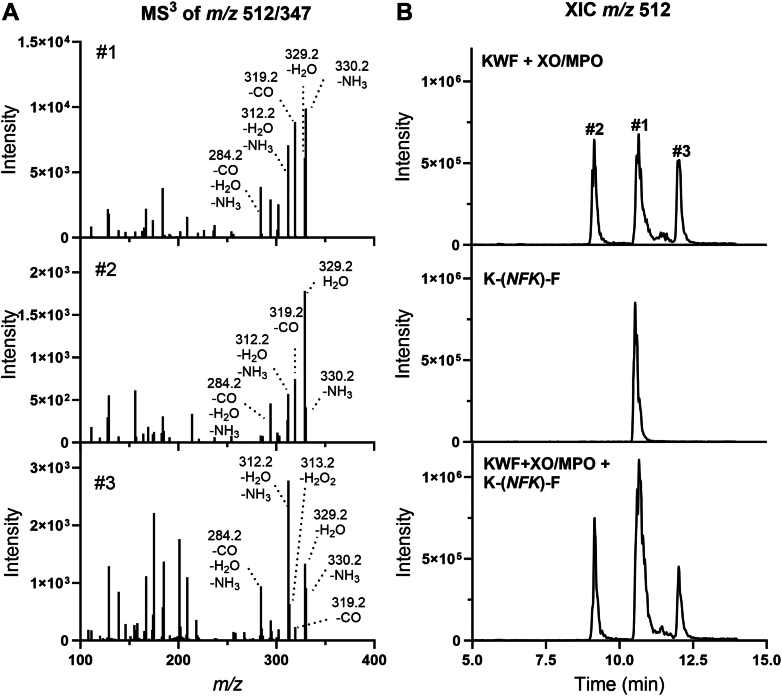 Figure 4
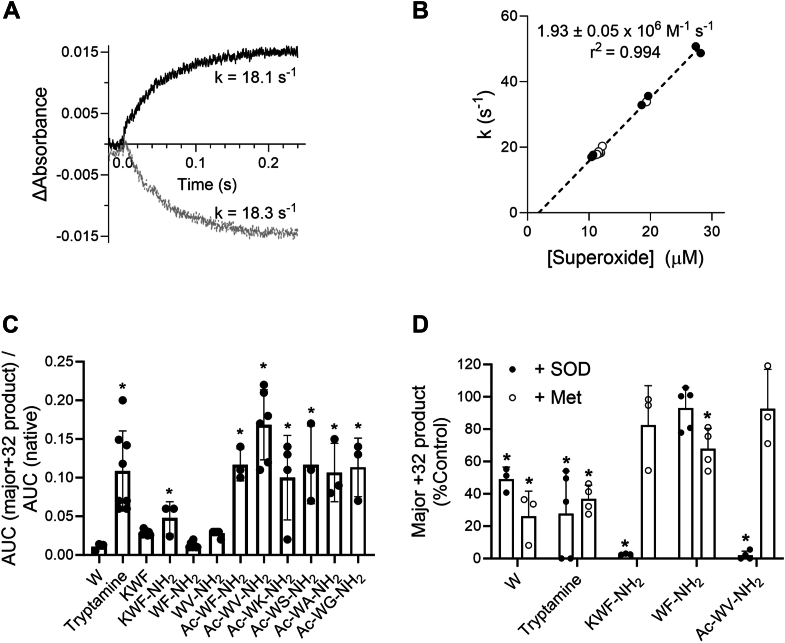 Figure 5
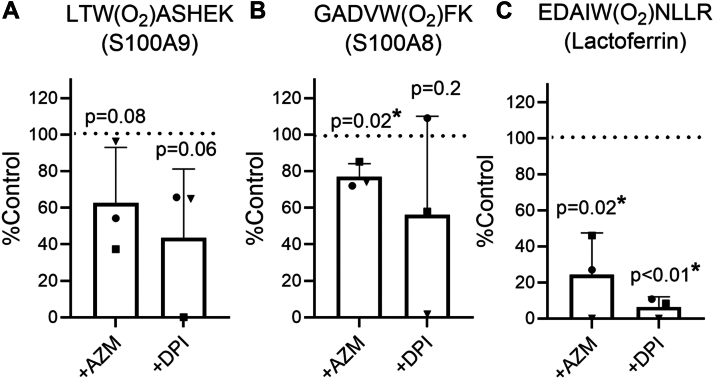 Figure 6
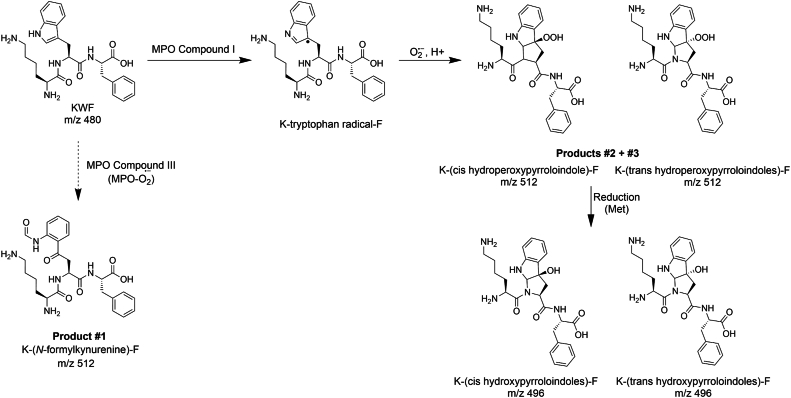 Figure 7
Peer Reviews
No public reviews on file for this paper yet. If you reviewed it on a platform where reviews are public (OpenReview, ICLR, NeurIPS, ICML), you can paste yours below so the community can read it here.
Videos
No videos yet. Explain this paper in a talk, walkthrough, or lecture? Add one.
Taxonomy
TopicsNeutrophil, Myeloperoxidase and Oxidative Mechanisms · Redox biology and oxidative stress · Nitric Oxide and Endothelin Effects