Invasive Acacia mangium Leaf Litter Modifies Soil Chemical Properties of A Bornean Tropical Heath Forest: A Soil Incubation Study
Mohamad Hilmi Ibrahim, Faizah Metali, Kushan U Tennakoon, Rahayu Sukmaria Sukri

TL;DR
This study shows how invasive Acacia mangium leaf litter changes soil chemistry in Bornean heath forests, and suggests a native species could help restore degraded areas.
Contribution
The study provides novel insights into how invasive Acacia mangium leaf litter alters soil properties and identifies a potential native species for ecological restoration.
Findings
A. mangium leaf litter increased soil pH and nitrogen and potassium levels while reducing aluminum concentrations.
Combining C. inophyllum and A. mangium litter decreased pH, organic carbon, and potassium and magnesium levels.
C. inophyllum may be useful for restoring tropical heath forests affected by invasive A. mangium.
Abstract
This study investigated the effects of Acacia mangium Willd. leaf litter on soil chemical properties of a tropical heath forest in Borneo using a controlled soil incubation experiment. The litter of exotic A. mangium and selected native heath forest species (Buchanania arborescens Blume., Calophyllum inophyllum L., Dillenia suffruticosa Griff. and Ploiarium alternifolium Vahl.) were incubated with heath forest soils collected under natural conditions and nine different treatments of heath forest soils (soils without leaf litter, soils treated with single species leaf litter, and soils treated with native leaf litter with and without A. mangium leaf litter). We quantified mass litter loss (%), and soil concentrations of exchangeable nitrogen ( NO3- and NH4+) and cations (K+, Ca2+ and Mg2+), available phosphorus (P), total organic carbon (TOC) and organic matter (OM), and total acidity…
Genes, proteins, chemicals, diseases, species, mutations and cell lines named across the full text — each resolved to its canonical identifier and authoritative record.
Click any figure to enlarge with its caption.
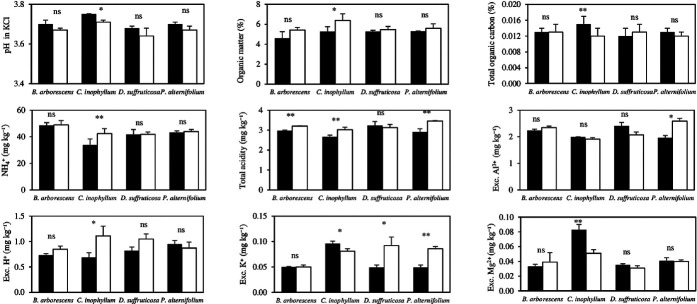 Figure 1
- —Brunei Research Council (UBD/BRC/11)
- —Forestry Department, Ministry of Primary Resources and Tourism, Brunei Darussalam
Peer Reviews
No public reviews on file for this paper yet. If you reviewed it on a platform where reviews are public (OpenReview, ICLR, NeurIPS, ICML), you can paste yours below so the community can read it here.
Videos
No videos yet. Explain this paper in a talk, walkthrough, or lecture? Add one.
Taxonomy
TopicsSoil and Land Suitability Analysis · African Botany and Ecology Studies
INTRODUCTION
Alien invasive tree species are considered a threat to biodiversity in a number of countries, including Southeast Asia (Fuentes-Ramírez et al. 2011; Le Maitre et al. 2011; Corlett 2010; Peh 2010). Acacia, a genus of trees from the family Fabaceae, is a well-documented invasive species in Borneo (Ibrahim et al. 2023; Richardson & Rejmánek 2011). In Brunei Darussalam, located in northwestern Borneo, three Acacia species (Acacia mangium Willd., Acacia cincinnata F. Muell, and Acacia auriculiformis Benth.) were first introduced in the mid-1990s for plantation forestry and restoration of degraded forests (Osunkoya et al. 2005). As nitrogen-fixing fast-growing plants, these exotic Acacia species have been able to outcompete co-occurring native species particularly in nutrient-poor soils (Osunkoya et al. 2005). Following their introduction, Acacia invasion is now recorded in Brunei’s urban forests and coastal forests, and in disturbed tropical Bornean heath and mixed dipterocarp forests (Jaafar et al. 2022a; Jambul et al. 2020; Tuah et al. 2020; Suhaili 2017; Din et al. 2015). These invasive Acacia species have negatively affected ecosystem processes, particularly soil properties, nutrient cycling processes and litter decomposition (Ibrahim et al. 2023; Jaafar et al. 2022b).
Leaf litter affects soil chemical properties through litter decomposition, which is in turn influenced by environmental conditions including both ambient air and soil temperatures, as well as the moisture levels present in the air and within the soil itself, the presence of microorganisms particularly microbial and fungal populations, and litter quality (Birouste et al. 2012; Bakker et al. 2011; Lützow et al. 2006). Leaf litter decomposition releases a flux of carbon, followed by organic matter, and finally soil humus enriched with basic cations such as potassium, calcium and magnesium (Jeyanny et al. 2015). However, the presence of alien invasive plants such as Acacia can interfere with litter decomposition processes in native habitat soils. Xiang and Bauhus (2007) recorded increased decomposition rates of naturally occurring Eucalyptus globulus leaf litter in the presence of exotic Acacia mearnsii in Victoria, Australia because of elevated N concentrations in soils. In contrast, Castro-Díez et al. (2012) reported that leaf litter from exotic Eucalyptus globulus and Acacia dealbata in Spain were less decomposed than litter from native tree species Quercus robur and Pinus pinaster. In Congo, Bernhard-Reversat and Schwartz (2002) reported that the decomposition rate of Acacia species leaf litter was intermediate between a Eucalypt plantation and a natural forest.
Comparisons of decomposition processes between invasive and native plants typically utilise the litter bag technique (Berg & Laskowski 2005). Using this technique, Le Maitre et al. (1996) studied the nitrogen cycling of invasive Acacia species that have spread through the fynbos biome in South Africa. In a separate study, Richardson and Rejmánek (2011) examined the effects of litter from Acacia species on the soil chemistry in Mediterranean-type ecosystems. In tropical Brunei Darussalam, Suhaili (2017) reported higher decomposition rates and nutrient release by A. mangium phyllodes compared to leaf litter from mixed native heath forests while Jaafar et al. (2022b) reported leaf litter decomposition rates and nutrient release were lower in Acacia-invaded mixed dipterocarp forest (AMDF) than in the Acacia-invaded heath forest (AHF), lowland heath (HF) and mixed dipterocarp forests (MDF).
Although litter decomposition studies using the litter bag have shown that invasive species litter decomposes at different rates than native litter, studies that directly evaluate the effects of invasive species litter on soil properties of invaded habitats remain limited. The soil incubation method (see Castro-Díez et al. 2012) was developed as an experimental approach in a controlled environment to quantify the direct effects of invasive litter decomposition on native soils. We therefore utilised the soil incubation method to investigate the contrasting effects of leaf litter decomposition from invasive A. mangium and selected native plant species on the chemical properties of tropical heath forest soils. We formulated two research questions:
Are there differences in the chemical properties of soils in tropical heath forests when incubated with leaf litter of a single species (A. mangium and a native species) and without litter?Are there differences in chemical properties of tropical heath forest soils when incubated with native species leaf litter (mixture) in the presence or absence of invasive A. mangium leaf litter?
MATERIALS AND METHODS
Litter And Soil Collection
We collected freshly fallen leaf litter from three native tropical heath species (Buchanania arborescens (Blume) Blume, Calophyllum inophyllum L. and Ploiarium alternifolium (Vahl) Melch), a common pioneer species (Dillenia suffruticosa (Griff.) Martelli) and freshly fallen phyllodes (hereafter leaf litter) of the invasive A. mangium Willd. These four native species were selected because they are the most abundant native species in the tropical coastal heath forests in Brunei Darussalam near the Universiti Brunei Darussalam campus (Tuah et al. 2020). Leaf litter of B. arborescens, C. inophyllum, D. suffruticosa and P. alternifolium were collected from heath forests that were not infested with Acacia (N 04°57.698 E 114°52.307 a.s.l.), while leaf litter of A. mangium was collected from *Acacia-*invaded heath forests (N 04°57.388 E 114°52.194 a.s.l.). The collected samples were cleaned of all residues with tissue paper and air-dried for two days, and air-dried leaf litter was cut into small pieces (about 1.5 cm^2^) with scissors. A detailed description of the study sites is included in Ibrahim et al. (2023).
We also collected fresh leaves of the five study species to quantify foliar nutrient composition before decomposition (Table 1). Three different trees (about 5 m high) of each species were selected (with distances of more than 3 m between sampled trees) and one branch with healthy and mature leaves was taken from each tree with pruning shears. The branches were taken to the laboratory for nutrient analysis (total N, P, Ca, K and Mg) as described by Jaafar et al. (2022b). In addition, 50 kg of soil were collected at a depth of 0 cm to 25 cm in an intact, non-invaded heath forest (N 04°57.698 E 114°52.307). The soil samples were air-dried for 6 days, crushed with a pestle and mortar, and passed through a 2-mm sieve following Ibrahim et al. (2023).
Soil Incubation Experiment
The soil incubation experiment was conducted in a 6 m × 4 m closed room at a relative humidity of 75.2 ± 2.3% and a room temperature of 26.1 ± 1.7°C. Sixty soil columns made of polyethylene plastic bottles (17 cm diameter, 6 cm height) were drilled with 26 holes (3 mm diameter) at the bottom and covered with Whatman filter paper No. 2 (Dise & Wright 1995; Castro-Díez et al. 2012). Soil bulk density (Brady & Weil 2002) at the intact heath forest site was first quantified, and the value was used to estimate the quantity of soil (i.e., soil without water content) to be used in each column. This resulted in each empty soil column being filled with 1.3 kg of air-dried soil, to simulate the natural condition of the heath soil at the study sites. The litter square technique described by Todd et al. (2000) was used to determine the required litter quantity in each soil column. Approximately 92 g of litter could be accommodated in a square (30 cm × 30 cm), resulting in approximately 24 g of leaf litter added to the air-dried soil in each soil column in a polyethylene bottle.
The soil incubation experiment was set up as a completely randomised design (CRD) consisting of 10 treatments with different combinations of study types, with 3 replicates per treatment (Table 2). Treatment 0 represented the control (soil only, without litter), while treatments 1 to 5 included litter from a single species. Treatments 6 to 9 were incubation treatments with litter from A. mangium and a native species (B. arborescens, C. inophyllum, D. suffruticosa and P. alternifolium) to simulate the effects of A. mangium invasion in a Bornean tropical heath forest.
All polyethylene columns received 1 L (100% field capacity) of distilled water at the start of the experiment in April 2015, followed by 100 mL of distilled water every week until December 2015. These water volumes were determined based on average yearly rainfall divided by the number of rainfall occurrences in a year for the study sites using the Brunei Meteorological Department database in 2015 (Brunei Meteorological Department, unpublished data). The soil incubation experiment was conducted over 9 months (Castro-Díez et al. 2012).
Litter and Soil Properties Analysis
At the end of the 9-month incubation period, all remaining leaf litter samples were collected and weighed to determine the percentage mass litter loss using the formula:
For the soils, samples were taken from each column and prepared for the respective soil chemical analyses. Soil samples were air-dried at the end of the 9-month incubation period, passed through a 2-mm sieve, and ground with a pestle and mortar. The total organic carbon (TOC) and organic matter (OM) content of all remaining leaf litter samples was determined using the dry combustion method (Cheftetz et al. 1996). Soil pH in water and KCl (pH_water_ and pH_KCl_) were determined according to the methods of Tan (2005), while exchangeable potassium (K^+^), calcium (Ca^2+^) and magnesium (Mg^2+^) were extracted according to the methods of
Allen et al. (1989). Total nutrient contents (K^+^, Ca^2+^ and Mg^2+^) for soil and leaf litter samples were determined using a flame atomic absorption spectrophotometer (AAS; iCE 300, Thermo Fisher Scientific^®^, NSW, Australia). Potassium chloride (KCl) solution was used to extract exchangeable ammonium ( ) and nitrate ( ) from the soil and both nutrients in the samples were quantified using a Flow Injection Analyzer (FIAstarTM5000, FOSS^®^, Hoganas, Sweden) (Keeney & Nelson 1982). Available phosphorus was determined according to Allen et al. (1989) using a UV-VIS spectrometer (UV1800, Shimadzu, Kyoto, Japan) at a wavelength of 880 nm after the samples had been extracted with a Bray solution (0.03 N ammonium fluoride in 0.025 N HCI). To determine the total acidity and exchangeable concentrations of aluminium (Al^3+^) and hydrogen (H^+^), soil samples were extracted with 1 M KCl, and the extracts were then titrated with 0.01 M NaOH and 0.01 M HCl as described by Rowell (1994).
Statistical Analysis
Between-species differences in soil properties (pH, and , K*^+^*, Ca^2+^, Mg^2+^, available P, TOC, OM, total acidity, Al^3+^ and H^+^) after incubation with leaf litter of native heath forest species (T2 to T5), invasive A. mangium litter (T1) and the control treatment (T0) were investigated using a one-way analysis of variance (ANOVA), followed by Tukey’s HSD tests. Unpaired t-tests were used to determine the differences in soil chemical properties when incubated with native species litter in the presence (T6 to T9) or absence (T2 to T5) of A. mangium leaf litter. For all one-way ANOVA and t-tests, assumptions of normality were tested using Shapiro-Wilk test and assumptions of homogeneity of variance were tested using Levene’s test, and neither assumptions were violated. All analyses were performed using Statistical Analysis System version 9.2 (SAS ver.9.2).
RESULTS
Variations of Percentage Mass Litter Loss and Selected Soil Chemical Properties when Incubated with Litter from a Single Species
The percentage mass litter loss of A. mangium and three of the native species (C. inophyllum, D. suffruticosa and P. alternifolium) varied significantly (p < 0.05; Table 3). The highest percentage mass litter loss recorded by C. inophyllum litter with 27.89%, while the lowest percentage mass litter loss recorded was for D. suffruticosa litter with 2.20% (Table 3). Percentage mass litter loss for A. mangium litter was significantly higher than percentage mass litter loss for D. suffruticosa litter, and significantly lower than percentage mass litter loss for C. inophyllum litter but did not significantly differ from percentage mass litter loss for B. arborescens and P. alternifolium (Table 3).
Several soil chemical properties (pH in KCl, pH in water, exchangeable concentrations of , Al^3+^, H^+^, K^+^, Ca^2+^ and Mg^2+^, and total acidity) recorded significant differences between the control treatment (soil samples incubated in a column with no litter) and treatments containing litter from a single-species: Acacia mangium litter and heath forest species litter (B. arborescens, C. inophyllum, D. suffruticosa and P. alternifolium), though these significant differences were variable and did not follow a consistent pattern (Table 3). However, TOC, OM, exchangeable and available P concentrations showed no significant mean differences among the treatments, hence they were excluded from this table.
Soil pH in water and KCl (pH_water_ and pH_KCl_) showed significant differences after incubation with litter (Table 3). Soil samples that were incubated without any litter recorded significantly lower pH_KCl_ (3.65) compared to soil samples incubated with C. inophyllum litter (3.75) but did not show significant differences with other single litter treatments, including that of invasive A. mangium leaf litter treatment. Soil samples that were incubated without any litter recorded significantly lower pH_water_ (4.61) compared to soil samples incubated with A. mangium litter (4.94), B. arborescens litter (4.94) and C. inophyllum litter (4.83) but did not show significant differences with other single litter treatments (Table 3).
Total acidity was significantly lower in soil samples incubated with A. mangium litter (2.88 mg kg^−1^), C. inophyllum litter (2.67 mg kg^−1^) and P. alternifolium litter (2.91 mg kg^−1^) than the samples incubated without any litter (3.24 mg kg^−1^). In contrast, exchangeable Al^3+^ concentration was significantly higher in soil samples incubated without any litter (2.55 mg kg^−1^) than soil samples incubated with tree litter (Table 3). For exchangeable H^+^, those soil samples incubated without any litter (T0) recorded significantly lower exchangeable H^+^ when compared to soil samples incubated with P. alternifolium litter but did not show significant differences with other single litter treatments, including that of invasive A. mangium litter (Table 3).
Soil exchangeable nitrate ( ) concentration of soil samples incubated without any litter was significantly lower when compared to those of A. mangium litter, C. inophyllum litter and P. alternifolium litter but did not significantly differ with B. arborescens litter (Table 3). Exchangeable cation concentrations showed significant differences after the incubation experiment (Table 3). Those soil samples incubated with tree litter recorded significantly higher exchangeable K^+^ concentration when compared to those soil samples incubated without any litter (Table 3). Exchangeable Mg^2+^ concentrations of soil samples incubated with no litter was significantly lower when compared to C. inophyllum litter, D. suffruticosa litter and P. alternifolium litter (Table 3). Exchangeable Ca^2+^ concentration was significantly higher in soil samples incubated with P. alternifolium litter (0.073 mg kg^−1^) than those soil samples incubated without any litter and other single litter treatments (Table 3).
Variations of Soil Chemical Properties After Incubation with Tropical Heath Forest Leaf Litter in the Presence or Absence of A. mangium Leaf Litter
Soils incubated with litter of native heath forest species showed significant differences for selected treatments in the presence and absence of A. mangium litter (p < 0.05; Fig. 1). The most substantial significant effects on soil properties were seen for those soil samples incubated with C. inophyllum litter in the absence or presence of A. mangium litter. Soil samples incubated with C. inophyllum litter in the absence of A. mangium litter were significantly lower in pH in KCl, organic matter content, concentrations of exchangeable ammonium ( ) and H^+^, and total acidity than when incubated in the presence of A. mangium litter. Conversely, treatment 3 soil samples were significantly higher in total organic carbon, exchangeable K^+^ and Mg^2+^ content than treatment 7 samples.
For those soil samples incubated with B. arborescens litter, only total acidity was significantly lower when compared to those samples incubated with A. mangium litter (Fig. 1). For soil samples incubated with litter from the pioneer species, D. suffruticosa, only exchangeable K^+^ was significantly lower when compared with those samples incubated with A. mangium litter (Fig. 1).
In those soil samples incubated with P. alternifolium litter, total acidity was significantly lower when compared to those samples having A. mangium litter (Fig. 1). Similarly, exchangeable K^+^ was significantly lower in the absence of A. mangium litter (0.049 ± 0.005 mg kg^−1^) compared to those with A. mangium litter (0.086 ± 0.004 mg kg^−1^), and exchangeable Al^3+^ was significantly lower when compared to those having A. mangium litter (Fig. 1).
DISCUSSION
Differences in Mass Litter Loss among Litter Incubation Treatments
The percentage of mass litter loss after 9 months of incubation differed significantly between the invasive A. mangium and two of the four native tropical heath forest species investigated (D. suffruticosa and C. inophyllum). Acacia mangium litter appeared to significantly decompose faster than D. suffruticosa litter but slower than C. inophyllum litter. In contrast, decomposition of A. mangium litter appeared similar to those of B. arborescens and P. alternifolium litter as there were no significant differences in percentage mass litter loss between these three species.
A similar decomposition pattern was observed for incubation experiments carried out by Castro-Díez et al. (2012) to assess exotic species vs. natives in Spain where exotic species leaf litter (Eucalyptus globulus and Acacia dealbata) decomposed relatively slower than native species leaf litter (Quercus robur and Pinus pinaster). Our results differ from Yusof (2015) and Suhaili (2017) who reported faster leaf litter decomposition rates for A. mangium than native tropical heath forest litter (Symplocos polyandra, Melastoma malabathricum and Callophyllum soulatrri). However, our findings are consistent with Jaafar et al. (2022b) who reported no significant differences in leaf litter decomposition rates between Acacia and mixed-species for invasive Acacia invaded vs. non-invaded heath forests in Brunei Darussalam. These differences between studies can be attributed to differences in study settings (i.e., laboratory controlled conditions for ours and Castro-Díez et al. (2012) vs. field conditions for Yusof (2015), Suhaili (2017) and Jaafar et al. (2022b), and the selection of different native species co-occurring with invasive acacias.
As our soil incubation experiment was conducted in a laboratory setting under uniform environmental conditions for all samples, the differences in percentage mass litter loss between A. mangium, D. suffruticosa and C. inophyllum could have resulted from differences in their litter quality affecting litter decomposition rates. Our determination of nutrient content of the fresh litter of these species showed that C. inophyllum leaves recorded significantly lower total N, total K, total Ca and total Mg content than those found in A. mangium phyllodes and D. suffruticosa leaves. Higher foliar nutrient content can facilitate decomposition because it provides essential elements that microorganisms need to break down organic matter more efficiently. Interestingly, we found highest soil exchangeable Mg content recorded for Treatment 3 (soils incubated with C. inophyllum litter), despite its fresh leaves showing the lowest Mg content among the five species studied. We suggest that C. inophyllum litter may have released nutrients faster as it appeared to decompose fastest (i.e., highest mean percentage of mass litter loss of 27.89%). The lowest mean percentage of mass litter loss recorded in D. suffruticosa (i.e., 2.20%) may be attributed to the chemical composition of D. suffruticosa leaves, such as high lignin or polyphenol content (Wickramathilake et al. 2014), as well as the presence of structural components such as cellulose and hemicellulose (Wahyuni 2023), both of which can slow down decomposition rates. Additionally, A. mangium phyllodes are xeromorphic with higher secondary metabolites contents such as tannins, flavonoids and alkaloids (Jaafar 2020), both of which can be attributed to the xeromorphic characteristics of its leaves. Xeromorphic adaptations, such as thick cuticles, reduced leaf surface area and dense trichomes, can contribute decreased decomposition rates. This also likely explains the lack of differences in percentage mass loss between A. mangium, B. arborescens and P. alternifolium litter, as these three species have fairly similar xeromorphic leaf characteristics (Yusof 2015). However, further studies using the litter bag technique in both the field and lab setting, including measurements of nutrient release and other liltter decomposition parameters, should be conducted to better understand these initial findings.
Effects of Incubation with Single-species Litter on Soil Chemical Properties
The effects of incubation with a single-species of native tropical heath forest species litter were variable and species-specific. Out of the four native heath forest species used in our study, soil samples incubated with C. inophyllum litter showed variations in pH_water_ and pH_KCl_ and exchangeable concentrations of Al^3+^, H^+^, K^+^, Mg^2+^ and nitrate ( ) and total acidity when compared with soils incubated without litter. However, total organic C content, organic matter content, exchangeable NH_4_^+^ concentration and available P concentration were not affected by the leaf litter type.
Soils incubated with C. inophyllum litter had significantly higher pH_water_ and pH_KCl_ and were enriched with exchangeable concentrations of , K^+^ and Mg^2+^ but lower in total acidity and exchangeable Al^3+^ concentration compared to soils not incubated with litter. This may be partly due to greater percentage mass litter loss recorded in C. inophyllum than the pioneer species (D. suffruticosa), native heath species (P. alternifolium) and invasive A. mangium. Higher mass loss often translates to greater nutrient release, which returns nutrients to the incubated soils (Berg & McClaugherty 2008).
Although fresh C. inophyllum leaves recorded lower leaf nutrient contents for total N, Ca and Mg (Table 2), it appeared that after the 9-months incubation experiment, decomposing C. inophyllum litter increased cation (K^+^ and Mg^2+^) content and nitrates, thus resulting in lower soil acidity. It is likely that the higher concentration in soil after incubation with C. inophyllum resulted from the oxidation of organic nitrogen (total N) to inorganic nitrogen ( ) during decomposition (Marchante et al. 2009). Joshi et al. (2019) reported similar findings, where the native tree species Euterpe oleracea showed a higher decomposition rate that induced the immobilising process where it increased pH and in the deciduous forest soils in the tropical forests of the Brazilian Amazon.
Results for lower total acidity and exchangeable Al^3+^ content for soils incubated with C. inophyllum leaf litter could be linked to the increased levels of pH (both pH_water_ and pH_KCl_). The increased pH values potentially indicate that the presence of C. inophyllum leaf litter can remediate the highly acidic tropical heath forest soil by increasing and cations such as K^+^ and Mg^2+^, present in these habitats. Once the total acidity in soils is lowered, proton ion charges can freely move, encouraging more cation exchange capacity (CEC) to occur in the soils (Bergaya et al. 2006) and lessening the stressed soil conditions (Li et al. 2001). Higher CEC results in an increase in cations, such as K^+^, Ca^2+^ and Mg^2+^ in the soils, which equates to an increase in soil fertility (Oorts et al. 2003).
When comparing the effects of soil incubation with A. mangium litter and without any litter, A. mangium caused an increase in pH_water_ and exchangeable and K^+^ concentrations in the heath soils but decreased total acidity and exchangeable Al^3+^ concentration in the incubated soils without litter. Higher N and P content of A. mangium litter could be a reason for this pattern as nitrogen produces nitrates ( ) and releases hydrogen H^+^ ions during the nitrification process (Marchante et al. 2009; Pandey et al. 2000). The resulting H^+^ ions are then used in P mineralisation or specifically for the formation of orthophosphates, (Barea & Richardson 2015). The binding of hydrogen with phosphate requires at least two H ions, which results in an increase in soil pH but a decrease in total acidity and exchangeable Al^3+^ concentration in the incubated soils.
Soils incubated with B. arborescens litter recorded significantly higher pH in water and exchangeable K^+^ concentration, but lower exchangeable Al^3+^ concentration than the soils without litter. Soils incubated with D. suffruticosa litter recorded significantly higher exchangeable K^+^ and Mg^2+^ concentrations than soils without litter. Meanwhile, soils incubated with P. alternifolium recorded significantly higher exchangeable H^+^, , Mg^2+^ and Ca^2+^ concentrations, but lower total acidity and exchangeable Al^3+^ concentrations. These results show a trend that the nutrient contents may be positively associated with percentage mass litter loss. We suggest that species with lower percentage litter loss may be less effective in altering incubated soil properties. Our results are comparable with Turner et al. (2000) that reported species with thicker leaves are low in foliar nitrogen and ash concentrations.
Effects of Incubation with a Single-species Litter in the Presence or Absence of A. mangium Litter on Soil Chemical Properties
When comparing the effects of incubation with each of the four different tropical heath forest species litter in the presence of A. mangium leaf litter, it was identified that soils incubated with a combination of C. inophyllum and A. mangium leaf litters recorded the highest number of significant effects in terms of increasing pH_water_, OM content, total acidity and exchangeable concentrations of and H^+^, and decreasing TOC and exchangeable concentrations of K^+^ and Mg^2+^. This is consistent with the results of the parallel single-species litter treatments that also recorded the most significant effects on soil samples when incubated with C. inophyllum litter alone and A. mangium litter alone. Furthermore, the presence of A. mangium litter with C. inophyllum litter enriched the overall nutrient concentration compared to A. mangium litter alone by increasing OM, after the incubation period. This can be attributed to the presence of high contents of nitrogen in A. mangium litter. Yusof (2015) also reported a similar positive correlation between leaf litter N and the topsoil N content in an Acacia-invaded tropical heath forest in Borneo.
In contrast, when tropical heath forest soils were incubated with litter of the other three native species in combination with A. mangium litter, significant changes were only recorded for total acidity (B. arborescens and P. alternifolium), exchangeable Al^3+^ (P. alternifolium) and K^+^ (D. suffruticosa and P. alternifolium) concentrations. Based on these findings, we suggest that the native C. inophyllum appears to be a promising candidate for enrichment planting of degraded or disturbed tropical heath forests with co-occurring invasive A. mangium. The presence of C. inophyllum litter appeared to lessen impacts of A. mangium through decreased soil acidity and increased organic matter and macronutrients (e.g., ) in the heath soils. Enrichment planting of C. inophyllum in *Acacia-*invaded heath forests, as well as degraded areas, in Brunei and elsewhere in Borneo could therefore facilitate the recovery of invaded and degraded soils as a first step towards the restoration of these ecosystems.
The findings of this study imply that other three tropical heath forest species litter, in the presence of A. mangium leaf litter (mixed species litter incubation), can also potentially improve most of the soil chemical properties, such as pH, OM, total acidity and exchangeable concentrations of , H^+^, Al^3+^ and K^+^, when compared to incubation with A. mangium litter alone. The negative impacts shown by A. mangium leaf litter can be due to the presence of higher lignin, TPC (Total phenolic content) and TTC (Total tannin content) present in phyllodes (Jamil 2018), that could hinder the decomposition rate. Turner et al. (2000) and Yusof (2015) also reported that tropical heath forest species had significantly thicker leaves and were higher in foliar nitrogen and ash concentrations. The effects of native litter in combination with the invasive A. mangium litter on soil properties appear to be species-specific, possibly due to differences in litter decomposition rates among the native species, as well as differences in leaf litter quality of these native species. Based on the results of percentage of litter loss, it shows that decomposition of C. inophyllum litter is higher compared to the other three native species and A. mangium litter; thus, implying significant improvements on soil properties when incubated with C. inophyllum litter.
The presence of A. mangium leaf litter increased total acidity in tropical heath forest soils investigated, thus causing a negative impact. The increase in total soil acidity with the presence of A. mangium leaf litter may be due to the release of humic acid from A. mangium leaf litter (Valladares et al. 2016). Phyllodes of A. mangium contain high levels of N and P (Yusof 2015) and litter containing higher levels of N and P are known to release more humic acids (Anđelković et al. 2006). It is possible that continuous exposure of tropical heath forest soils to A. mangium leaf litter, especially in high volumes in leaf litterfall (Suhaili 2017; Jaafar et al. 2022b), may also trigger other negative effects such as nutrient leaching and Al toxicity. Our findings have shown that the incorporation of native species leaf litter through mixed species incubation can mitigate these negative effects, providing a stabilising effect on soil pH and nutrient balance, thereby potentially restoring the health and resilience of invaded tropical heath forest soil properties.
Management Implications
Our results offer important insights for Bornean tropical heath forests impacted by A. mangium. Long-term invasions of A. mangium in Bornean heath forests existing on nutrient-poor and highly acidic soils, when left unmanaged, are known to drastically modify soil properties (Jaafar et al. 2022b, Ibrahim et al. 2023) leading to changes in ecosystem functioning that prevent natural ecosystem recovery. The recorded variable effects on soil chemical properties when incubated with A. mangium and different single-species litter of four native tropical heath forest species suggests that a uniform strategy for the management of A. mangium invasion may not be effective as different native species likely interact with A. mangium in complex and distinct ways. Further studies, conducted over longer periods than the duration of our study (nine months), focusing on native species that co-occur with A. mangium can help forest managers make informed decisions to formulate effective management and mitigation strategies.
CONCLUSION
Our soil incubation experiment has demonstrated that most of the measured chemical properties of tropical heath forest soil samples incubated with A. mangium leaf litter were significantly altered. Conversely, the effects on soil chemical properties when incubated with a single native tropical heath forest species litter did not show any consistent patterns and appeared to be species-specific. The effects on soil properties when each of the four tropical heath forest species litter were incubated with A. mangium litter varied, with the most desirable impacts recorded when incubated with C. inophyllum litter (increased pH_water_, OM content, total acidity and exchangeable concentrations of and H^+^, and decreased TOC and exchangeable concentrations of K^+^ and Mg^2+^). These positive impacts of C. inophyllum may indicate that it is a promising candidate for enrichment planting of degraded or disturbed tropical heath forests with co-occurring invasive A. mangium.
The reference list from the paper itself. Each links out to its DOI / PubMed record.
- 1Allen SE Grimshaw HM Parkinson JA Quarmby C 1989 Chemical analysis of ecological materials Oxford, UK Blackwell Scientific Publications
- 2AnđelkovićT PerovićJ BlagojevićS PurenovićM NikolićR BojićA AnđelkovićD 2006 Acidity of humic acid related to its oxygen-containing functional groups Macedonian Journal of Chemistry and Chemical Engineering 252131137
- 3Bakker MA Carreño-Rocabado G Poorter L 2011 Leaf economics traits predict litter decomposition of tropical plants and differ among land use types Functional Ecology 25347348310.1111/j.1365-2435.2010.01802.x · doi ↗
- 4Barea JM Richardson AE 2015 Phosphate mobilisation by soil microorganisms Richardson AE Principles of plant-microbe interactions Cham Springer International Publishing 22523410.1007/978-3-319-08575-3_24 · doi ↗
- 5Berg B Laskowski R 2005 Litter decomposition: A guide to carbon and nutrient turnover Advances in Ecological Research 38San Diego, CA Elsevier Academic Press
- 6Berg B Mc Claugherty C 2008 Plant litter: Decomposition, humus formation, carbon sequestration Berlin Springer 10.1007/978-3-540-74923-3 · doi ↗
- 7Bergaya F Lagaly G Vayer M 2006 Cation and anion exchange Developments in Clay Science 1979100110.1016/S 1572-4352(05)01036-6 · doi ↗
- 8Bernhard-Reversat F Schwartz D 2002 Change in lignin content during litter decomposition in tropical forest soils (Congo): Comparison of exotic plantations and native stands Comptes Rendus de l’Académie Des Sciences - Series IIA - Earth and Planetary Science 325642743210.1016/S 1251-8050(97)81160-3 · doi ↗