Patient-specific 3D-tissue slices from peritoneal metastases – An in vitro model for individual susceptibility analysis
Christian Etzold, Orestis Lyros, Matthias Mehdorn, Robert Nowotny, Stefan Niebisch, Boris Jansen-Winkeln, Katrin Schierle, Ines Gockel, René Thieme

TL;DR
Researchers developed a lab model using patient-specific 3D tissue slices from peritoneal metastases to study individual responses to chemotherapy drugs.
Contribution
The study introduces a novel in vitro model using 3D-tissue slices from peritoneal metastases to assess patient-specific chemosensitivity.
Findings
3D-tissue slices from peritoneal metastases retained tumor cell morphology and Ki-67 expression after in vitro culture.
Doxorubicin treatment reduced cytokeratin-positive tumor cells and proliferative cells in the slices.
The model successfully cultured patient-specific slices for up to 4 days, preserving tumor characteristics.
Abstract
The prognosis of patients with peritoneal metastases (PM) is poor, and these patients have a brief overall survival. Most patients with advanced PM receive palliative therapy to maintain their quality of life. In our current study, we investigated whether patient-specific 3D-tissue slices from patients with PM subjected to pressurized intraperitoneal aerosol chemotherapy could be cultured in vitro. Biopsies from gastric cancer patients with PM were characterized for cytokeratin-positive tumor cells and the proliferation marker Ki-67. Biopsies from seven patients were cut to 350 µM thick slices in a standardized manner, cultured with 10 µM 5-fluorouracil, doxorubicin, cisplatin, oxaliplatin, or irinotecan for 96 h, and then examined histopathologically and via immunohistochemistry for persistent cytokeratin and Ki-67 expression. In vitro cultured slices revealed a similar morphology to…
Genes, proteins, chemicals, diseases, species, mutations and cell lines named across the full text — each resolved to its canonical identifier and authoritative record.
Click any figure to enlarge with its caption.
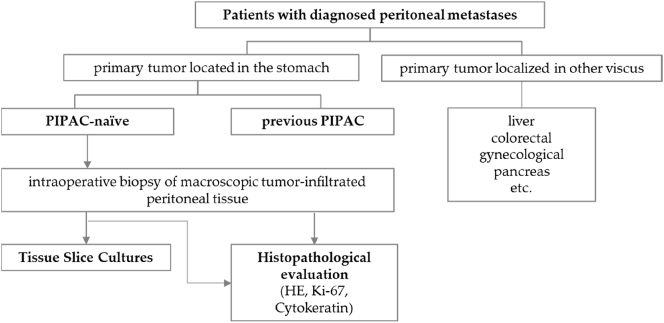 Figure 1
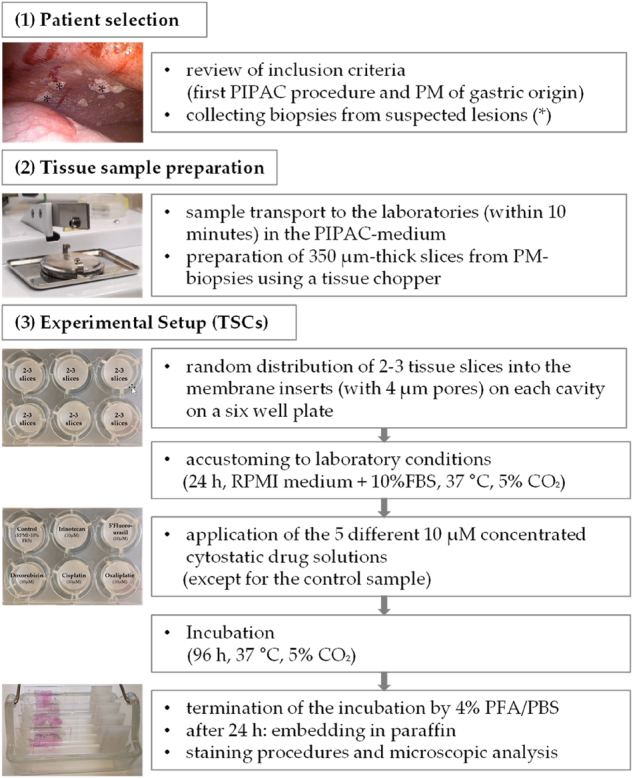 Figure 2
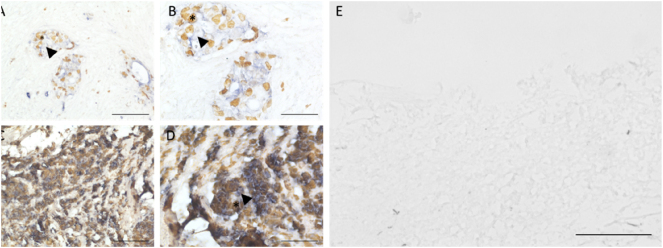 Figure 3
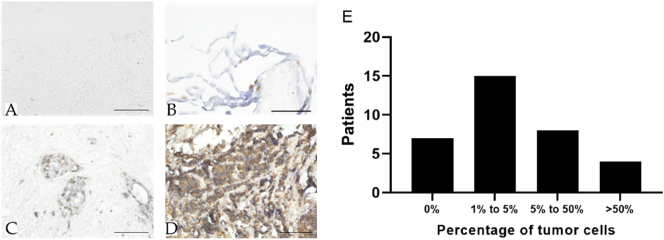 Figure 4
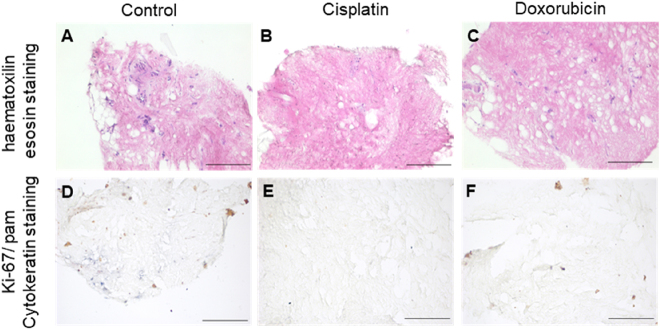 Figure 5
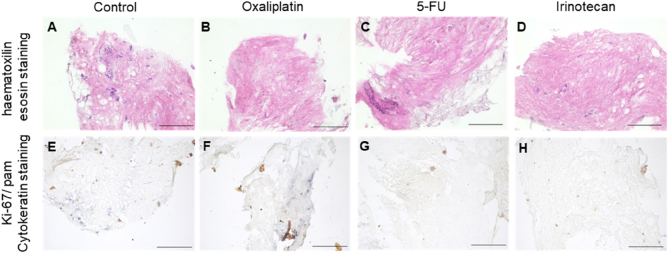 Figure 6
Peer Reviews
No public reviews on file for this paper yet. If you reviewed it on a platform where reviews are public (OpenReview, ICLR, NeurIPS, ICML), you can paste yours below so the community can read it here.
Videos
No videos yet. Explain this paper in a talk, walkthrough, or lecture? Add one.
Taxonomy
TopicsIntraperitoneal and Appendiceal Malignancies · Gastric Cancer Management and Outcomes · Gastrointestinal Tumor Research and Treatment