Study of F-wave Components in a Control Population of Young Adults
Sangeeta Gupta, Ramji Singh

TL;DR
This study establishes normal F-wave values in young adults and finds that height strongly influences F-wave latency.
Contribution
Provides normative data for rarely studied F-wave components and highlights the impact of height on latency.
Findings
F-wave minimum latency strongly correlates with height across multiple nerves.
Right side F-wave latency is significantly longer than the left side.
Male participants show increased F-wave latency compared to females.
Abstract
Introduction The F-wave represents a delayed muscular response that occurs as a result of the antidromic activation of one or a few motoneurons ensuing the electrical stimulation of a peripheral nerve. F-wave response has various parameters, yet the primary application of F-waves is presently confined to latency measurement, with a particular emphasis on F-wave minimum latency. Our goal is to report F-wave data in a population of young healthy individuals, encompassing rarely examined components including F-wave/M-wave amplitude (F/M ratio), duration, chronodispersion, and persistence in both upper and lower extremity nerves. Methods F-response components were recorded from median, ulnar, tibial, and peroneal nerves in 100 healthy volunteers in the age group of 18-40 years. Linear regression analysis was conducted for the correlation of F-wave parameters with height and age. Gender…
Genes, proteins, chemicals, diseases, species, mutations and cell lines named across the full text — each resolved to its canonical identifier and authoritative record.
Click any figure to enlarge with its caption.
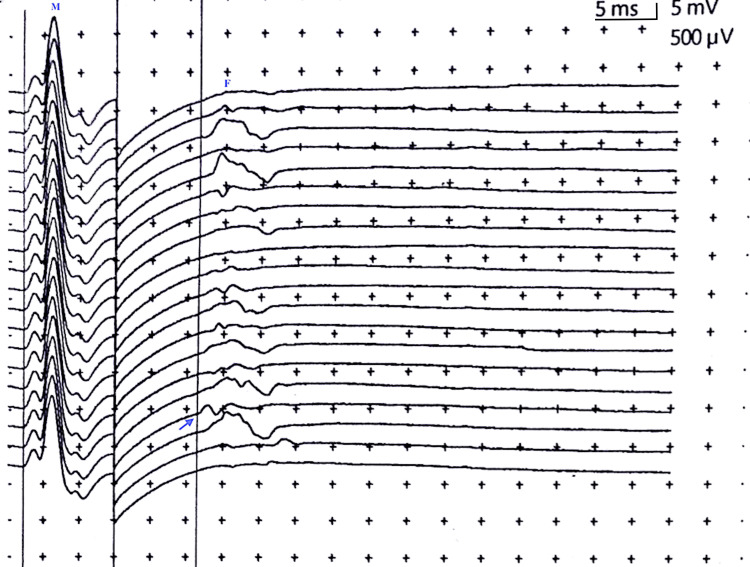 Figure 1
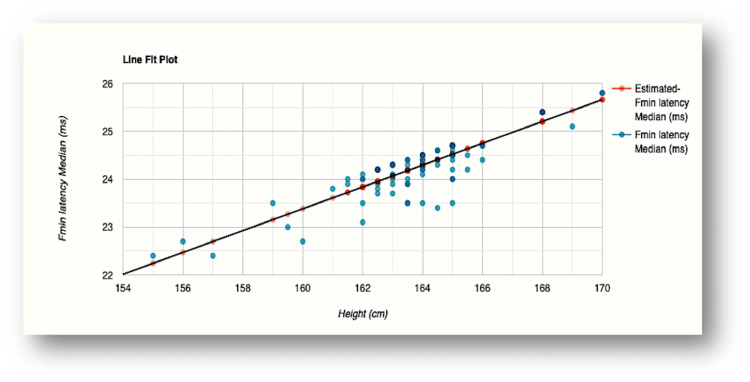 Figure 2
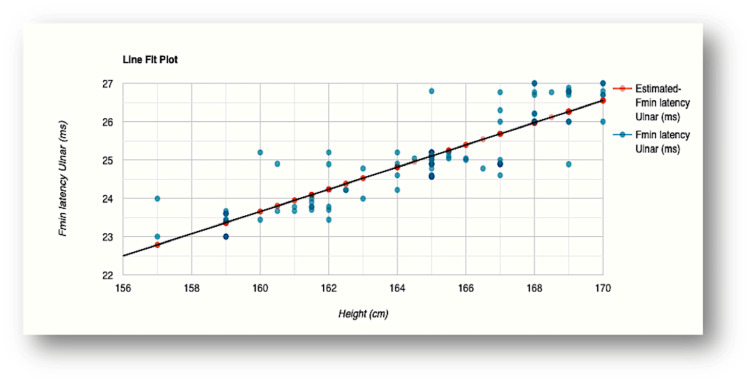 Figure 3
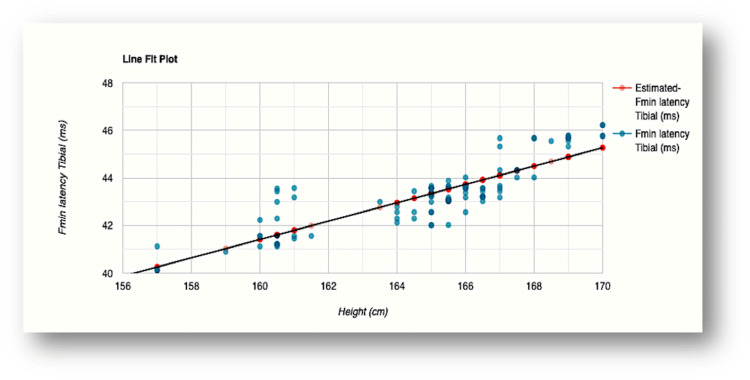 Figure 4
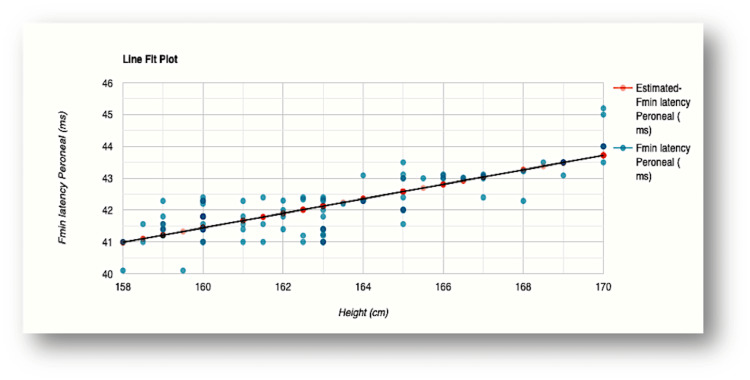 Figure 5
Peer Reviews
No public reviews on file for this paper yet. If you reviewed it on a platform where reviews are public (OpenReview, ICLR, NeurIPS, ICML), you can paste yours below so the community can read it here.
Videos
No videos yet. Explain this paper in a talk, walkthrough, or lecture? Add one.
Taxonomy
TopicsMuscle activation and electromyography studies · Botulinum Toxin and Related Neurological Disorders · Peripheral Neuropathies and Disorders