A humanized Gs-coupled DREADD for circuit and behavior modulation
Qi Zhang, Ruiqi Wang, Liang Zhang, Mengqi Li, Jianbang Lin, Xiaoyang Lu, Yixuan Tian, Yunping Lin, Taian Liu, Yefei Chen, Yuantao Li, Jun Cao, Qiang Wu, Jinhui Wang, Zhonghua Lu, Zexuan Hong

TL;DR
Scientists developed a humanized version of a DREADD receptor that can safely and effectively modulate brain circuits and improve Parkinson's symptoms in mice.
Contribution
A fully humanized Gs-coupled DREADD (hM3Ds) was developed and shown to be effective in a Parkinson's disease model.
Findings
hM3Ds has a comparable ligand response profile to the original rM3Ds DREADD.
hM3Ds activated D1-MSNs and improved Parkinsonian symptoms in a mouse model.
The humanized DREADD is likely safer and suitable for clinical translation.
Abstract
Designer receptors exclusively activated by designer drugs (DREADDs) play important roles in neuroscience research and show great promise for future clinical interventions in neurological diseases. The Gs-coupled DREADD, rM3Ds, modulates excitability in neuron subsets that are sensitive to downstream effectors of Gs protein. However, given the non-human nature of the rM3Ds backbone, risks about potential immunogenicity and tolerability exist when considering clinical translation. Here, we report the development of a whole sequence-humanized Gs-coupled DREADD, hM3Ds. We found that hM3Ds has a comparable DREADD ligand response profile to rM3Ds. We then selectively expressed hM3Ds in D1 medium spiny neurons (D1-MSNs) and found that hM3Ds was able to activate the D1-MSNs-mediated basal ganglia direct pathway and alleviate Parkinsonian phenotypes in a Parkinson’s disease mouse model. In…
Genes, proteins, chemicals, diseases, species, mutations and cell lines named across the full text — each resolved to its canonical identifier and authoritative record.
Click any figure to enlarge with its caption.
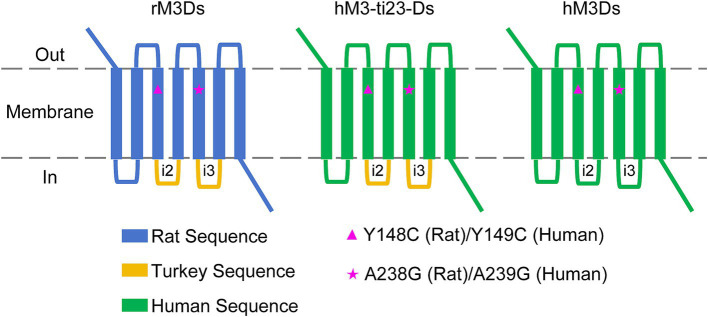 Figure 1
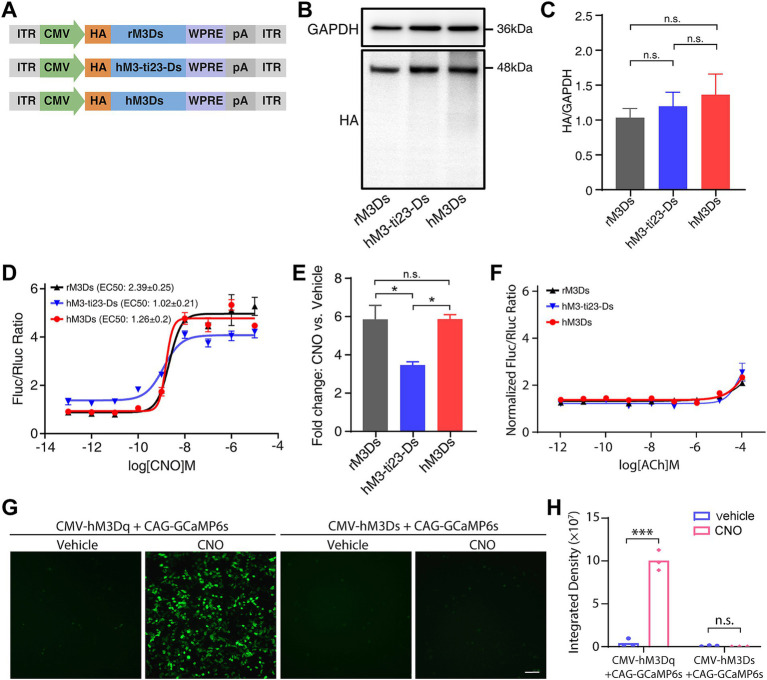 Figure 2
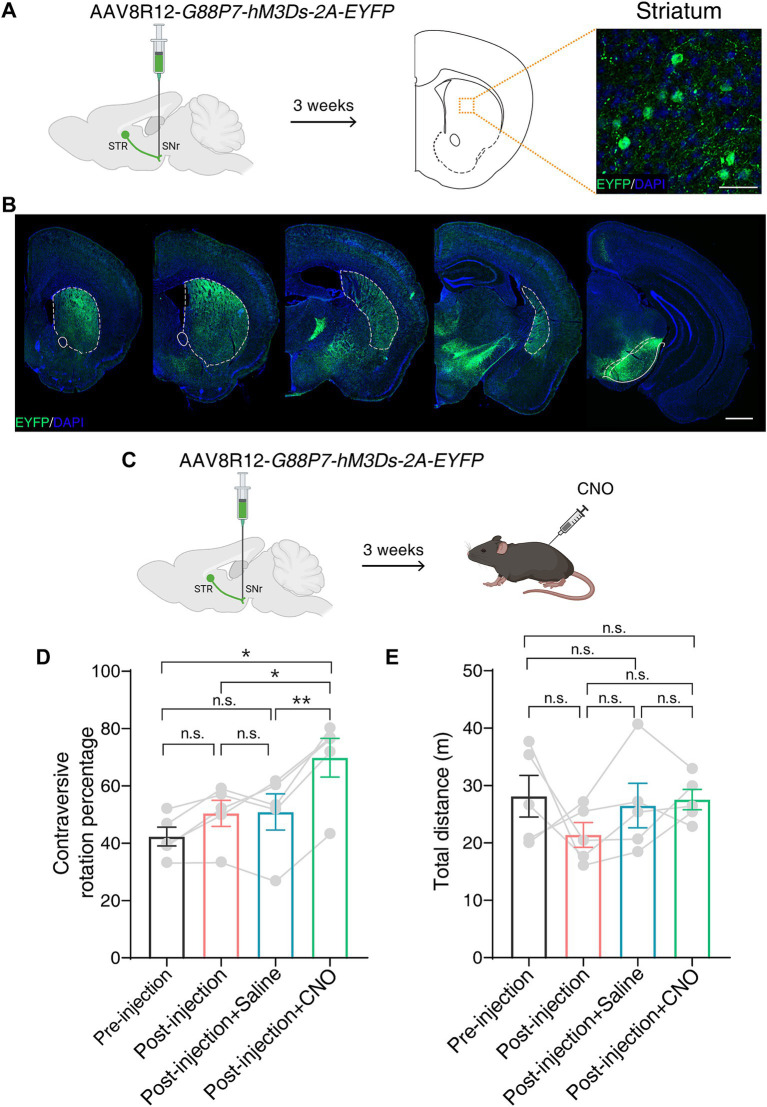 Figure 3
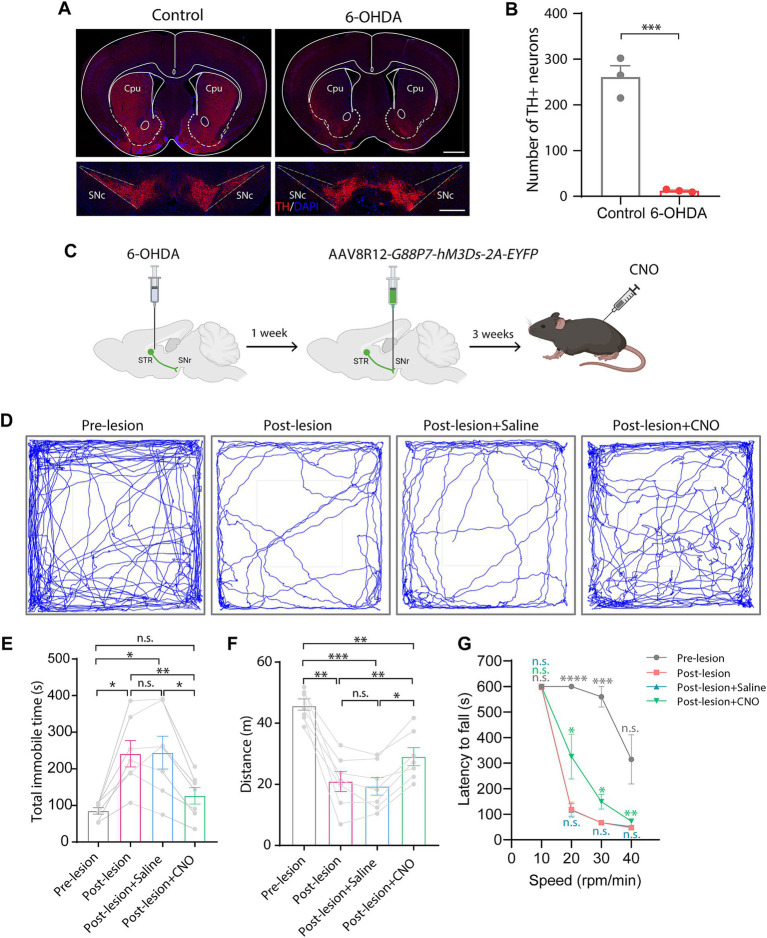 Figure 4
Peer Reviews
No public reviews on file for this paper yet. If you reviewed it on a platform where reviews are public (OpenReview, ICLR, NeurIPS, ICML), you can paste yours below so the community can read it here.
Videos
No videos yet. Explain this paper in a talk, walkthrough, or lecture? Add one.
Taxonomy
TopicsNeuroscience and Neural Engineering · Advanced Memory and Neural Computing · CCD and CMOS Imaging Sensors