The impact of monoallelic inactivation mutations in the ENPP1 gene on pediatric skeletal development: a case report and literature review
Siyi Lu, Ning Sun, Yuan Li, Zongyi Wu, Jingdong Zhang

TL;DR
A 17-year-old boy with a rare bone disorder caused by a mutation in the ENPP1 gene highlights its role in pediatric skeletal development.
Contribution
This case report identifies the clinical impact of monoallelic ENPP1 inactivation mutations in children.
Findings
A monoallelic inactivation mutation in the ENPP1 gene was found to affect calcium and phosphorus metabolism in a pediatric patient.
The mutation led to skeletal abnormalities including femoral metaphysis and acetabulum defects.
The case provides insights for diagnosing and managing bone diseases related to ENPP1 mutations in children.
Abstract
Recently, in our clinical work, we discovered a case of abnormal bone metabolism in children resulting from an inactivated mutation of the ENPP1 gene. Through this discovery, we highlighted the impact of the ENPP1 gene on the skeletal growth and development of children, and provided new ideas for the clinical diagnosis of bone diseases in children. A 17-year-old boy presented with abnormal gait and hip pain. The anteroposterior (AP) pelvis X-ray revealed bilateral abnormalities in the femoral metaphysis, acetabulum, and ilium bones, as well as slippage of the left femoral head epiphysis. After genetic testing was carried out, it was found that the patient had a monoallelic inactivation mutations in the ENPP1 gene, which is the pathogenic gene of Autosomal-Recessive Hypophosphatemic Rickets 2 (ARHR2). Genetic testing identified that the patient had an inactivating mutation in the ENPP1…
Genes, proteins, chemicals, diseases, species, mutations and cell lines named across the full text — each resolved to its canonical identifier and authoritative record.
Click any figure to enlarge with its caption.
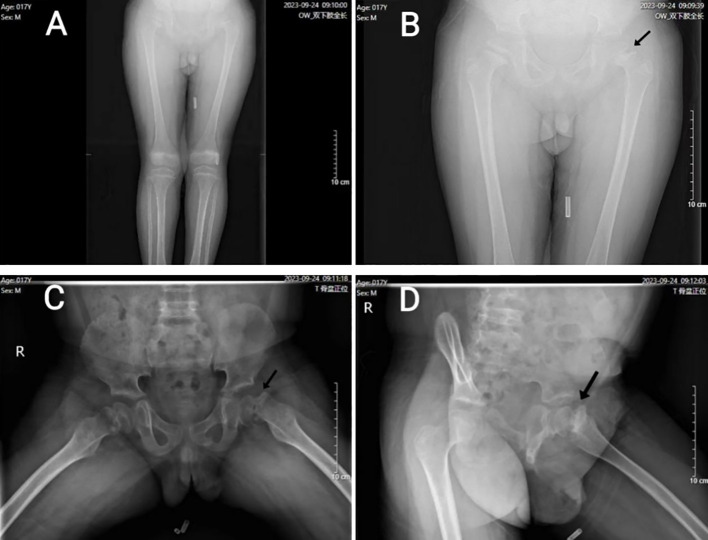 Figure 1
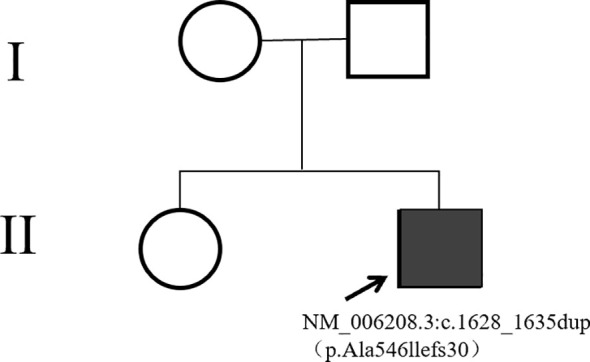 Figure 2
Peer Reviews
No public reviews on file for this paper yet. If you reviewed it on a platform where reviews are public (OpenReview, ICLR, NeurIPS, ICML), you can paste yours below so the community can read it here.
Videos
No videos yet. Explain this paper in a talk, walkthrough, or lecture? Add one.
Taxonomy
TopicsDermatological and Skeletal Disorders · Connective tissue disorders research · Heterotopic Ossification and Related Conditions