The role of recurrent somatic mutations that alter conserved m6A motifs in human cancer
Oliver Artz, James R White, Benoit Rousseau, Guillem Argiles, Michael B Foote, Paul Johannet, Miteshkumar Patel, Somer Abdelfattah, Shrey Patel, Callahan Wilde, David Mieles, Luis A Diaz

TL;DR
This study examines how mutations affecting m6A RNA modifications influence cancer progression and patient outcomes.
Contribution
The study reveals that mutations altering m6A motifs are not a major driver of gene regulation in most cancers.
Findings
Mutations disrupting or creating m6A motifs are rare and have minimal impact on RNA levels.
Patients with altered m6A sites do not show significant changes in mortality or outcomes.
Single-site mutations are likely insufficient to affect gene expression broadly in cancer.
Abstract
N6-methyladenosine (m6A) is the most abundant internal RNA modification in eukaryotes and plays a key role in cellular growth and development. Global changes in cellular methylated RNA and m6A-mediated transcript regulation significantly impact oncogenesis. Here, we investigate how recurrent synonymous and non-synonymous somatic mutations abolishing individual canonical methylated m6A motifs affect transcript levels and survival of patients with cancer. Moreover, we explore the effect of these mutations on creating de novo m6A motifs. To this end, we compared publicly available data on m6A sites with mutations reported in The Cancer Genome Atlas (TCGA). We find that mutations disrupting or creating m6A motifs display a low recurrence and have a negligible impact on RNA abundance. Patients with the highest number of disrupted m6A sites or newly generated m6A motifs did not generally…
Genes, proteins, chemicals, diseases, species, mutations and cell lines named across the full text — each resolved to its canonical identifier and authoritative record.
Click any figure to enlarge with its caption.
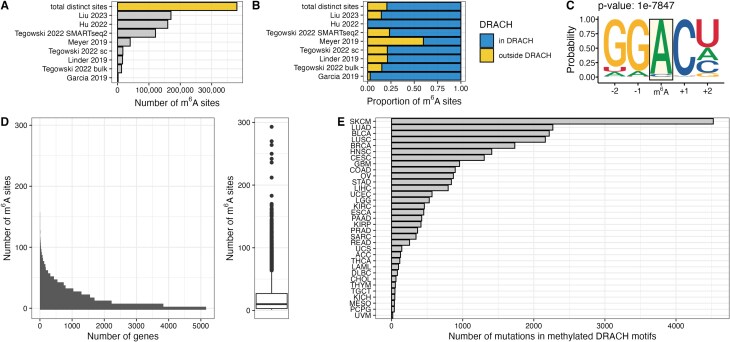 Figure 1
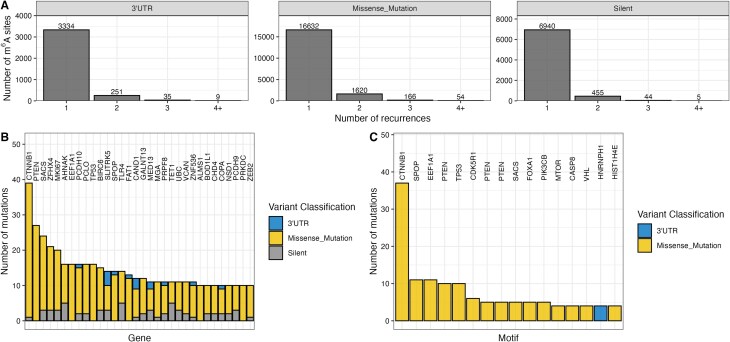 Figure 2
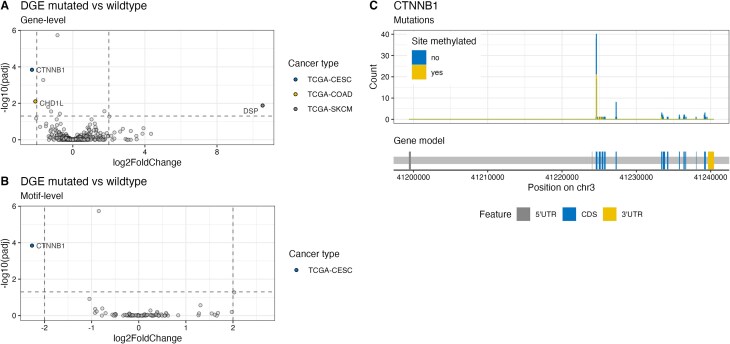 Figure 3
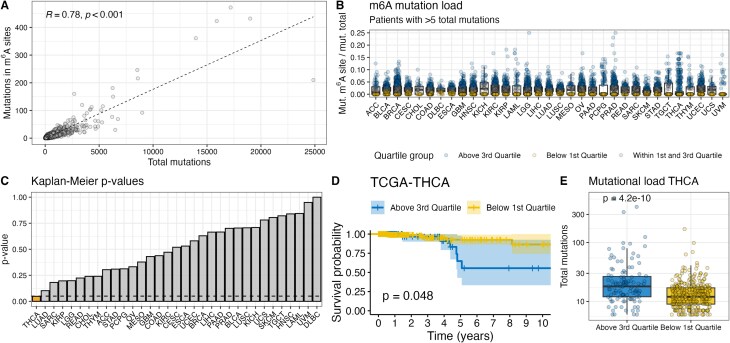 Figure 4
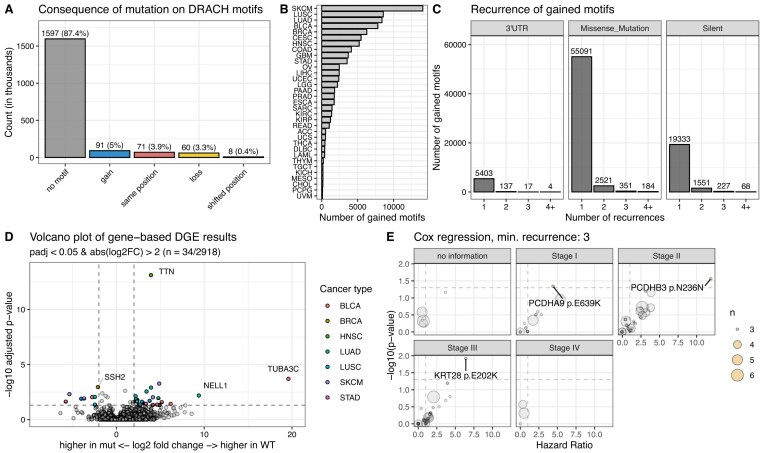 Figure 5
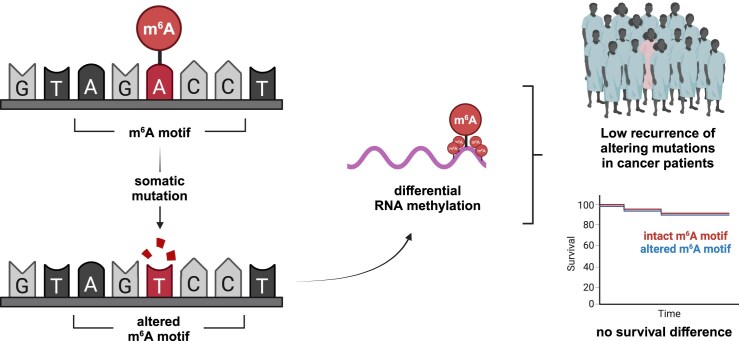 Figure 6
Peer Reviews
No public reviews on file for this paper yet. If you reviewed it on a platform where reviews are public (OpenReview, ICLR, NeurIPS, ICML), you can paste yours below so the community can read it here.
Videos
No videos yet. Explain this paper in a talk, walkthrough, or lecture? Add one.
Taxonomy
TopicsRNA modifications and cancer · Cancer-related gene regulation · Cancer-related molecular mechanisms research