Importance of Considering Seasonality in Tick Activity When Assessing Spatial Expansion Potential: A Case Study on Haemaphysalis longicornis
Younjung Kim, Raphaëlle Métras

TL;DR
This study shows how seasonal changes affect the spread of a tick species in North America and Europe, emphasizing the need for better surveillance strategies.
Contribution
The study introduces a novel habitat suitability model that incorporates seasonal tick activity and ecologically relevant predictors.
Findings
The model predicted limited suitability for H. longicornis in the western US and southern Europe, contrasting with earlier studies.
Incorporating seasonal saturation deficit and temperature improved the accuracy of spatial projections.
Current tick boundaries in the eastern US align closely with model predictions.
Abstract
Haemaphysalis longicornis, a tick vector of the severe fever with thrombocytopenia syndrome (SFTS) virus, has long been established in parts of East Asia and Oceania but is now rapidly expanding in the eastern US, raising significant concerns about its further domestic and international spread. In this study, we mapped the spatial expansion risk of H. longicornis in North America and Europe by training a habitat suitability model with its occurrence data from East Asia and Oceania. Our model incorporated ecologically relevant predictors for tick survival, which have been neglected in previous habitat suitability modeling for this species. Specifically, we employed temperature, relative humidity, saturation deficit, precipitation, and vegetation level as predictors, with the first three distinguishing between tick questing and non‐questing seasons to account for their varying impacts on…
Genes, proteins, chemicals, diseases, species, mutations and cell lines named across the full text — each resolved to its canonical identifier and authoritative record.
Click any figure to enlarge with its caption.
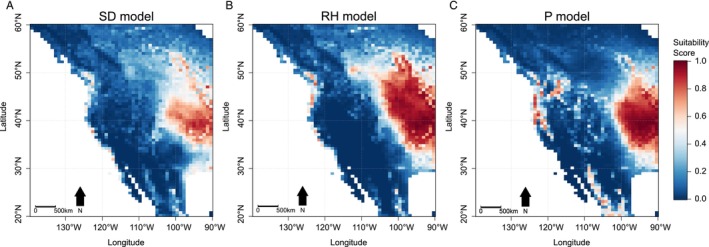 Figure 1
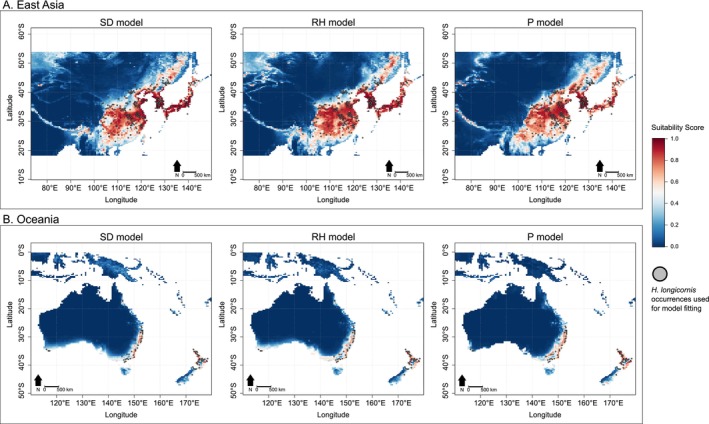 Figure 2
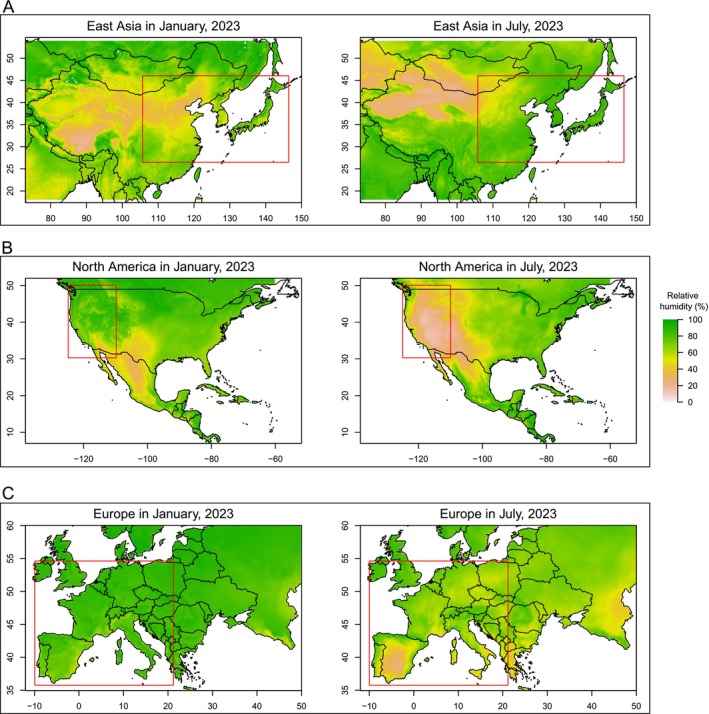 Figure 3
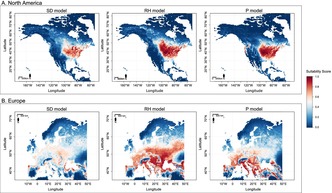 Figure 4
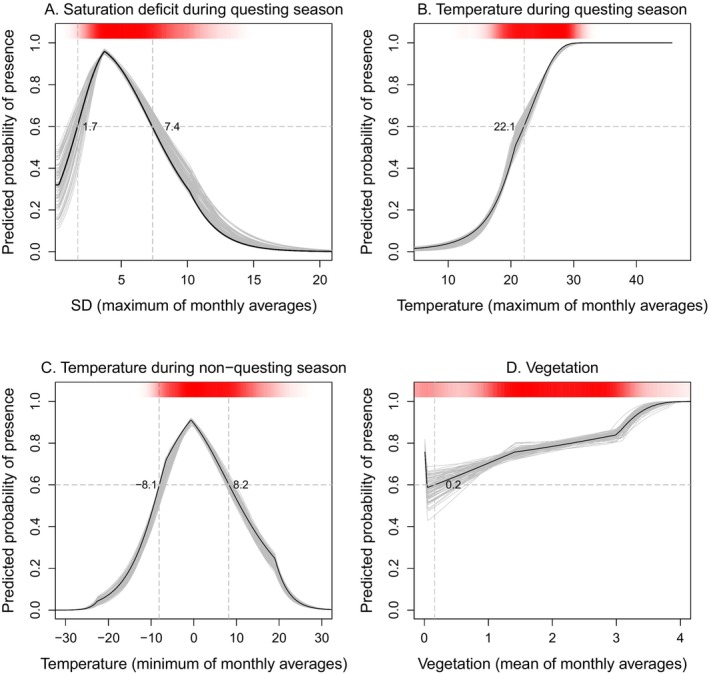 Figure 5
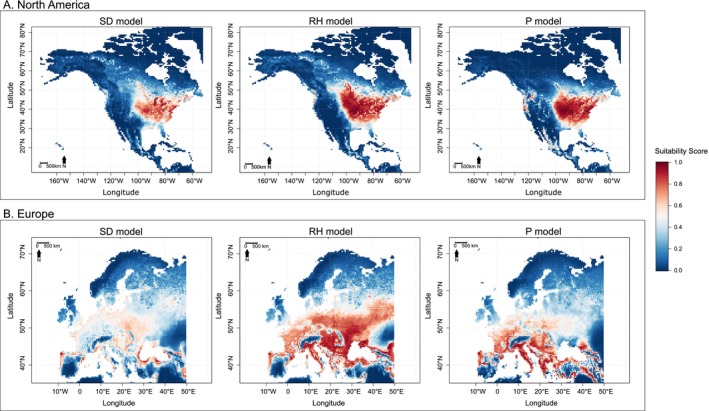 Figure 6
Peer Reviews
No public reviews on file for this paper yet. If you reviewed it on a platform where reviews are public (OpenReview, ICLR, NeurIPS, ICML), you can paste yours below so the community can read it here.
Videos
No videos yet. Explain this paper in a talk, walkthrough, or lecture? Add one.
Taxonomy
TopicsViral Infections and Vectors · Vector-borne infectious diseases · Mosquito-borne diseases and control