Differences in stewardship strategies between hospitals performing well and poorly on a risk-adjusted metric for post-discharge antibiotic use
Daniel J. Livorsi, James A. Merchant, Hyunkeun Cho, Matthew Bidwell Goetz, Bruce Alexander, Brice Beck, Michihiko Goto

TL;DR
The study found that hospitals with better antibiotic use after discharge had stronger stewardship practices, like regular physician-pharmacist collaboration and local prescribing guidelines.
Contribution
Identifies specific stewardship practices associated with better antibiotic use outcomes in hospitals.
Findings
Low-performing hospitals were less likely to have regular physician-pharmacist interactions.
Low-performing hospitals were less likely to have local antibiotic-prescribing guidelines.
Abstract
Stewardship processes were compared across 123 hospitals that differed on a risk-adjusted post-discharge antibiotic use metric. Low-performing hospitals were less likely than high-performing hospitals to report routine interactions between their stewardship physician and pharmacist(s) (OR 0.12, 95% CI 0.03–0.55) and to have local antibiotic-prescribing guidelines (OR 0.21, 95% CI 0.05–0.93)
Genes, proteins, chemicals, diseases, species, mutations and cell lines named across the full text — each resolved to its canonical identifier and authoritative record.
Click any figure to enlarge with its caption.
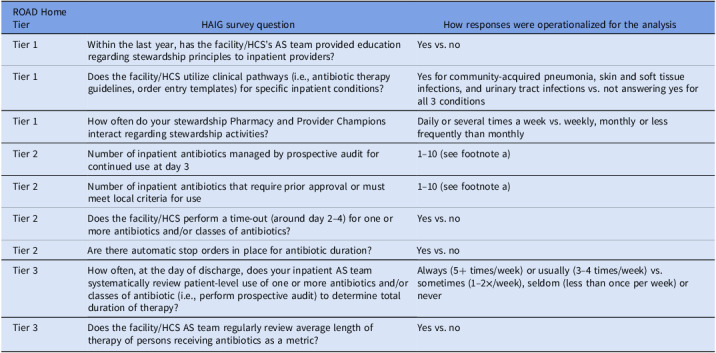 Figure 1
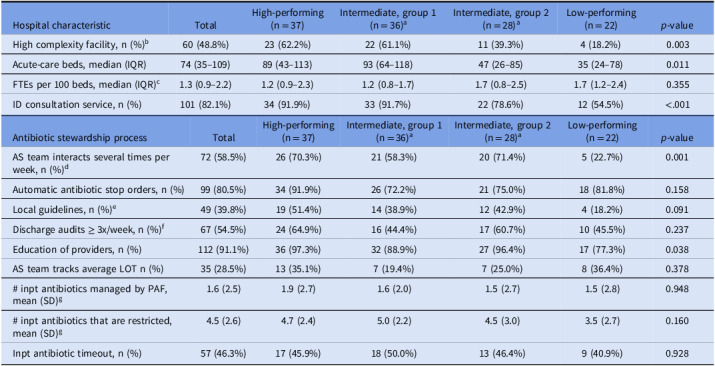 Figure 2
Peer Reviews
No public reviews on file for this paper yet. If you reviewed it on a platform where reviews are public (OpenReview, ICLR, NeurIPS, ICML), you can paste yours below so the community can read it here.
Videos
No videos yet. Explain this paper in a talk, walkthrough, or lecture? Add one.
Taxonomy
TopicsAntibiotic Use and Resistance · Patient Satisfaction in Healthcare · Pharmaceutical Practices and Patient Outcomes