The role of retroelements in Parkinson’s disease development
R.N. Mustafin

TL;DR
This paper explores how retroelements, like LINE1s and Alu elements, may contribute to Parkinson’s disease by affecting alpha-synuclein accumulation and inflammation in the brain.
Contribution
The paper introduces a novel hypothesis linking retroelement activation with Parkinson’s disease progression through antiviral response and microRNA mechanisms.
Findings
Alpha-synuclein aggregates in Parkinson’s disease may result from interactions with retroelement transcripts.
Activation of LINE1s and Alu elements in Parkinson’s patients is linked to mitochondrial dysfunction and neurodegeneration.
35 microRNAs derived from retroelements are identified as potential therapeutic targets for Parkinson’s disease.
Abstract
Parkinson’s disease is the second most common neurodegenerative disease characterized by accumulation of alpha-synuclein and Lewy bodies in the brain’s substantia nigra. Genetic studies indicate an association of various SNPs, many of which are located in intergenic and intronic regions, where retrotransposons and non-coding RNA genes derived from them reside, with this disease. Therefore, we hypothesize the influence of SNPs in retroelement genes on Parkinson’s disease development. A susceptibility factor is retrotransposons activation with age, since the disease is associated with aging. We hypothesized that alpha-synuclein accumulates in the brain due to its interaction with transcripts of activated retroelements. As a result of a defective antiviral response and a large number of RNA targets for this protein, its aggregates form Lewy bodies in neurons with inflammation and…
Genes, proteins, chemicals, diseases, species, mutations and cell lines named across the full text — each resolved to its canonical identifier and authoritative record.
Click any figure to enlarge with its caption.
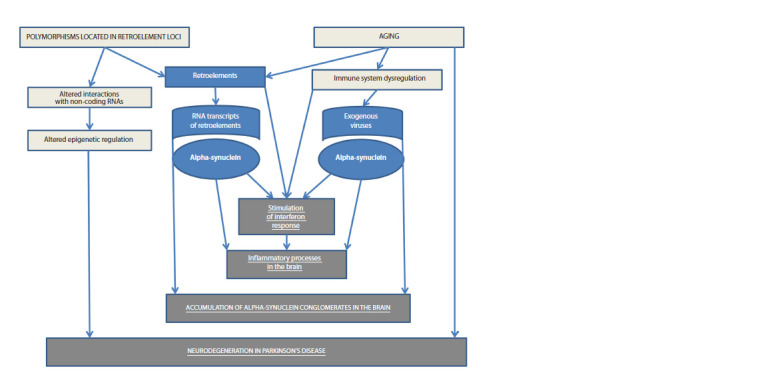 Figure 1
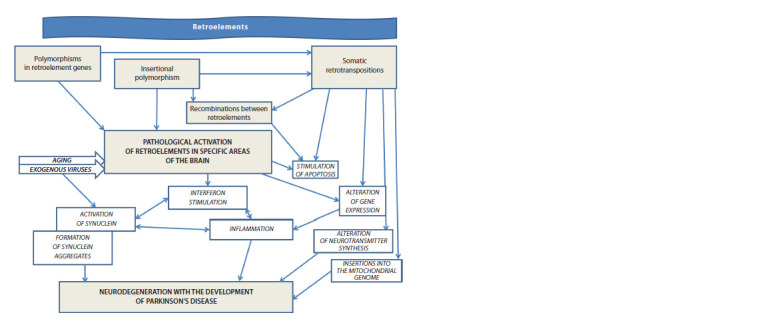 Figure 2
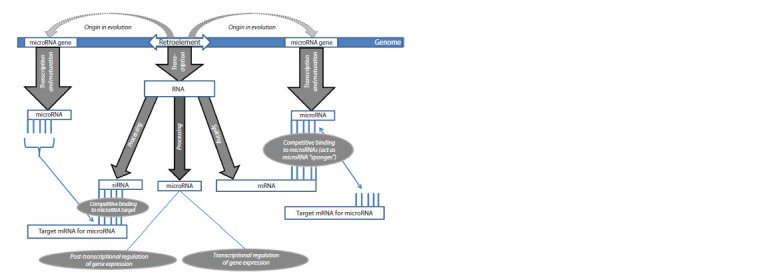 Figure 3
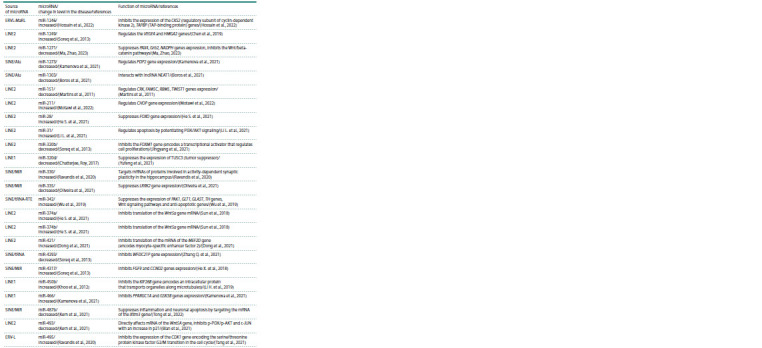 Figure 4
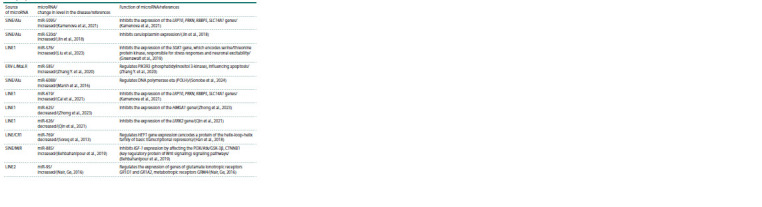 Figure 5
Peer Reviews
No public reviews on file for this paper yet. If you reviewed it on a platform where reviews are public (OpenReview, ICLR, NeurIPS, ICML), you can paste yours below so the community can read it here.
Videos
No videos yet. Explain this paper in a talk, walkthrough, or lecture? Add one.
Taxonomy
TopicsRNA regulation and disease · CRISPR and Genetic Engineering · Chromosomal and Genetic Variations