Tagus River microbial profile through nanopore sequencing on samples gathered from Prainha do Braco de Prata, Lisbon
Cristiano Pedroso-Roussado, Mariana Pestana, Ricardo Dias, Mónica Nunes, Pedro Pascoal, Marcelo Pereira, Nuno Nunes, Anyi Hu, Dave R. Clark, Cristiano Pedroso-Roussado

TL;DR
This study analyzed microbial communities in the Tagus River using nanopore sequencing and found Candidatus Pelagibacter, Egibacter, and Ralstonia as dominant genera, which may be involved in organic matter decomposition.
Contribution
The study provides a preliminary microbial profile of the Tagus River and highlights the potential of using microbial biomarkers to assess ecosystem services.
Findings
Candidatus Pelagibacter, Egibacter, and Ralstonia were the most abundant genera in the Tagus River samples.
These genera are likely involved in organic matter decomposition based on literature review.
More robust sampling is needed to better understand the microbial ecosystem services in the river.
Abstract
Freshwater ecosystems play a vital role for humans and more-than-humans, and their study can elucidate their dynamic state throughout time. However, there is not much knowledge about the microbial profiles and their relevance for the ecosystem balance is still unclear. In this Brief Report three freshwater samples collected in the Tagus River north margin were analysed through 16S-targeted nanopore sequencing and by customized bioinformatics pipeline. Our results revealed a consensual microbial profile with Candidatus Pelagibacter, Egibacter, and Ralstonia as the most abundant genera. Additionally, through a literature review we found that the ecosystem services provided by these genera are mostly related to organic matter decomposition. Despite the need for a more robust sampling and analyses, we conclude that there is potential to use microbial profile approaches to help define the…
Genes, proteins, chemicals, diseases, species, mutations and cell lines named across the full text — each resolved to its canonical identifier and authoritative record.
Click any figure to enlarge with its caption.
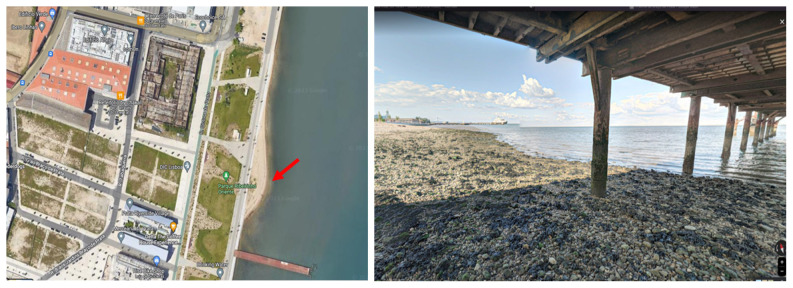 Figure 1
Peer Reviews
No public reviews on file for this paper yet. If you reviewed it on a platform where reviews are public (OpenReview, ICLR, NeurIPS, ICML), you can paste yours below so the community can read it here.
Videos
No videos yet. Explain this paper in a talk, walkthrough, or lecture? Add one.
Taxonomy
TopicsMicrobial Community Ecology and Physiology · Environmental DNA in Biodiversity Studies · Freshwater macroinvertebrate diversity and ecology