Executive functions and associated brain volumetry in children with persistent stunting and catch-up growth
Beena Koshy, Vedha Viyas Thilagarajan, Roshan S. Livingstone, Manikandan Srinivasan, Venkata Raghava Mohan, Rachel Beulah, Anitha Jasper, Sushil John, Gagandeep Kang

TL;DR
Stunted children show worse executive functions and brain volume differences compared to non-stunted peers, emphasizing the importance of early nutrition and care.
Contribution
The study links persistent stunting with specific brain volumetric changes and executive function deficits in children.
Findings
AS children had lower verbal fluency and inhibitory control scores compared to NS children.
AS children showed reduced brain volumes in the right occipital fusiform gyrus and left lateral occipital cortex.
Left pars triangularis and basal ganglia regions were also significantly reduced in AS children.
Abstract
Early childhood stunting can result in sub-optimal executive functions (EF), affecting academic achievements and economic potential in later life. This study hypothesized that children always stunted (AS) at ages 2, 5 and 9 years had lower EF than those who were never stunted (NS). A birth-cohort in Vellore, India was followed up with periodic anthropometric and development/cognitive measures over 2, 5 and 9 years of age. Based on stunting status at these time points, children were classified as NS, stunted at 2 years and caught up by 5 years (S2N5), stunted at 2 and 5 years but caught up later (S5N9), and AS. At 9th year, children underwent neuroimaging using 3T MRI scanner and EF assessment using FAS phonemic fluency test, colour cancellation test and colour trials tests (CTT). From the original birth-cohort of 251, 205 children were reviewed at 9 years. FAS phonemic fluency test…
Genes, proteins, chemicals, diseases, species, mutations and cell lines named across the full text — each resolved to its canonical identifier and authoritative record.
Click any figure to enlarge with its caption.
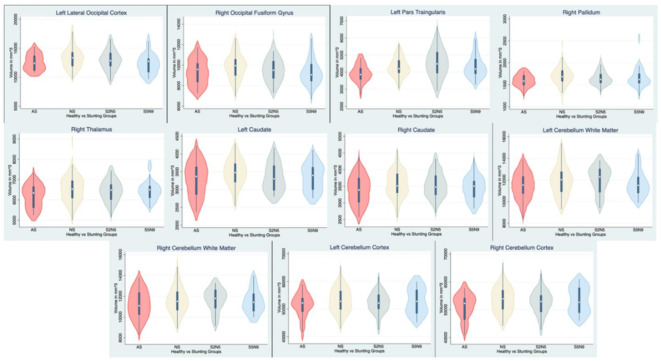 Figure 1
Peer Reviews
No public reviews on file for this paper yet. If you reviewed it on a platform where reviews are public (OpenReview, ICLR, NeurIPS, ICML), you can paste yours below so the community can read it here.
Videos
No videos yet. Explain this paper in a talk, walkthrough, or lecture? Add one.
Taxonomy
TopicsChild Nutrition and Water Access · Birth, Development, and Health · Infant Development and Preterm Care