Glial connexins in glaucoma
Qiuyi Song, Xi Wu, Jiawei Yang, Siqi Li, Junguo Duan

TL;DR
This review explores how glial connexins contribute to neuroinflammation and their potential role in glaucoma and possible treatments.
Contribution
The paper highlights the novel perspective of connexins as functional bridges in glial networks for glaucoma therapy.
Findings
Glial connexins are essential for maintaining CNS homeostasis and neuroprotection.
Connexins play a key role in neuroinflammation and glial network communication.
Targeting connexins may offer therapeutic strategies for glaucoma.
Abstract
Glial cells play a crucial role in maintaining central nervous system (CNS) homeostasis and facilitating the repair of neural tissue following injury. The regulation of neuroglia may serve as a safe and effective strategy for modulating neuroinflammatory responses and restoring glial homeostasis and defense functions. Given that the glial network is composed of connexin (CX) proteins, its neuroprotective role is extensive. Therefore, connexins should be considered as functional “bridges” within this network. This review examines evidence for the active involvement of glial networks in neuroinflammation under both physiological and pathological conditions and summarizes the role of CXs in glaucoma. Finally, potential therapeutic strategies for glaucoma are explored.
Genes, proteins, chemicals, diseases, species, mutations and cell lines named across the full text — each resolved to its canonical identifier and authoritative record.
Click any figure to enlarge with its caption.
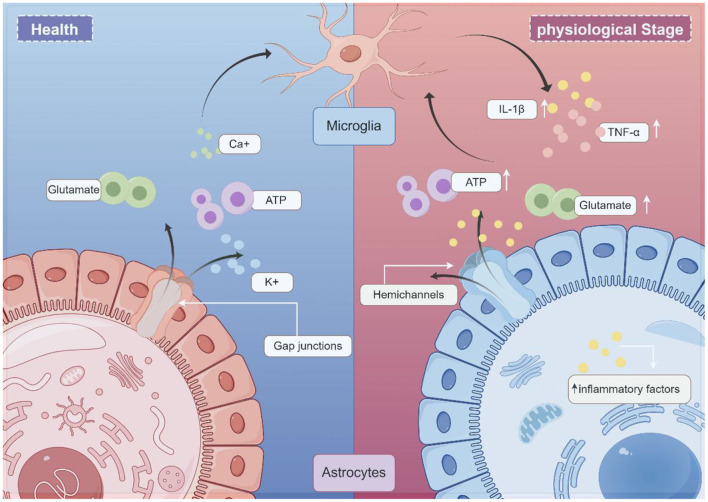 Figure 1
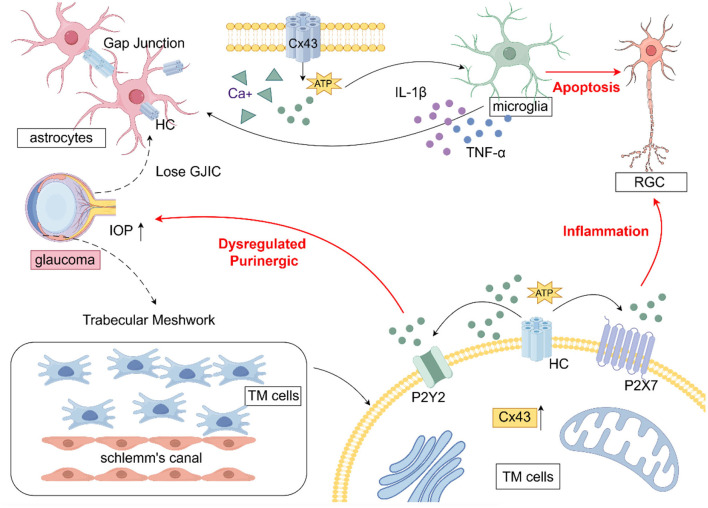 Figure 2
Peer Reviews
No public reviews on file for this paper yet. If you reviewed it on a platform where reviews are public (OpenReview, ICLR, NeurIPS, ICML), you can paste yours below so the community can read it here.
Videos
No videos yet. Explain this paper in a talk, walkthrough, or lecture? Add one.
Taxonomy
TopicsGlaucoma and retinal disorders · Connexins and lens biology · Nicotinic Acetylcholine Receptors Study