Neural speech tracking in a virtual acoustic environment: audio-visual benefit for unscripted continuous speech
Mareike Daeglau, Jürgen Otten, Giso Grimm, Bojana Mirkovic, Volker Hohmann, Stefan Debener

TL;DR
This study shows that seeing a speaker's lips helps understand speech better, especially in noisy environments, using natural and unscripted speech.
Contribution
The study introduces a novel use of unscripted speech in virtual environments to examine audio-visual benefits in speech perception.
Findings
Audio-visual speech tracking shows significant enhancement in noisy environments.
Lip movements are crucial for speech understanding in adverse listening conditions.
Individual speaker characteristics influence audio-visual integration effectiveness.
Abstract
The audio-visual benefit in speech perception—where congruent visual input enhances auditory processing—is well-documented across age groups, particularly in challenging listening conditions and among individuals with varying hearing abilities. However, most studies rely on highly controlled laboratory environments with scripted stimuli. Here, we examine the audio-visual benefit using unscripted, natural speech from untrained speakers within a virtual acoustic environment. Using electroencephalography (EEG) and cortical speech tracking, we assessed neural responses across audio-visual, audio-only, visual-only, and masked-lip conditions to isolate the role of lip movements. Additionally, we analysed individual differences in acoustic and visual features of the speakers, including pitch, jitter, and lip-openness, to explore their influence on the audio-visual speech tracking benefit.…
Genes, proteins, chemicals, diseases, species, mutations and cell lines named across the full text — each resolved to its canonical identifier and authoritative record.
Click any figure to enlarge with its caption.
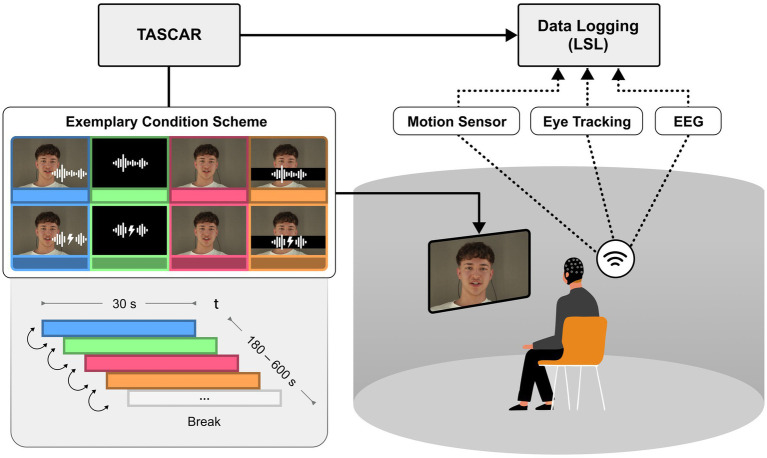 Figure 1
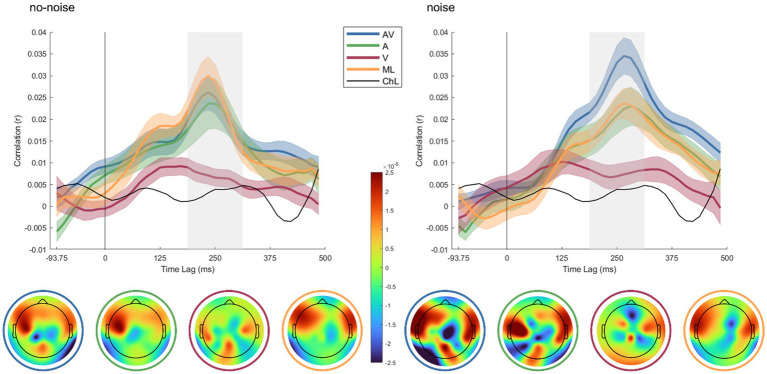 Figure 2
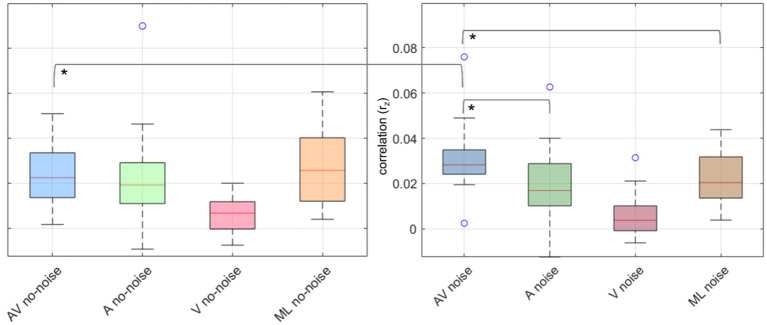 Figure 3
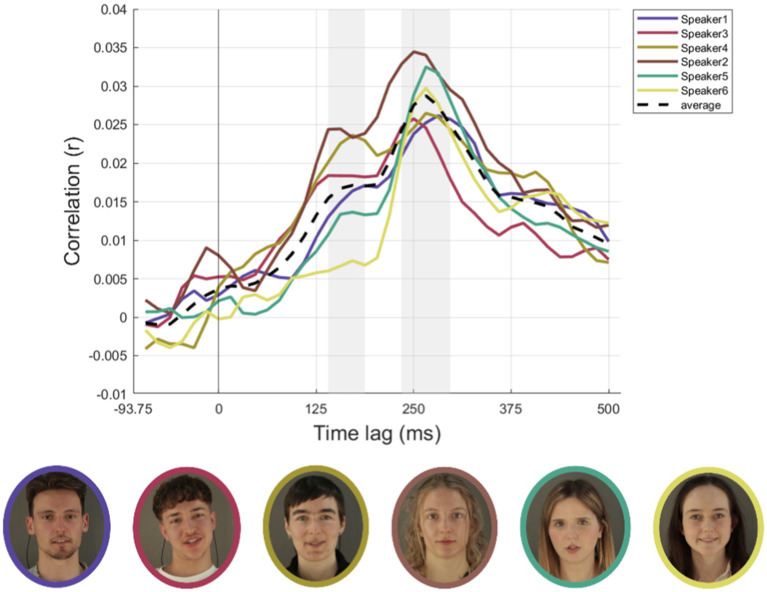 Figure 4
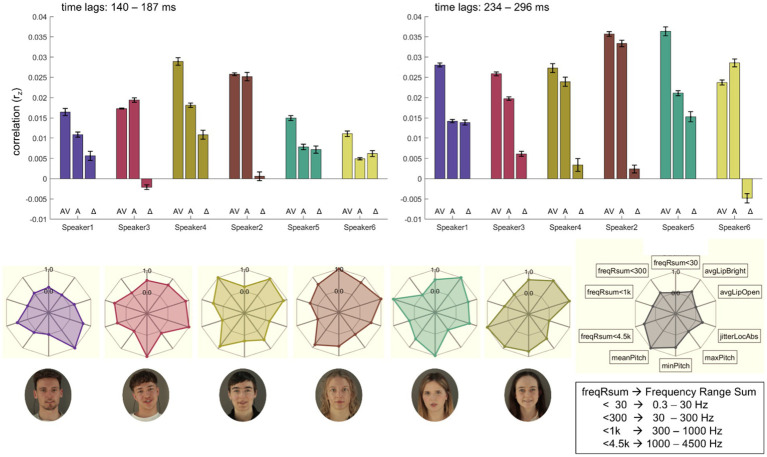 Figure 5
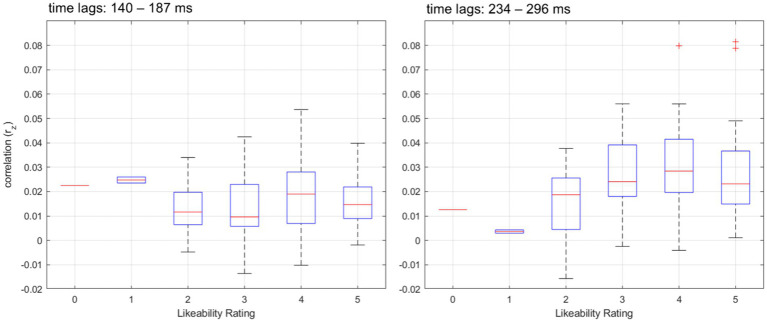 Figure 6
Peer Reviews
No public reviews on file for this paper yet. If you reviewed it on a platform where reviews are public (OpenReview, ICLR, NeurIPS, ICML), you can paste yours below so the community can read it here.
Videos
No videos yet. Explain this paper in a talk, walkthrough, or lecture? Add one.
Taxonomy
TopicsSpeech and Audio Processing · Hearing Loss and Rehabilitation · Multisensory perception and integration