Advancing syphilis diagnosis: multi-phase study evaluation of a TpN17-based double-antigen sandwich ELISA for detecting Treponema pallidum specific antibodies
Ângelo Antônio Oliveira Silva, Larissa Carvalho Medrado Vasconcelos, Natália Erdens Maron Freitas, Talita Andrade Oliva, Miralba Freire Carvalho Ribeiro Silva, Isadora Cristina Siqueira, Edimilson Domingos Silva, Keila Gisele Azevedo Figueiredo Santos, Maria Amélia Virgens Lima

TL;DR
This study evaluates a new ELISA test using the TpN17 protein to diagnose syphilis, showing high accuracy and agreement with existing tests.
Contribution
The study introduces and validates a TpN17-based double-antigen sandwich ELISA for syphilis with strong diagnostic metrics.
Findings
The TpN17-based ELISA showed an AUC of 98.7% and Cohen’s Kappa of 0.91 in phase I.
Phase II results included 100% specificity, 88.9% sensitivity, and a diagnostic odds ratio of 13,600.
Cross-reactivity was observed in 2.6–11.5% of samples for other diseases like Chagas and HCV.
Abstract
Syphilis, a sexually transmitted infection caused by the bacterium Treponema pallidum, has high incidence rates among adults, pregnant women, and newborns. Diagnostic procedures typically involve a treponemal test (such as ELISA, CMIA, and IFI), followed by a non-treponemal test (VDRL and RPR). This study aimed to assess the diagnostic performance of a double antigen sandwich ELISA (DAgS-ELISA) using the recombinant protein TpN17, analyzing serum samples from both infected and not infected with T. pallidum. A total of 712 samples were deemed eligible and recharacterized using VDRL, ELISA, and FTA-ABS, with 613 ultimately included in the evaluation: 180 T. pallidum-positive, 169 T. pallidum-negative, and 264 positive samples for other diseases. The assay was standardized using checkerboard titration and evaluated based on the area under the ROC curve (AUC), sensitivity, specificity,…
Genes, proteins, chemicals, diseases, species, mutations and cell lines named across the full text — each resolved to its canonical identifier and authoritative record.
Click any figure to enlarge with its caption.
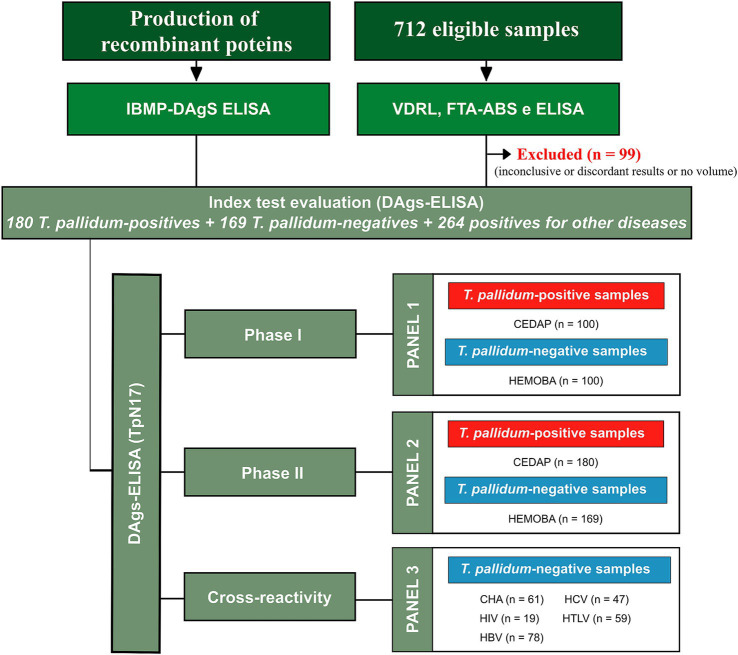 Figure 1
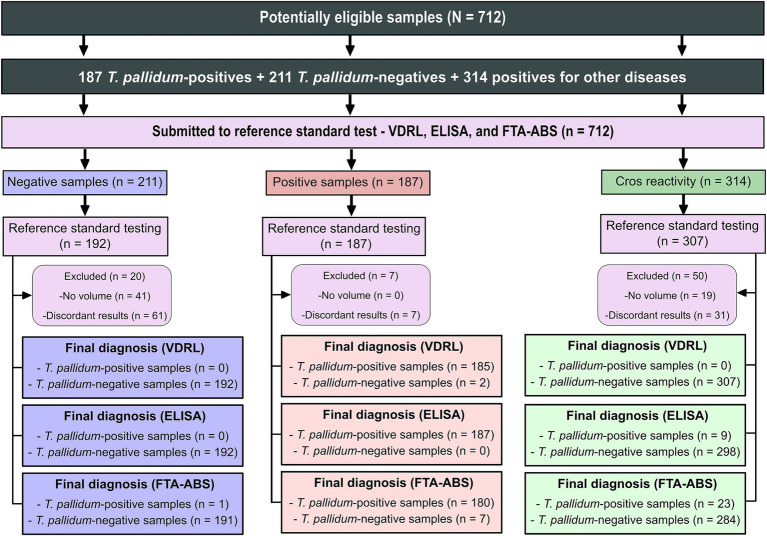 Figure 2
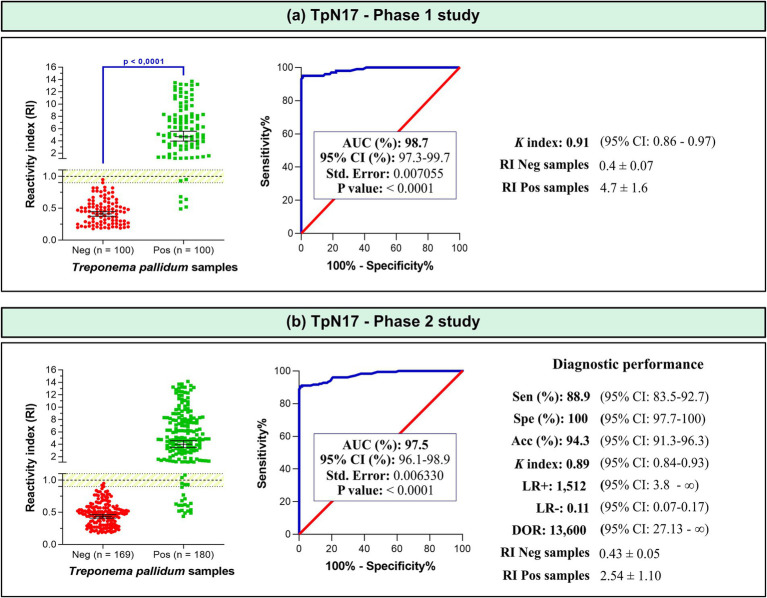 Figure 3
 Figure 4
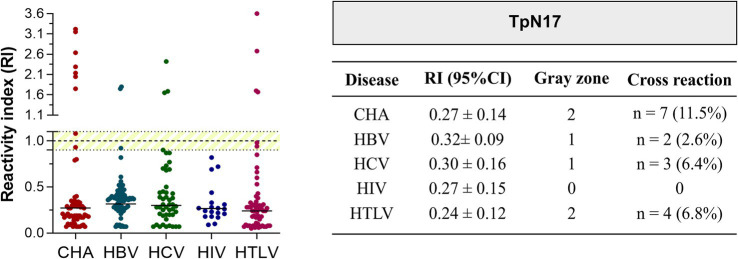 Figure 5
Peer Reviews
No public reviews on file for this paper yet. If you reviewed it on a platform where reviews are public (OpenReview, ICLR, NeurIPS, ICML), you can paste yours below so the community can read it here.
Videos
No videos yet. Explain this paper in a talk, walkthrough, or lecture? Add one.
Taxonomy
TopicsSyphilis Diagnosis and Treatment · Reproductive tract infections research · Virology and Viral Diseases