Spinal cord stimulation using time-dynamic pulses achieves longer reversal of allodynia compared to tonic pulses in a rat model of neuropathic pain
Changfang Zhu, Ki-Soo Jeong, Muhammad Edhi, Victoria Rogness, Carl Y. Saab, Rosana Esteller

TL;DR
Time-dynamic spinal cord stimulation reverses pain longer than traditional methods in a rat model of neuropathic pain.
Contribution
Time-dynamic pulses show longer-lasting analgesic effects compared to tonic stimulation in neuropathic pain models.
Findings
TDPs and tonic stimulation both reversed allodynia within 30 minutes.
TDPs showed slower analgesia wash-out rates compared to tonic stimulation.
TDPs maintained analgesic efficacy longer when stimulation was extended to 90 minutes.
Abstract
Spinal cord stimulation (SCS) utilizing time-dynamic pulses (TDPs) is an emergent field of neuromodulation that continuously and automatically modulates pulse parameters. We previously demonstrated that TDPs delivered for 60 min at paresthesia-free or minimal paresthesia amplitudes significantly reversed allodynia in a rat model of neuropathic pain. Because the anti-allodynic effect was observed to persist post-stimulation, we hypothesized that the anti-nociceptive effects of TDPs may persist longer than those of tonic stimulation. We extended SCS stimulation period up to 90 min and investigated the temporal dynamics of SCS-induced analgesia through PWT analysis of the aggregated data from both cohorts. Both TDPs and tonic stimulation reversed paw withdrawal thresholds (PWT) to near pre-neuropathic levels within 30 min. Most TDPs exhibited significantly slower ramp-up slope (analgesia…
Genes, proteins, chemicals, diseases, species, mutations and cell lines named across the full text — each resolved to its canonical identifier and authoritative record.
Click any figure to enlarge with its caption.
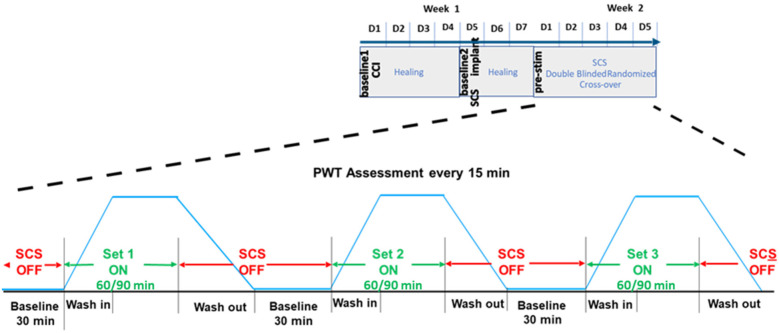 Figure 1
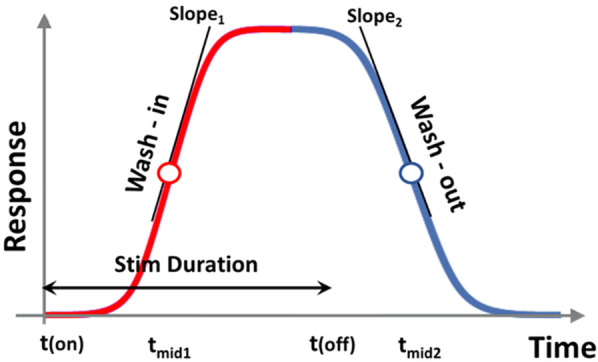 Figure 2
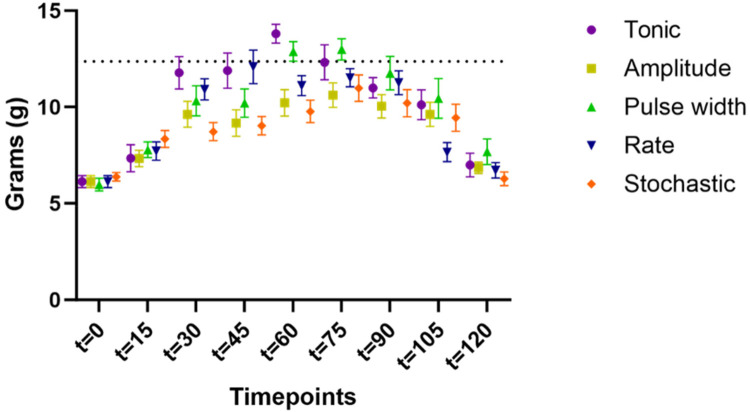 Figure 3
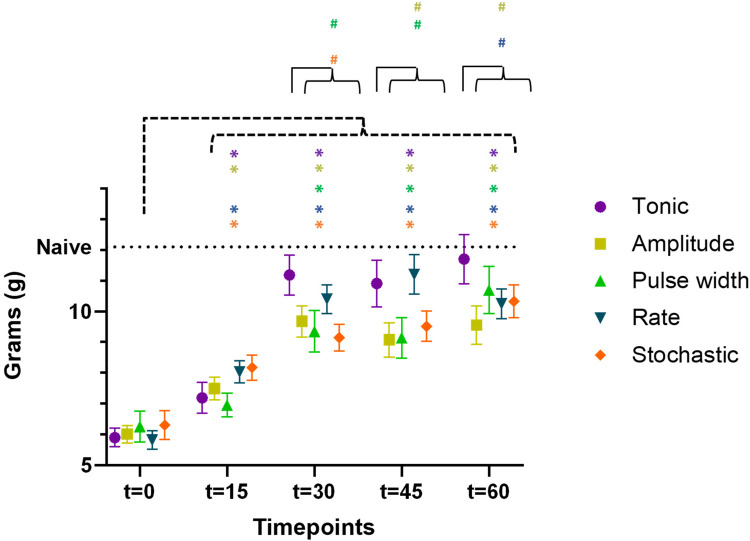 Figure 4
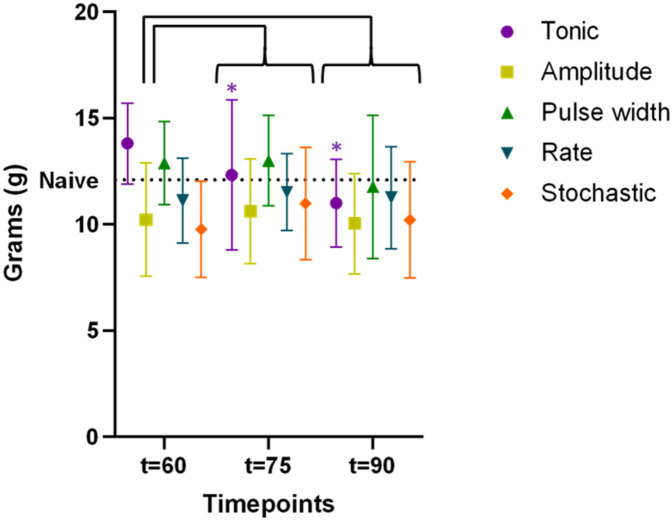 Figure 5
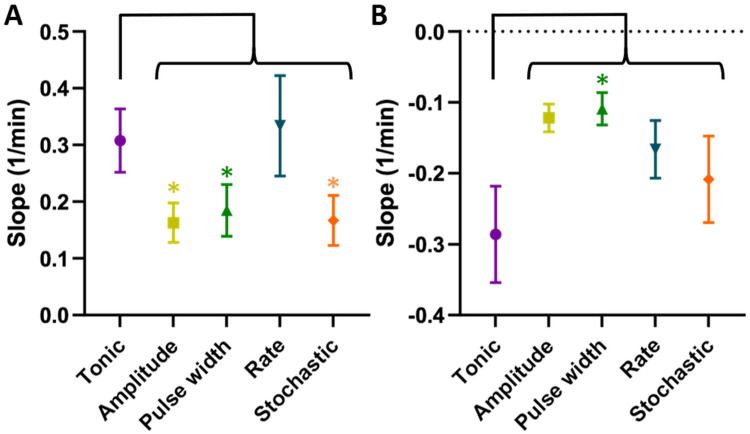 Figure 6
Peer Reviews
No public reviews on file for this paper yet. If you reviewed it on a platform where reviews are public (OpenReview, ICLR, NeurIPS, ICML), you can paste yours below so the community can read it here.
Videos
No videos yet. Explain this paper in a talk, walkthrough, or lecture? Add one.
Taxonomy
TopicsPain Management and Treatment · Musculoskeletal pain and rehabilitation · Pain Mechanisms and Treatments