Inverse association between triglyceride–glucose index and maximal oxygen uptake in US young and middle-aged population: a cross-sectional study
Bin Zhang, Junxing Lai, Dan Li, Yongfeng Li, Peng Wang, Shangan Cai, Qiang Ren, Dong Li

TL;DR
This study finds that higher triglyceride–glucose index is linked to lower cardiovascular fitness in US young and middle-aged adults.
Contribution
The study establishes a novel inverse association between the TyG index and maximal oxygen uptake (VO2max) in a large US population.
Findings
Each 1 unit increase in the TyG index was associated with a significant decrease in VO2max.
Diastolic blood pressure, white blood cell count, and C-reactive protein partially mediate the TyG-VO2max relationship.
Hemoglobin may suppress the inverse association between the TyG index and VO2max.
Abstract
The triglyceride–glucose (TyG) index has been linked to impaired cardiovascular fitness (CVF). However, the available evidence regarding the direct relationship between the TyG index and maximal oxygen uptake (VO2max) is limited. This study aims to investigate the association between the TyG index and VO2max. We conducted a retrospective cross-sectional study involving 3,571 participants who completed a CVF examination as part of the National Health and Nutrition Examination Survey (NHANES) 1999–2004. Data on triglycerides, glucose, and VO2max were collected from all participants. The TyG index was calculated using the formula: Ln[triglyceride (TG)(mg/dl) × fasting plasma glucose (FPG)(mg/dl)/2]. Linear regression analysis was utilized to substantiate the research objectives. The complex sampling design and mobile examination center sample weights were considered. In multivariable…
Genes, proteins, chemicals, diseases, species, mutations and cell lines named across the full text — each resolved to its canonical identifier and authoritative record.
Click any figure to enlarge with its caption.
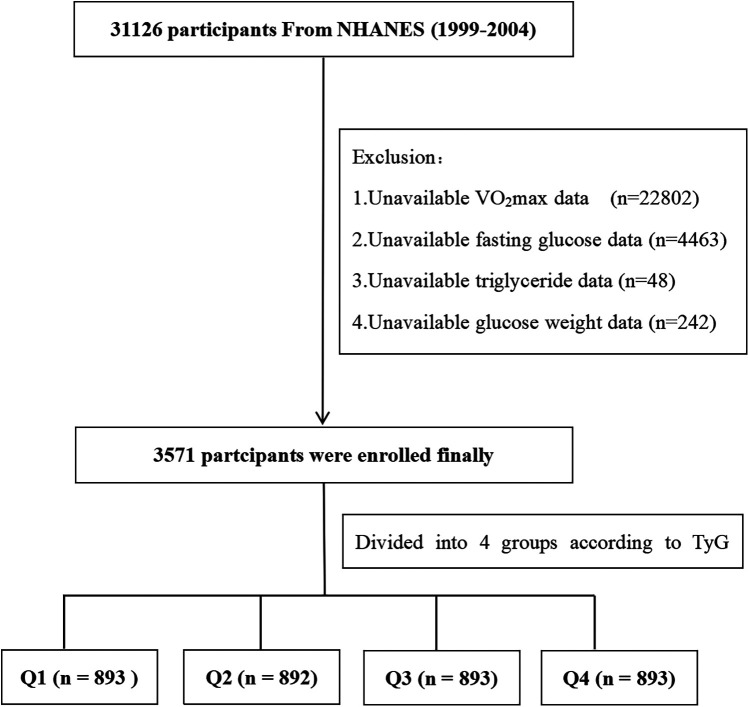 Figure 1
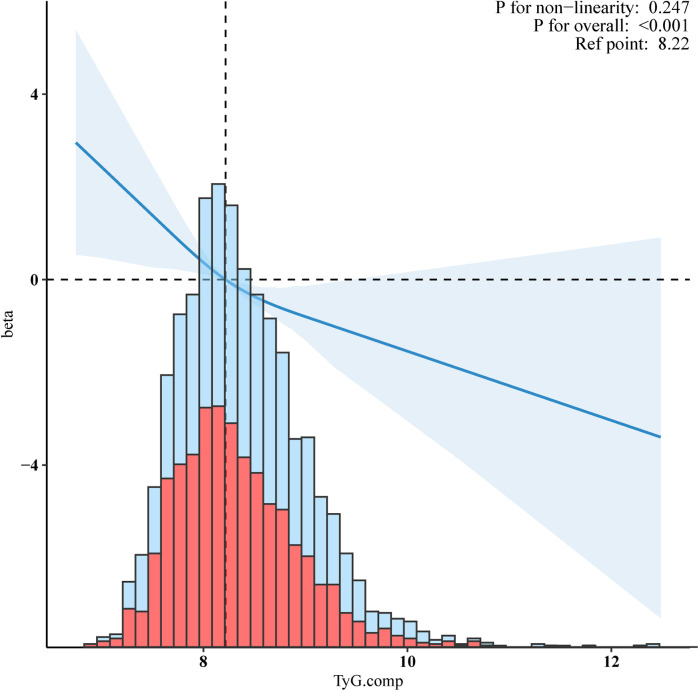 Figure 2
 Figure 3
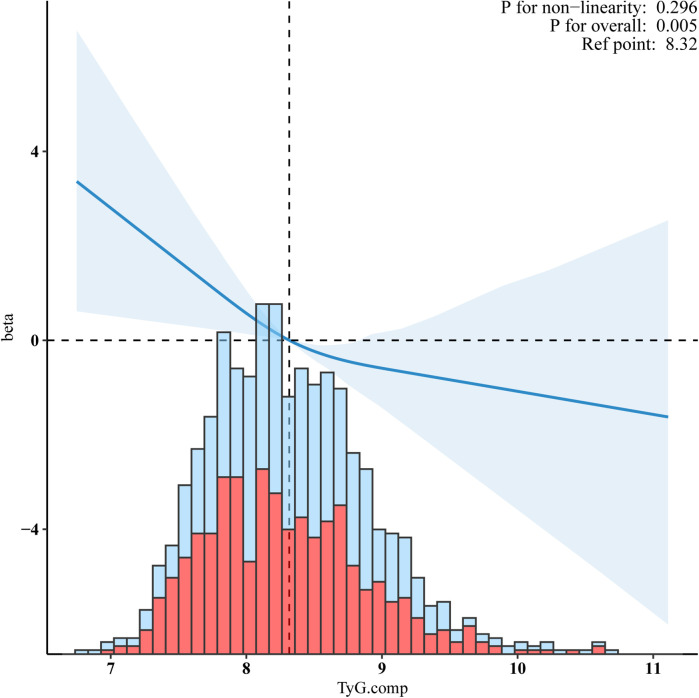 Figure 4
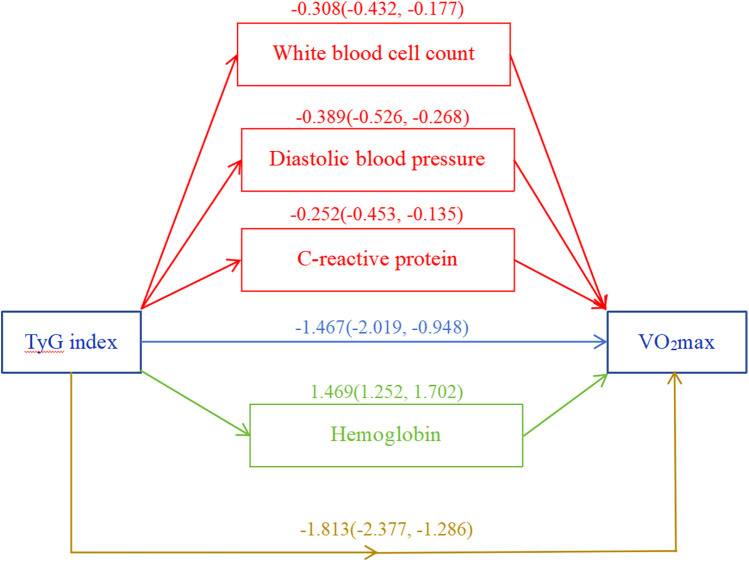 Figure 5
Peer Reviews
No public reviews on file for this paper yet. If you reviewed it on a platform where reviews are public (OpenReview, ICLR, NeurIPS, ICML), you can paste yours below so the community can read it here.
Videos
No videos yet. Explain this paper in a talk, walkthrough, or lecture? Add one.
Taxonomy
TopicsCardiovascular Function and Risk Factors · Cardiovascular and exercise physiology · Heart Rate Variability and Autonomic Control