Candida Parapsilosis: a Rare Culprit of Shunt Infection in an Adult
Ersin Ikizoglu, Mert Arslan, Irmak Guzel, Ceren Kizmazoglu, Vildan Avkan Oguz, Burak Sade

TL;DR
This paper reports a rare case of a brain shunt infection caused by Candida parapsilosis in an adult, highlighting its unusual clinical presentation.
Contribution
The novelty lies in documenting a rare fungal infection in an adult VP shunt, which is typically seen in newborns or immunocompromised individuals.
Findings
Candida parapsilosis caused a VP shunt infection in a 53-year-old male with subarachnoid hemorrhage.
The infection occurred despite the absence of typical risk factors like immunocompromise or ICU admission.
The case underscores the need for considering rare fungal pathogens in shunt infections.
Abstract
Candida parapsilosis is an exceedingly rare cause of ventriculoperitoneal (VP) shunt infection, even in patients who have a history of long-term antibiotic use, immune-compromised newborns, and intensive care unit patients. We hereby report a case of a 53-year-old male who presented with subarachnoid hemorrhage and had a complicated postoperative course due to C. parapsilosis infection, and we discuss the pertinent clinical aspects.
Genes, proteins, chemicals, diseases, species, mutations and cell lines named across the full text — each resolved to its canonical identifier and authoritative record.
Click any figure to enlarge with its caption.
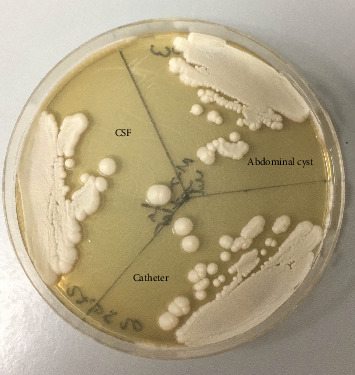 Figure 1
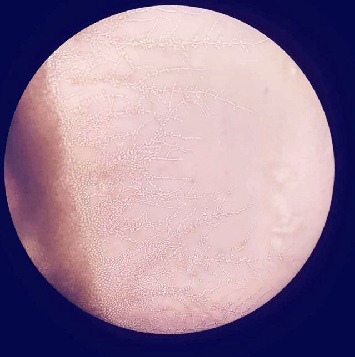 Figure 2
Peer Reviews
No public reviews on file for this paper yet. If you reviewed it on a platform where reviews are public (OpenReview, ICLR, NeurIPS, ICML), you can paste yours below so the community can read it here.
Videos
No videos yet. Explain this paper in a talk, walkthrough, or lecture? Add one.
Taxonomy
TopicsAntifungal resistance and susceptibility · Cystic Fibrosis Research Advances · Infections and bacterial resistance