Standardization of the use of opsonized zymosan as stimulus in the 1,2,3-dihydrorhodamine technique for the assessment of neutrophil respiratory burst
Uriel Pérez-Blanco, Jenniffer Yissel Girón, Guillermo Juárez-Vega, María Jiménez, Carlos Sánchez, Ricardo Rioja, Sara Espinosa-Padilla, Lizbeth Blancas-Galicia

TL;DR
This paper standardizes the use of opsonized zymosan in a technique to assess neutrophil respiratory burst, important for diagnosing chronic granulomatous disease.
Contribution
The study establishes 50 µg of opsonized zymosan as the optimal and reproducible stimulus for the 1,2,3-dihydrorhodamine technique.
Findings
Phorbol-12-myristate 13-acetate increased fluorescence intensity in healthy subjects.
50 µg of opsonized zymosan was found to be the optimal and reproducible stimulus.
The optimized technique is proposed for routine clinical diagnosis of chronic granulomatous disease.
Abstract
Chronic granulomatous disease is a defect in phagocytosis due to deficiency of gp91 phox , p22 phox , p47 phox , p40 phox , and p67 phox (classic form of the disease). Recently, EROS and p40phox deficiency were described as responsible for the non-classical form of the disease. The 1,2,3-dihydrorhodamine oxidation technique, with phorbol-12-myristate 13-acetate as a stimulus, is performed to diagnose the classic chronic granulomatous disease. However, oxidation mediated by EROS and p40 phox requires stimuli such as zymosan, Escherichia coli, or Staphylococcus aureus. Estandarizar el estímulo con zimosán en la técnica de la 1,2,3-dihidrorrodamina para evaluar el estallido respiratorio del neutrófilo. Se obtuvo sangre de cinco sujetos sanos previo consentimiento informado. Se utilizó la técnica de 1,2,3-dihidrorrodamina usando el forbol-12-miristato- 13-acetato como control y…
Genes, proteins, chemicals, diseases, species, mutations and cell lines named across the full text — each resolved to its canonical identifier and authoritative record.
Click any figure to enlarge with its caption.
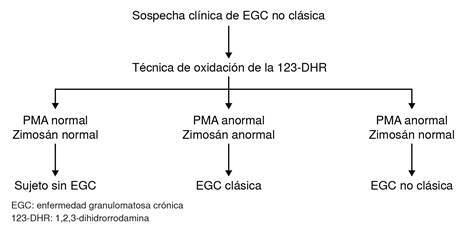 Figure 1
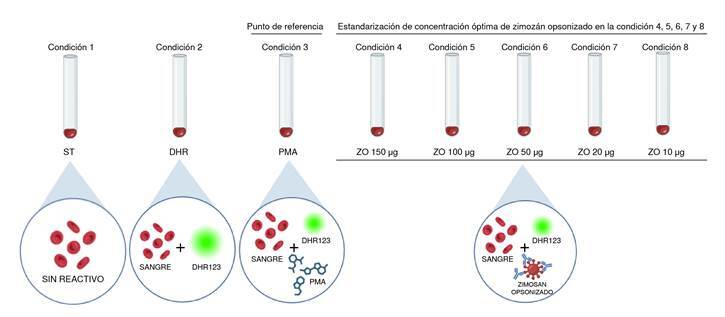 Figure 2
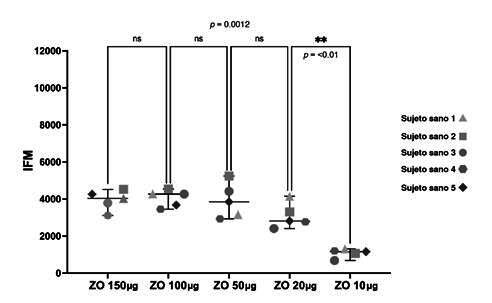 Figure 3
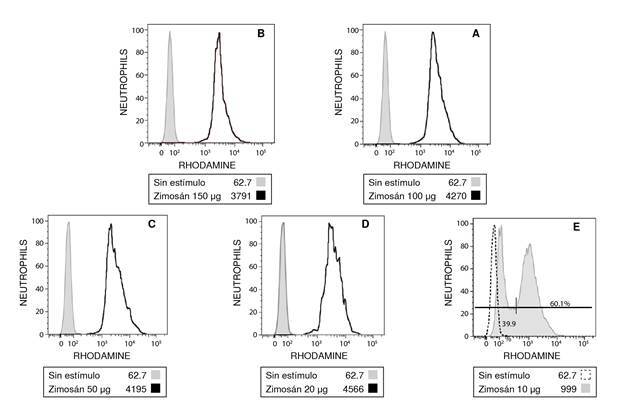 Figure 4
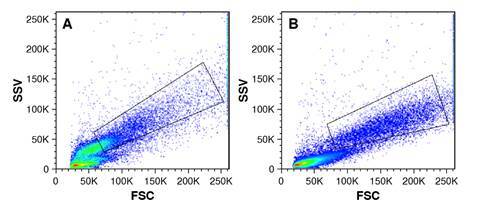 Figure 5
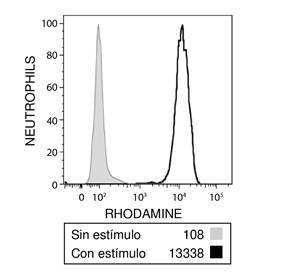 Figure 6
Peer Reviews
No public reviews on file for this paper yet. If you reviewed it on a platform where reviews are public (OpenReview, ICLR, NeurIPS, ICML), you can paste yours below so the community can read it here.
Videos
No videos yet. Explain this paper in a talk, walkthrough, or lecture? Add one.
Taxonomy
TopicsNeonatal Respiratory Health Research · Respiratory viral infections research · Neuroscience of respiration and sleep