Clinical and genetic description of patients with chronic granulomatous disease in a pediatric hospital
Xareni Berriozábal-Villarruel, Guadalupe Fernanda Godínez-Zamora, Patricia Baeza-Capetillo, Uriel Pérez-Blanco, Sara Elva Espinosa-Padilla, Jesús Aguirre-Hernández, Lizbeth Blancas-Galicia, Omar Josué Saucedo-Ramírez

TL;DR
This paper describes four male patients with chronic granulomatous disease, focusing on their clinical features and genetic mutations, particularly in the CYBB gene.
Contribution
The study provides a detailed clinical and genetic characterization of CGD cases in a Mexican pediatric hospital, highlighting the role of CYBB mutations and BCG infection as an initial manifestation.
Findings
Three out of four patients had CYBB gene mutations, including nonsense variants and deletions.
BCG infection was a common initial manifestation in patients with CYBB mutations.
The patient without p47phox expression had a less severe clinical course compared to those with CYBB deletions.
Abstract
La enfermedad granulomatosa crónica es un error innato de la inmunidad caracterizado por aumento de la susceptibilidad a desarrollar infecciones por hongos y bacterias, e inflamación no regulada. Se produce por defectos en la coenzima NADPH oxidasa y la proteína EROS. Caracterizar clínica y genéticamente cuatro pacientes con enfermedad granulomatosa crónica del Hospital Infantil de México Federico Gómez. Los pacientes con diagnóstico de enfermedad granulomatosa crónica diagnosticados por la técnica de oxidación de dihidrorrodamina, fueron caracterizados molecular y genéticamente mediante la medición de la expresión de las subunidades de la NADPH oxidasa, y por secuenciación y análisis de exorna. Se obtuvieron diferentes variables de la historia clínica y se describió cada una de ellas. Se describieron cuatro pacientes de sexo masculino con enfermedad granulomatosa crónica. En tres se…
Genes, proteins, chemicals, diseases, species, mutations and cell lines named across the full text — each resolved to its canonical identifier and authoritative record.
Click any figure to enlarge with its caption.
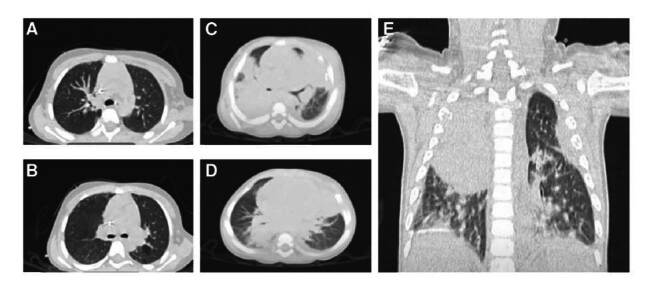 Figure 1
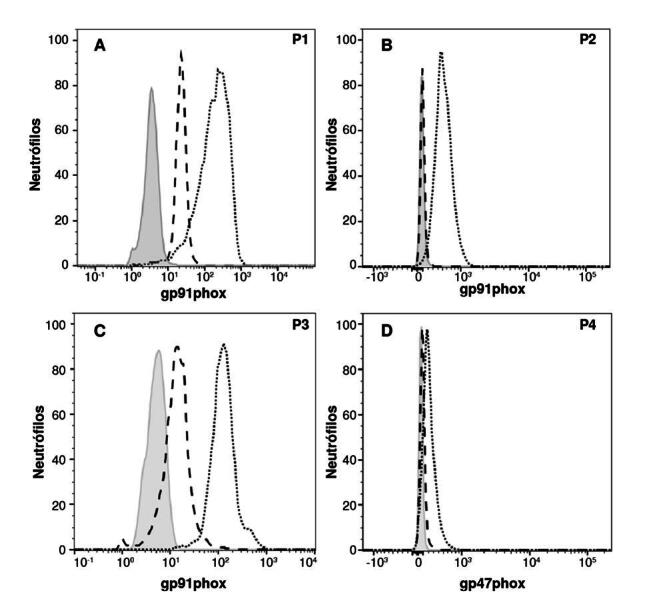 Figure 2
Peer Reviews
No public reviews on file for this paper yet. If you reviewed it on a platform where reviews are public (OpenReview, ICLR, NeurIPS, ICML), you can paste yours below so the community can read it here.
Videos
No videos yet. Explain this paper in a talk, walkthrough, or lecture? Add one.
Taxonomy
TopicsNeutrophil, Myeloperoxidase and Oxidative Mechanisms · Blood disorders and treatments · Immune Response and Inflammation