Chronic mucocutaneous candidiasis, mycobacterial infections and rosacea in a Mexican adult with STAT1 gain of function
Valeria Valerio-Gómez, Uriel Pérez-Blanco, Guillermo Velázquez-Sámano, Andrea Aída Velasco-Medina, Antonio Albarrán, Itzel Yoselín Sánchez, Laura Berrón-Ruiz, Sara Espinosa-Padilla, Lizbeth Blancas-Galicia

TL;DR
A Mexican adult with a STAT1 gain-of-function mutation developed chronic fungal infections, mycobacterial infections, and rosacea, highlighting the role of STAT1 mutations in immune-related diseases.
Contribution
This case report confirms a previously described STAT1 gain-of-function mutation (p.Arg321Gly) in an adult with chronic infections and rosacea.
Findings
A 27-year-old patient with STAT1 gain-of-function mutation presented with chronic mucocutaneous candidiasis, mycobacterial infections, and rosacea.
The patient was found to carry the c.961 A>G (p.Arg321Gly) variant in the STAT1 gene, previously associated with increased STAT1 activity.
The case illustrates that STAT1 mutations can lead to severe and recurrent infections in adults.
Abstract
El STAT1 (Signal Transducer and Activator of Transcription 1) es un factor de transcripción citoplasmático, cuya función es la regulación del crecimiento, la diferenciación, la proliferación, el metabolismo y la apoptosis celular. La vía de señalización JAK/STAT, mediada por el interferon, participa en la eliminación de agentes patógenos intracelulares y virus. Las variantes patógenas de STAT1 pueden producir una función deficiente o incrementada. El aumento de la función o actividad del factor de transcripción STAT1, descrito en el 2011, ocurre por su fosforilación excesiva. Los portadores de estas variantes patogénicas pueden desarrollar enfermedades autoinmunitarias e inflamatorias, y son susceptibles a infecciones por hongos, virus y bacterias. La manifestación temprana y común es la candidiasis mucocutánea crónica. Este reporte trata sobre un paciente, en cuyo primer año de vida,…
Genes, proteins, chemicals, diseases, species, mutations and cell lines named across the full text — each resolved to its canonical identifier and authoritative record.
Click any figure to enlarge with its caption.
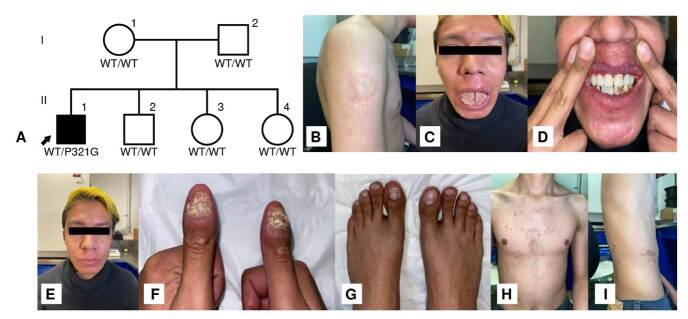 Figure 1
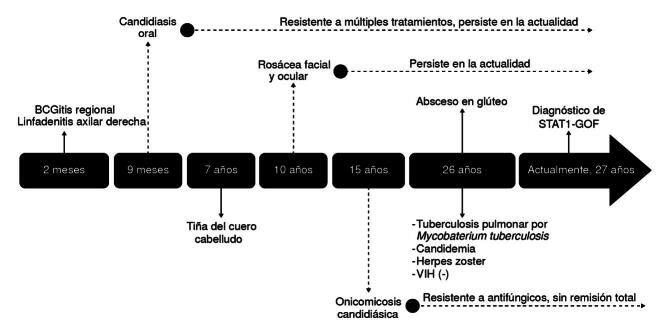 Figure 2
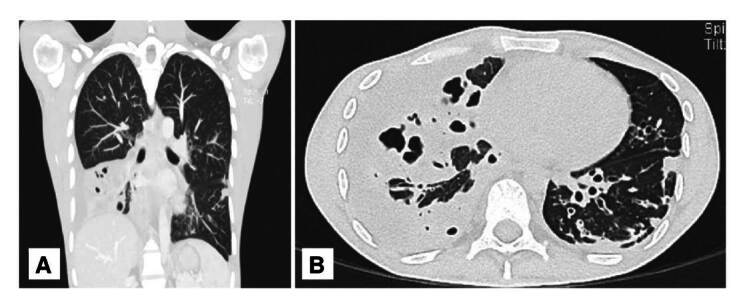 Figure 3
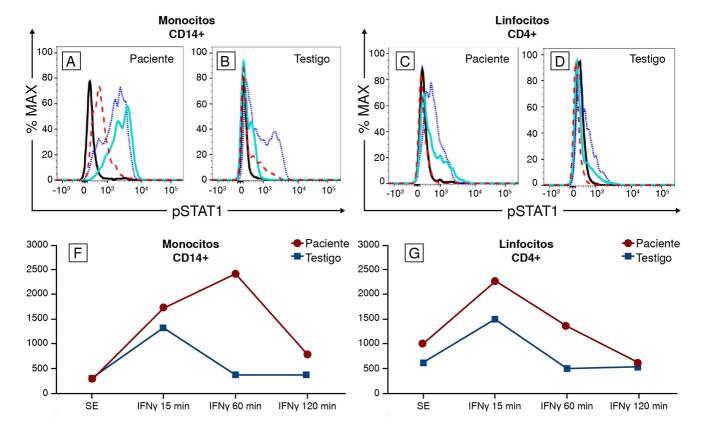 Figure 4
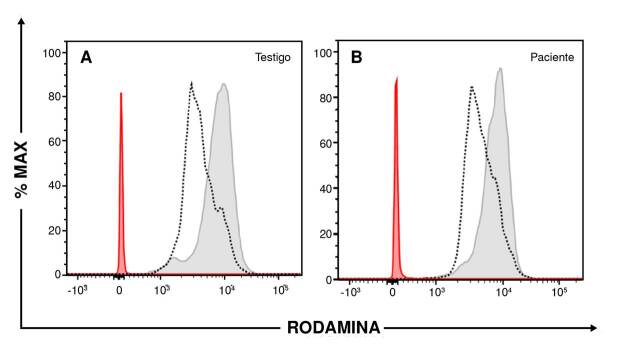 Figure 5
Peer Reviews
No public reviews on file for this paper yet. If you reviewed it on a platform where reviews are public (OpenReview, ICLR, NeurIPS, ICML), you can paste yours below so the community can read it here.
Videos
No videos yet. Explain this paper in a talk, walkthrough, or lecture? Add one.
Taxonomy
TopicsImmunodeficiency and Autoimmune Disorders · Antifungal resistance and susceptibility · Fungal Infections and Studies