Prediction of PaO2 from SpO2 values in critically ill invasively ventilated patients: rationale and protocol for a patient–level analysis of ERICC, LUNG SAFE, PRoVENT and PRoVENT–iMiC (PRoPERLy II)
Simon Corrado Serafini, David M. P. van Meenen, Luigi Pisani, Ary Serpa, Luciano César Pontes Azevedo, Tai Pham, Eya Sahraoui, Giacomo Bellani, John G. Laffey, Marcus J. Schultz, Guido Mazzinari

TL;DR
This study aims to compare methods for predicting arterial oxygen levels using pulse oximetry data in critically ill patients.
Contribution
The novelty lies in evaluating the accuracy of PaO2 prediction equations from SpO2 in a pooled database of four critical care studies.
Findings
The study will assess the accuracy of existing equations to predict PaO2 from SpO2 in critically ill patients.
It will compare risk stratification using measured versus predicted PaO2/FiO2 ratios.
Findings could influence clinical practices in settings with limited access to arterial blood gas analysis.
Abstract
In patients with acute respiratory distress syndrome (ARDS), mortality risk is typically assessed using the arterial partial pressure of oxygen (PaO2) divided by the fraction of inspired oxygen (FiO2), known as the PaO2/FiO2 ratio. Recently, the SpO2/FiO2 ratio, which uses peripheral oxygen saturation (SpO2) instead of PaO2, has been suggested as a reasonable alternative when there is little access to arterial blood gas analyses. Additionally, equations that predict PaO2 from SpO2 values could offer another viable method for assessment. To evaluate the accuracy of methods for predicting PaO2 from SpO2 values and compare risk stratification based on measured versus predicted PaO2/FiO2 ratios using a large database that harmonizes the individual data of patients included in four observational studies. The individual data from four observational studies (‘Epidemiology of Respiratory…
Genes, proteins, chemicals, diseases, species, mutations and cell lines named across the full text — each resolved to its canonical identifier and authoritative record.
Click any figure to enlarge with its caption.
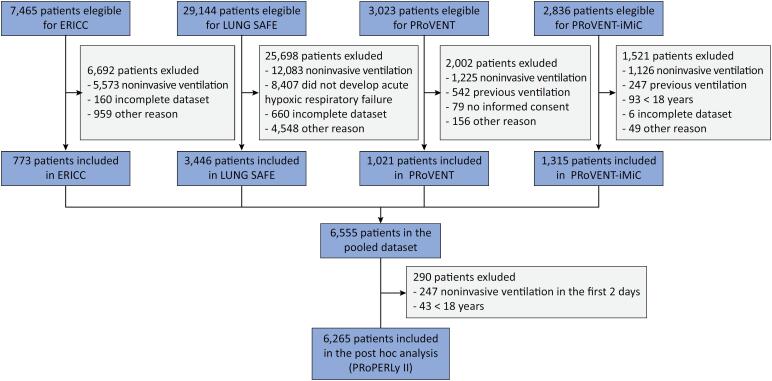 Figure 1
Peer Reviews
No public reviews on file for this paper yet. If you reviewed it on a platform where reviews are public (OpenReview, ICLR, NeurIPS, ICML), you can paste yours below so the community can read it here.
Videos
No videos yet. Explain this paper in a talk, walkthrough, or lecture? Add one.
Taxonomy
TopicsRespiratory Support and Mechanisms · Intensive Care Unit Cognitive Disorders · Cardiac Arrest and Resuscitation