Real-world evidence in gynecologic cancers presented at key oncology conferences in the United States: Distribution and factors related to high-tier acceptance
Elizabeth A. Szamreta, Mansi Modi, Ramu Periyasamy, Bhavani Yamsani, Pattabhi Machiraju, Neetu Menghani, Matthew Monberg

TL;DR
This study examines the role of real-world evidence in gynecologic cancer research presented at major U.S. oncology conferences, finding that such evidence is common but less visible than clinical trials.
Contribution
The study provides the first detailed analysis of RWE abstracts in gynecologic cancers at key U.S. oncology conferences.
Findings
RWE abstracts made up 77% of the included studies, with a higher proportion at SGO than ASCO.
Most RWE abstracts were accepted as posters, not oral presentations, and were mostly retrospective.
Molecular analyses and treatment efficacy outcomes were the most common in RWE abstracts.
Abstract
To describe the distribution, trends, and characteristics of types of real-world evidence (RWE) abstracts presented at key oncology congresses. Data on gynecologic cancers (cervical, ovarian, endometrial, and multiple gynecologic/other) were extracted from the American Society of Clinical Oncology (ASCO) and the Society of Gynecologic Oncology (SGO) conference databases (2018–2020) to: a) identify the proportion of clinical trial (CT) versus RWE abstracts accepted; b) describe the distribution and tier of acceptance of RWE versus CTs; c) analyze the characteristics (authorship, data source, data type, study design, outcome[s], and presence of statistically significant results) associated with RWE acceptance. Of 3163 abstracts screened, 2271 (77% RWE, 23% CTs) were included. RWE represented a higher proportion of work at SGO versus ASCO (70% vs 30%). Overall, more RWE studies versus…
Genes, proteins, chemicals, diseases, species, mutations and cell lines named across the full text — each resolved to its canonical identifier and authoritative record.
Click any figure to enlarge with its caption.
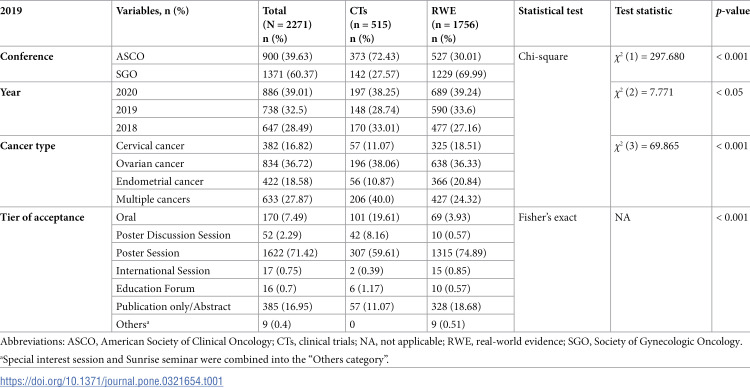 Figure 1
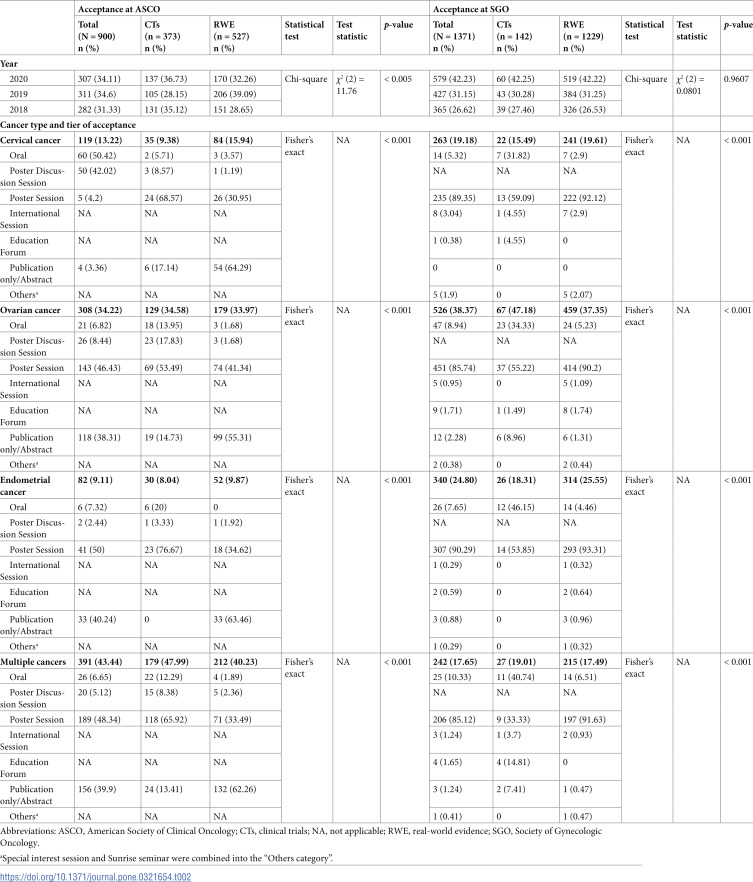 Figure 2
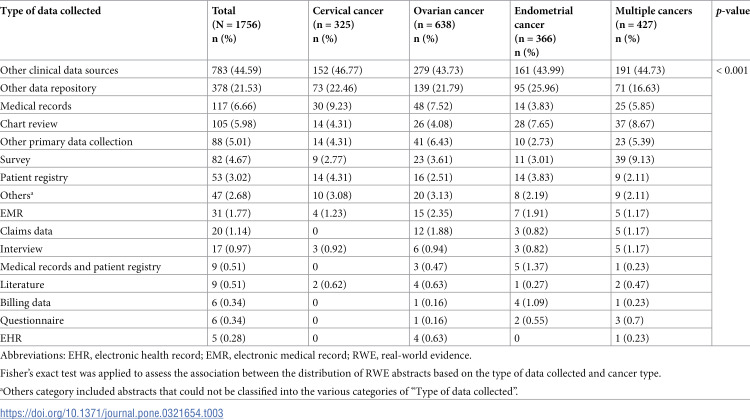 Figure 3
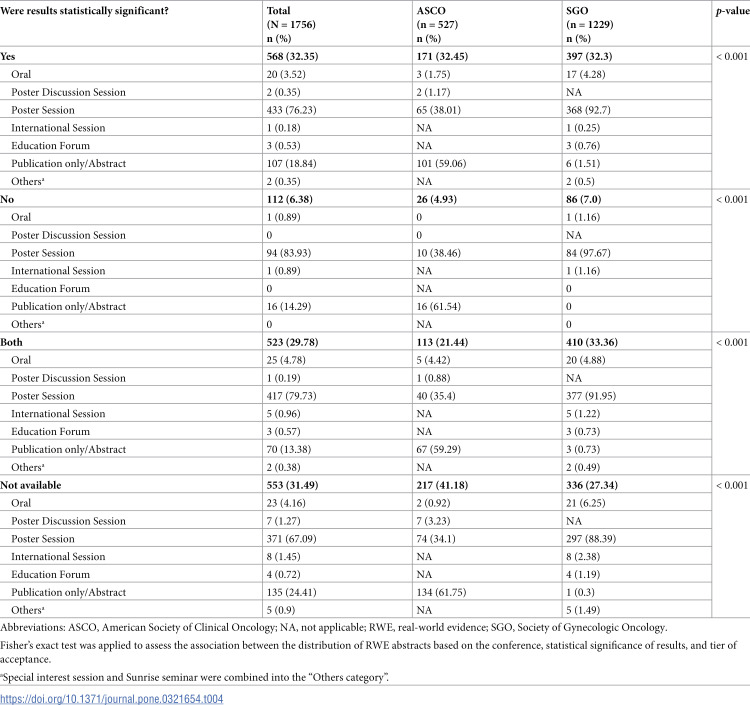 Figure 4
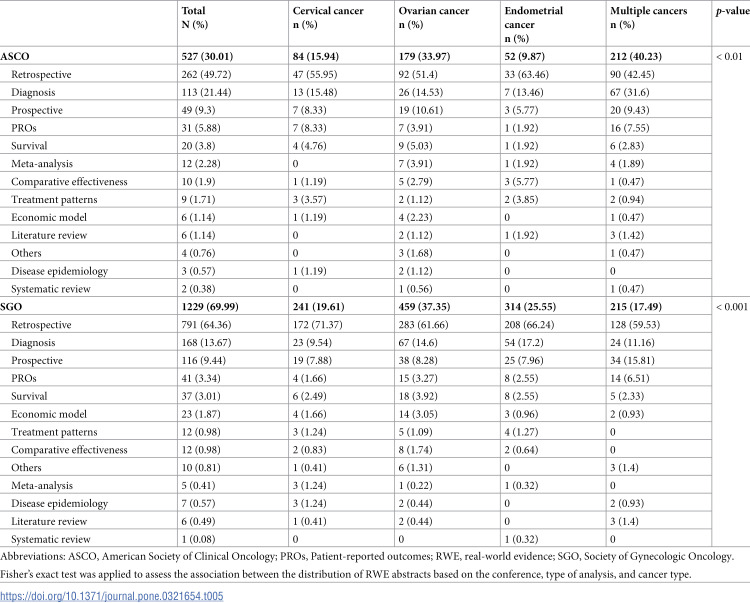 Figure 5
Peer Reviews
No public reviews on file for this paper yet. If you reviewed it on a platform where reviews are public (OpenReview, ICLR, NeurIPS, ICML), you can paste yours below so the community can read it here.
Videos
No videos yet. Explain this paper in a talk, walkthrough, or lecture? Add one.
Taxonomy
TopicsEndometrial and Cervical Cancer Treatments · Ovarian cancer diagnosis and treatment · Endometriosis Research and Treatment