Associations between self-reported SARS-CoV-2 infection status, serology and common longer-term COVID-19 symptoms among adults in Canada, a cross-sectional study
Alain Demers, Dianne Zakaria, Nicholas Cheta, Peri Abdullah, Samina Aziz

TL;DR
This study in Canada finds that self-reported SARS-CoV-2 infection status and antibody testing can lead to different conclusions about infection rates and long-term symptoms.
Contribution
The study highlights discrepancies between self-reported infection status and antibody testing in estimating SARS-CoV-2 prevalence and symptom associations.
Findings
37.9% of adults self-reported a confirmed or suspected SARS-CoV-2 infection, while 52.9% had antibodies.
Antibody presence was linked to self-reported certainty of infection but not to symptom severity or long-term symptoms.
Over 20% of adults were unaware they had been infected, suggesting self-reporting may misclassify infection status.
Abstract
A variety of methods, including self-report and antibody testing, has been used to estimate the prevalence of SARS-CoV-2 infections and related longer-term symptoms, but the impact of employed methods on conclusions has not been thoroughly explored. We examined associations between self-report and antibody findings in the Canadian adult (aged 18 years and older) population. We used data from a large population-based cross-sectional probability survey conducted between April and August 2022. Self-reported infection status and experiences with common longer-term COVID-19 symptoms since the start of the pandemic was collected, as well as a dried blood spot to measure SARS-CoV-2 antibodies. As of August 2022, the number of adults reported having had a confirmed or suspected infection was 37.9% (95% CI: 36.8%–39.1%), while the overall mean probability of having infection-related…
Genes, proteins, chemicals, diseases, species, mutations and cell lines named across the full text — each resolved to its canonical identifier and authoritative record.
Click any figure to enlarge with its caption.
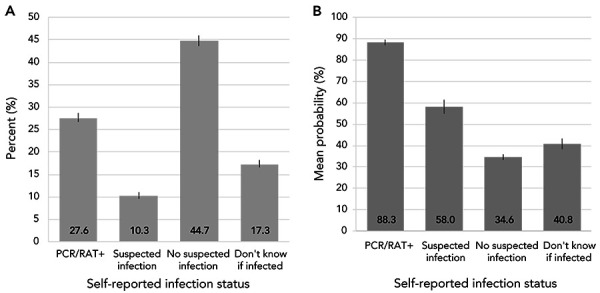 Figure 1
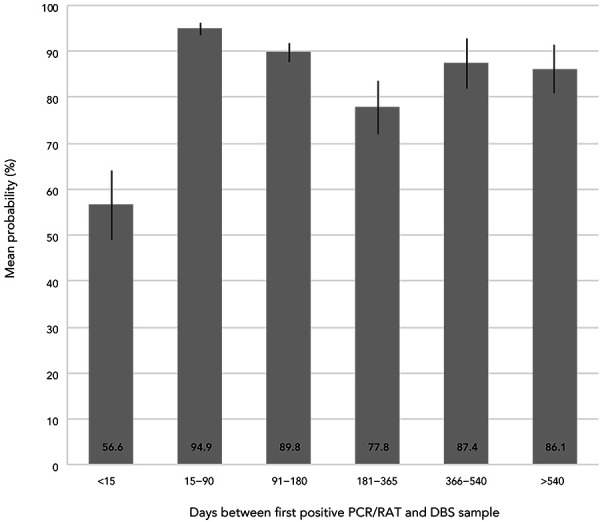 Figure 2
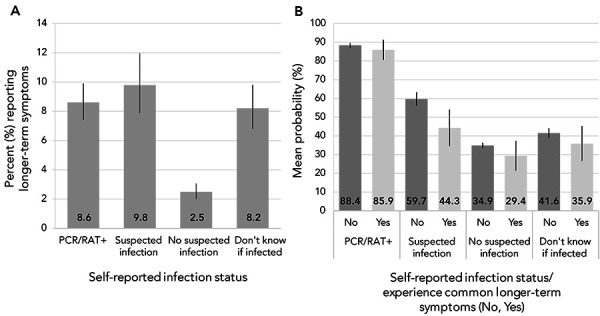 Figure 3
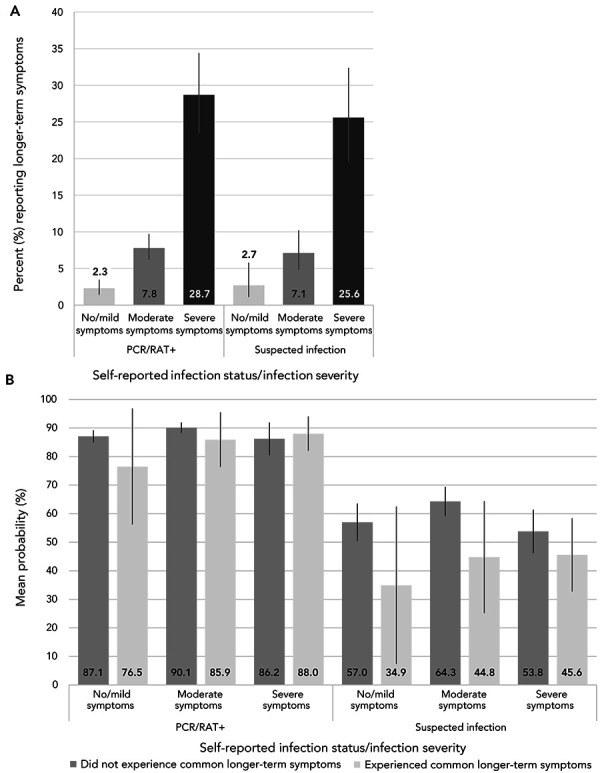 Figure 4
Peer Reviews
No public reviews on file for this paper yet. If you reviewed it on a platform where reviews are public (OpenReview, ICLR, NeurIPS, ICML), you can paste yours below so the community can read it here.
Videos
No videos yet. Explain this paper in a talk, walkthrough, or lecture? Add one.
Taxonomy
TopicsLong-Term Effects of COVID-19 · COVID-19 and Mental Health