One‐Year Follow‐Up of Clinical and Morphological Outcomes in Elite Athletes With Early‐Stage Lower Extremity Tendinopathy
Marc Seidler, Rene B. Svensson, Christopher Meulengracht, Kasper Ø. Christensen, Christoffer Brushøj, Mathilde Kracht, Mikkel H. Hjortshoej, S. Peter Magnusson, Roald Bahr, Michael Kjær, Christian Couppé

TL;DR
Elite athletes with early tendinopathy showed significant clinical improvement over one year, with specific morphological changes observed in Achilles tendons.
Contribution
The study identifies baseline prognostic indicators for tendinopathy progression in elite athletes through clinical and ultrasonography outcomes.
Findings
Athletes showed significant improvement in VISA scores and pain reduction over one year.
Achilles tendons showed reduced peritendinous thickness, while patellar tendons remained enlarged.
Lower baseline power Doppler flow and higher initial VISA scores correlated with better outcomes.
Abstract
Little is known about early tendinopathy in elite athletes. This study aimed to investigate changes in clinical and ultrasonography outcomes over 1 year and assess the prognostic values of these outcomes at baseline with respect to tendinopathy progression. Sixty‐two elite athletes (24 ± 5 years) with early phase (symptom duration < three months) Achilles or patellar tendinopathy (AT and PT) were examined at baseline and after one year. Pain‐guided activity modification was the only intervention. Clinical outcomes were assessed using Victorian Institute of Sports Assessment questionnaires (VISA) for function and symptoms, pain scores (1–10 numerical rating scale (NRS)) and ultrasound tendon morphology (thickness, echogenicity and power Doppler (PD) flow area). A linear mixed‐effects model analysed changes from baseline to 1 year. Athletes showed clinical improvements in VISA‐Achilles…
Genes, proteins, chemicals, diseases, species, mutations and cell lines named across the full text — each resolved to its canonical identifier and authoritative record.
Click any figure to enlarge with its caption.
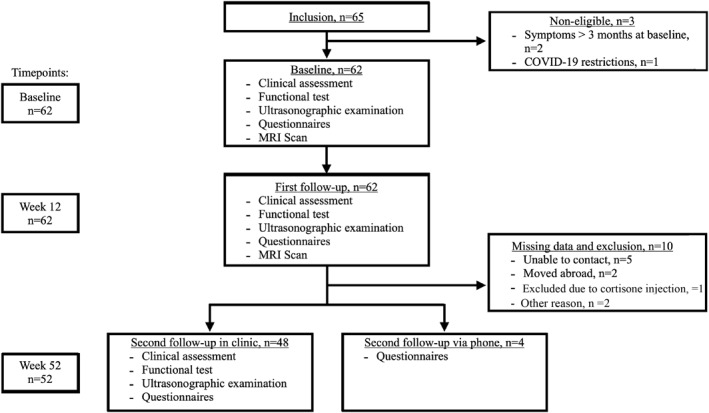 Figure 1
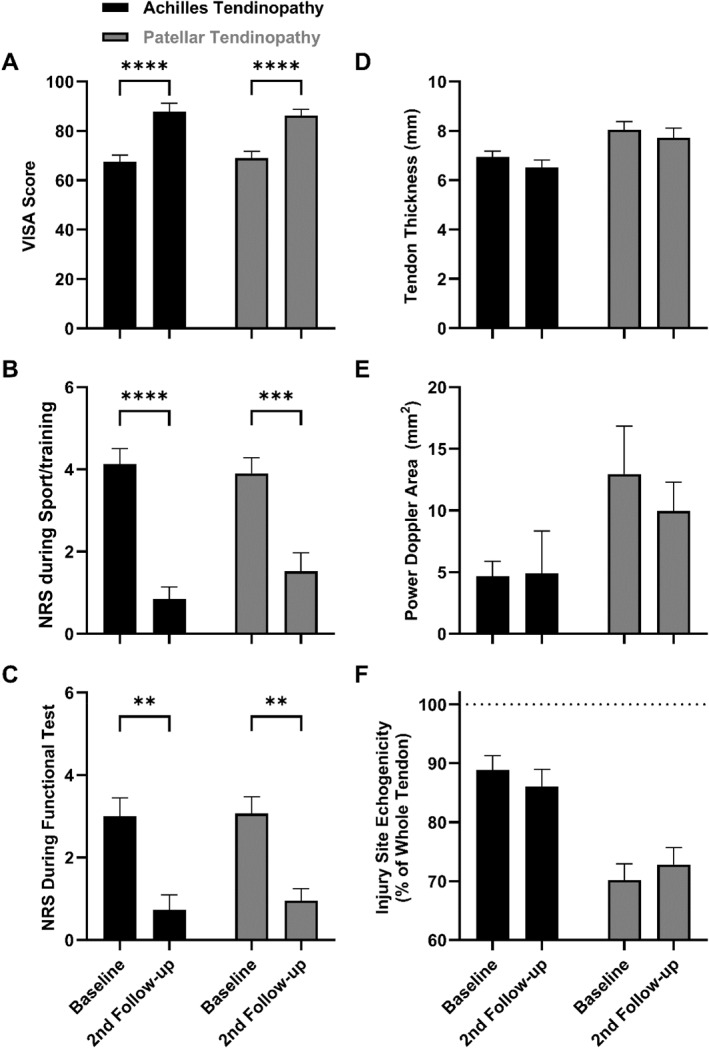 Figure 2
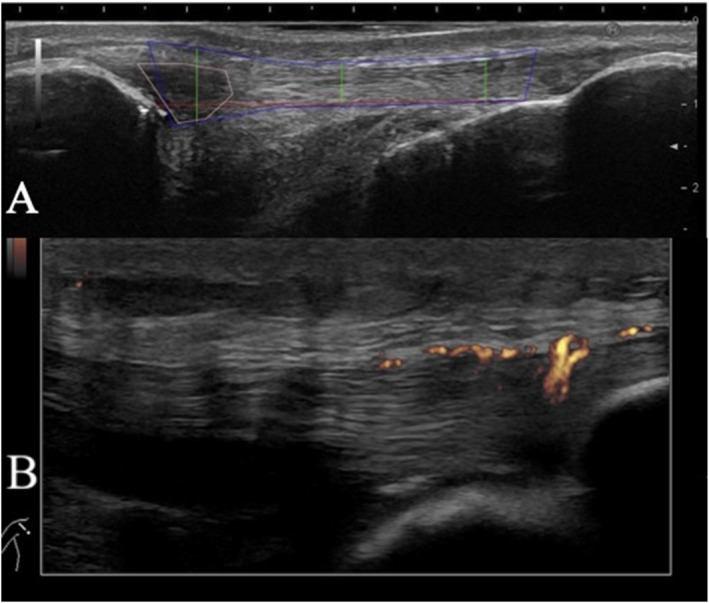 Figure 3
Peer Reviews
No public reviews on file for this paper yet. If you reviewed it on a platform where reviews are public (OpenReview, ICLR, NeurIPS, ICML), you can paste yours below so the community can read it here.
Videos
No videos yet. Explain this paper in a talk, walkthrough, or lecture? Add one.
Taxonomy
TopicsTendon Structure and Treatment · Shoulder Injury and Treatment · Sports injuries and prevention