Congenital hypoplasia of the posterior arch of the atlas accompanied with cervical high-intensity intramedullary lesions: a case report
Jian Zhang, Jiahao Liu, Jingyu Jia, Xinxin Miao, Xigao Cheng

TL;DR
A rare case of a spinal bone defect in the atlas caused neurological symptoms, and surgery helped improve the patient's condition.
Contribution
Highlights a rare cause of neurological symptoms and the effectiveness of posterior arch resection in such cases.
Findings
The patient had congenital hypoplasia of the posterior arch of C1 with high-intensity spinal cord lesions.
Symptoms improved after surgical resection of the posterior arch of C1.
Detailed imaging is crucial for diagnosing and managing such rare spinal conditions.
Abstract
Congenital hypoplasia of the posterior arch of the atlas (C1) is uncommon and typically asymptomatic. A 49-year-old woman presented with a 2-year history of recurrent vertigo attacks. One month before admission, she began to have weakness in both lower extremities and unsteady walking, with chest tightness and shortness of breath after walking. She did not have any history of trauma. Cervical spine imaging revealed partial hypoplasia of the posterior arch of C1, midline cleft of the anterior arch, and cervical high-intensity intramedullary lesions. We used a posterior, suboccipital midline approach to resect the posterior arch of C1. This case underscores the importance of differential diagnosis, detailed imaging examinations should be performed to properly assess the stability of the atlantoaxial spine. In patients with neurological symptoms but no severe spinal cord compression,…
Genes, proteins, chemicals, diseases, species, mutations and cell lines named across the full text — each resolved to its canonical identifier and authoritative record.
Click any figure to enlarge with its caption.
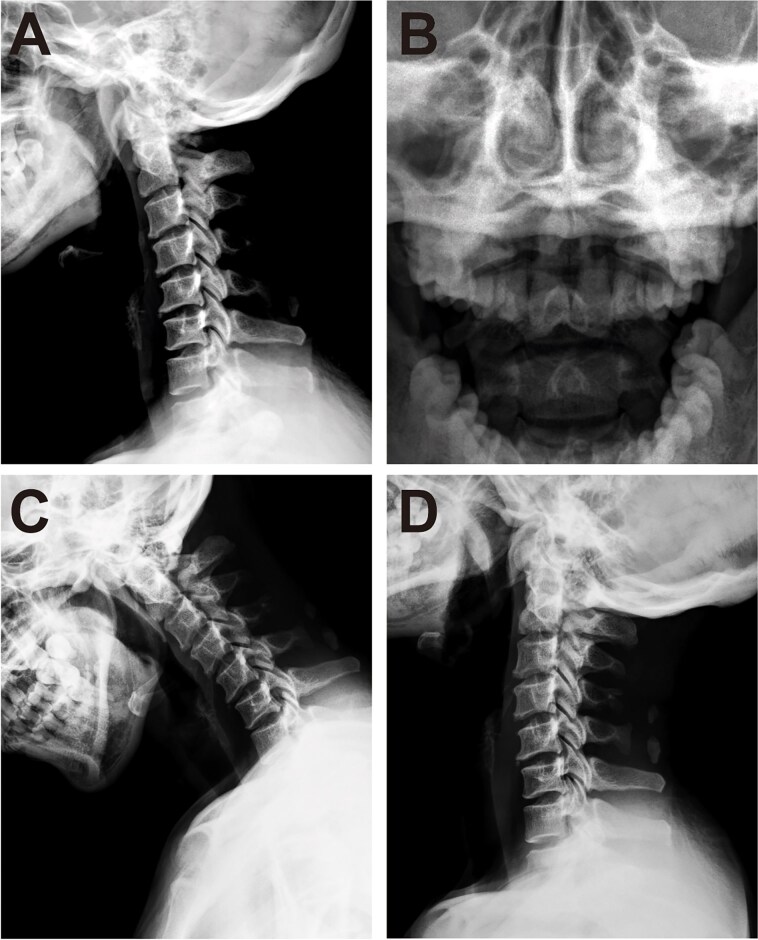 Figure 1
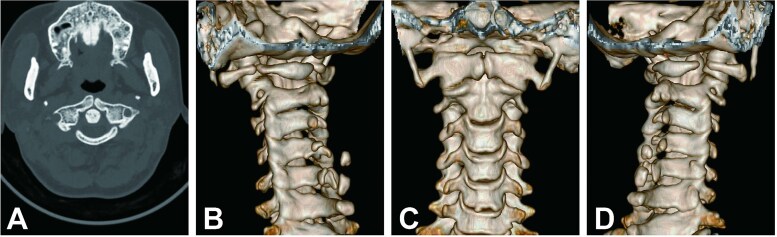 Figure 2
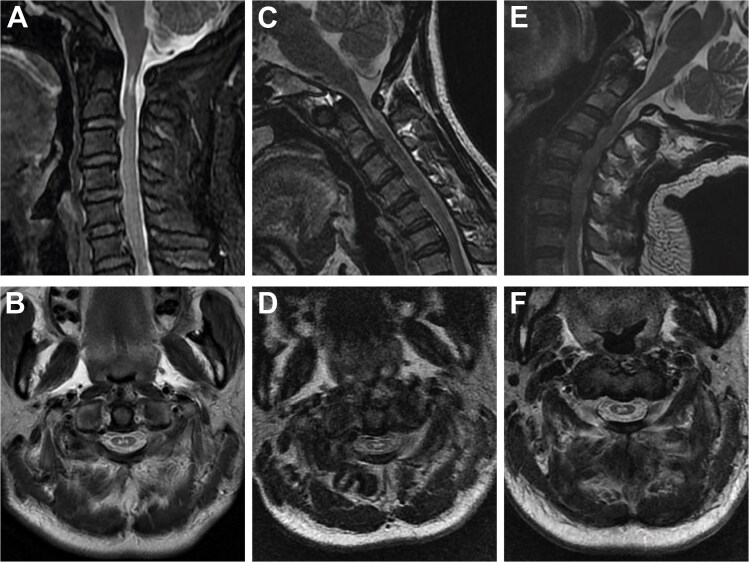 Figure 3
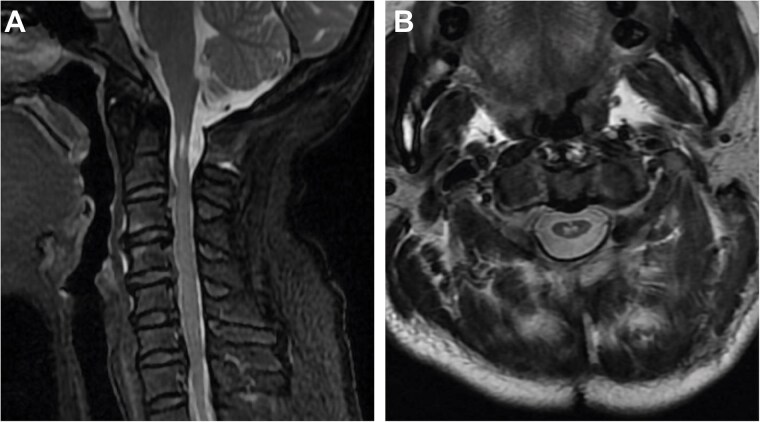 Figure 4
Peer Reviews
No public reviews on file for this paper yet. If you reviewed it on a platform where reviews are public (OpenReview, ICLR, NeurIPS, ICML), you can paste yours below so the community can read it here.
Videos
No videos yet. Explain this paper in a talk, walkthrough, or lecture? Add one.
Taxonomy
TopicsSpinal Cord Injury Research · Spinal Dysraphism and Malformations · Spinal Fractures and Fixation Techniques