Evaluation of the protective effects of Spirulina platensis against cyclophosphamide-induced genotoxicity
Kouamé Ephrem Zikpi, Aku Enam Motto, Kokou Atchou, Kounouho R. Adounkpe Kougblenou, Povi Lawson-Evi, Kwashie Eklu-Gadegbeku

TL;DR
This study shows that Spirulina platensis can protect against DNA damage caused by the chemotherapy drug cyclophosphamide in mice.
Contribution
The novel contribution is demonstrating the antigenotoxic and antioxidant effects of Spirulina platensis in a mouse model of cyclophosphamide-induced toxicity.
Findings
Spirulina platensis powder reduced micronuclei formation in bone marrow cells treated with cyclophosphamide.
PoSP significantly decreased malondialdehyde levels and increased catalase activity in liver, kidney, and spleen tissues.
The protective effects of PoSP were dose-dependent and statistically significant.
Abstract
Damage to normal cells is the most common limitation of cancer chemotherapy. Cyclophosphamide, one of the most widely used anticancer drugs due to its cytotoxicity, can bind to deoxyribonucleic acid (DNA), causing chromosomal breaks, micronuclei, and cell death. The use of natural sources helps to prevent this damage, and Spirulina platensis is highly appreciated for its numerous bioactive compounds. This study aimed to investigate the antigenotoxic effects of Spirulina platensis powder (PoSP) on mouse bone marrow cells in vivo via a micronucleus assay. Compared to the positive control, the administration of powder significantly reduced the PCE/PCE + NCE (polychromatic erythrocytes, normochromatic erythrocytes) ratio in treated mice. A significant increase in the percentage of MnPCE (micronucleus in polychromatic erythrocytes) in cyclophosphamide-treated bone marrow cells was observed.…
Genes, proteins, chemicals, diseases, species, mutations and cell lines named across the full text — each resolved to its canonical identifier and authoritative record.
Click any figure to enlarge with its caption.
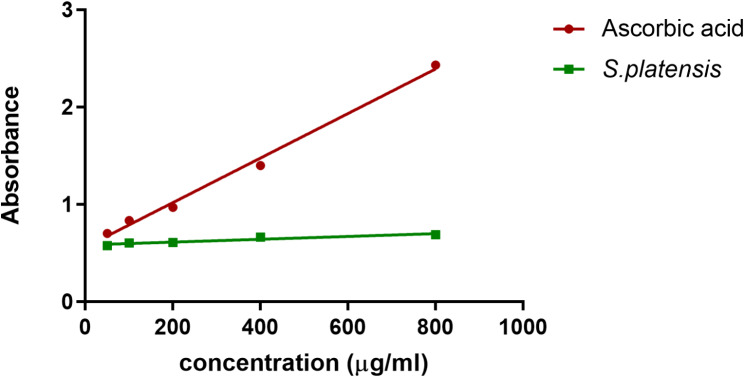 Figure 1
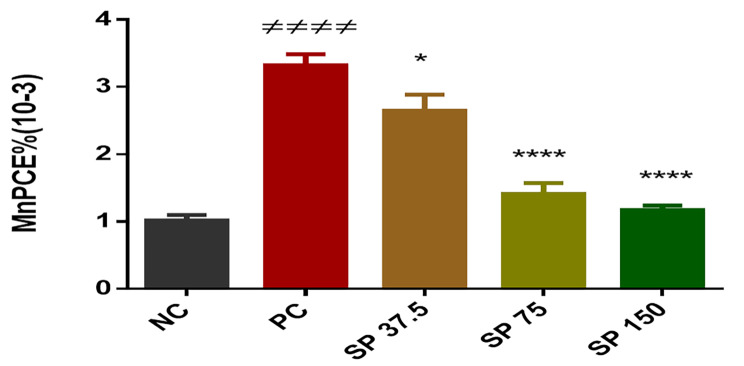 Figure 2
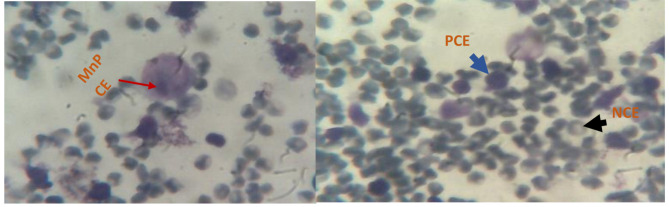 Figure 3
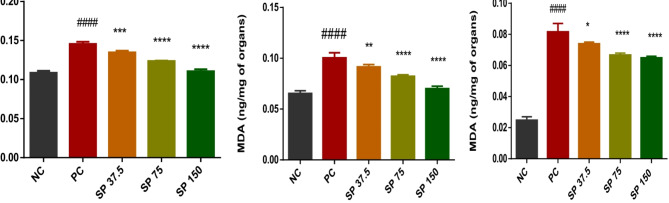 Figure 4
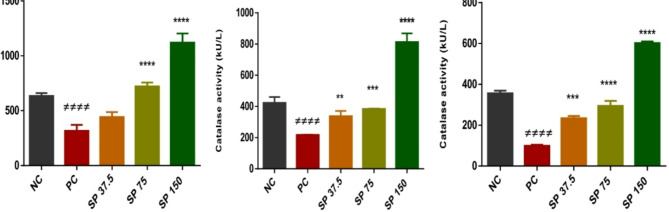 Figure 5
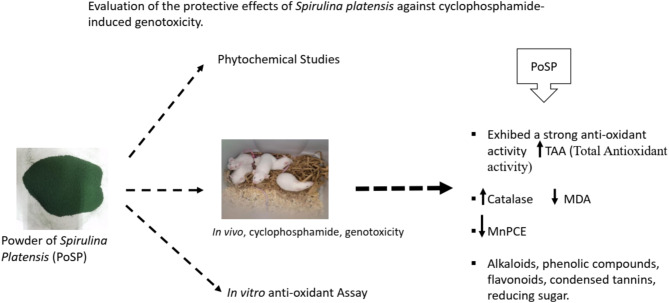 Figure 6
Peer Reviews
No public reviews on file for this paper yet. If you reviewed it on a platform where reviews are public (OpenReview, ICLR, NeurIPS, ICML), you can paste yours below so the community can read it here.
Videos
No videos yet. Explain this paper in a talk, walkthrough, or lecture? Add one.
Taxonomy
TopicsChemotherapy-induced organ toxicity mitigation · Acute Lymphoblastic Leukemia research · Carcinogens and Genotoxicity Assessment