Chitinivorax: The New Kid on the Block of Bacterial 2-Alkyl-4(1H)-quinolone Producers
Viktoriia Savchenko, Xiaoqian Annie Yu, Martin F. Polz, Thomas Böttcher

TL;DR
This paper identifies Chitinivorax as a new bacterial genus that produces 2-alkyl-4(1H)-quinolones, expanding our understanding of these compounds' biosynthesis.
Contribution
The discovery of Chitinivorax as a new genus producing 2-alkyl-4(1H)-quinolones adds to the known diversity of quinolone-producing bacteria.
Findings
Chitinivorax is a new genus capable of producing 2-alkyl-4(1H)-quinolones.
The phylogeny of quinolone biosynthetic gene clusters was analyzed to identify evolutionary relationships.
The study expands the known bacterial diversity involved in quinolone biosynthesis.
Abstract
2-Alkyl-4(1H)-quinolones play a key role in bacterial communication, regulating biofilm formation, and virulence. Their antimicrobial properties also support bacterial survival and interspecies competition in microbial communities. In addition to the human pathogen Pseudomonas aeruginosa various species of Burkholderia and Pseudoalteromonas are known to produce 2-alkyl-4(1H)-quinolones. However, the evolutionary relationships of their biosynthetic gene clusters remain largely unexplored. To address this, we investigated the phylogeny of 2-alkyl-4(1H)-quinolone biosynthetic gene clusters, leading to the discovery of Chitinivorax as a fourth genus capable of producing 2-alkyl-4(1H)-quinolones, expanding our knowledge of the diversity of bacteria involved in quinolone-biosynthesis.
Genes, proteins, chemicals, diseases, species, mutations and cell lines named across the full text — each resolved to its canonical identifier and authoritative record.
Click any figure to enlarge with its caption.
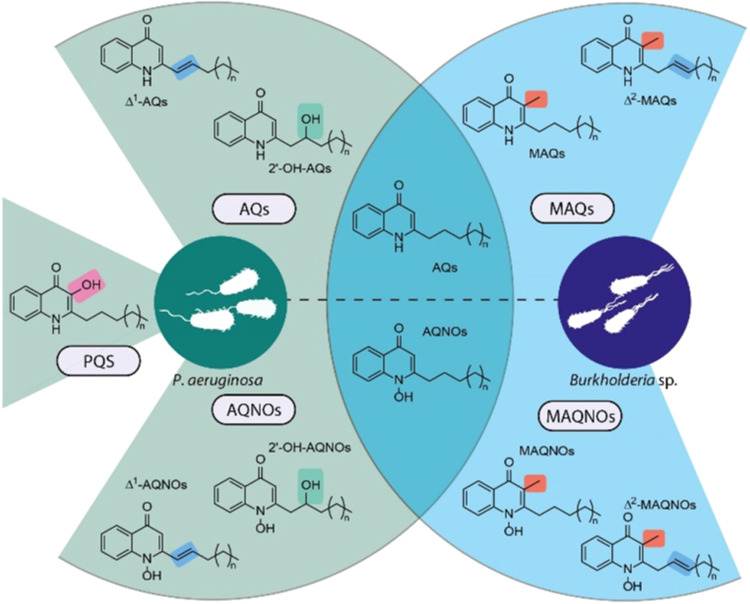 Figure 1
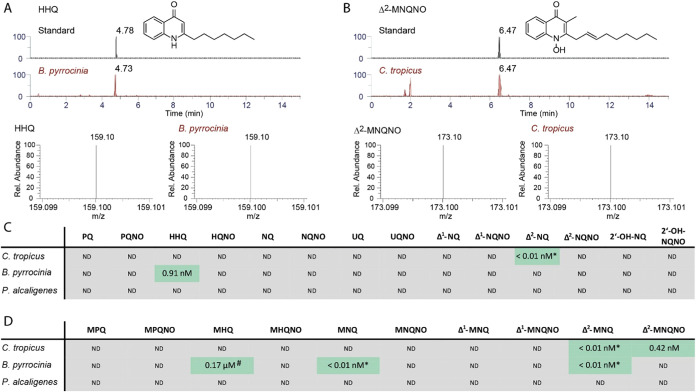 Figure 2
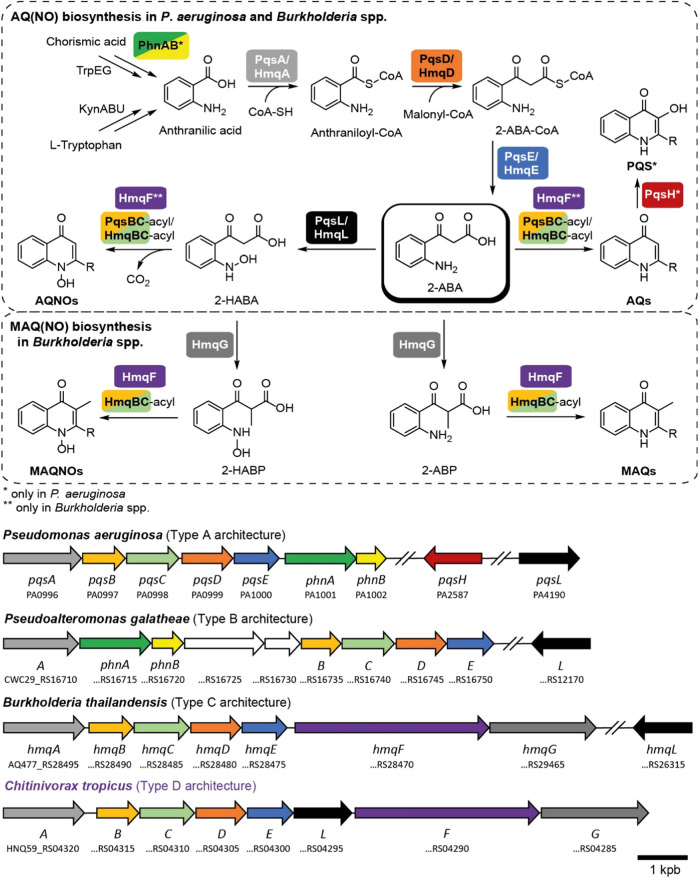 Figure 3
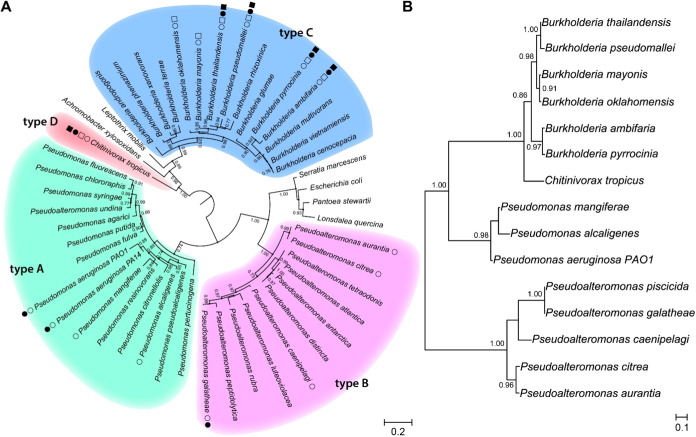 Figure 4
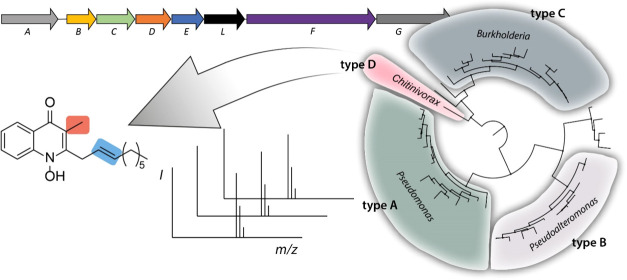 Figure 5
Peer Reviews
No public reviews on file for this paper yet. If you reviewed it on a platform where reviews are public (OpenReview, ICLR, NeurIPS, ICML), you can paste yours below so the community can read it here.
Videos
No videos yet. Explain this paper in a talk, walkthrough, or lecture? Add one.
Taxonomy
TopicsMedicinal Plants and Neuroprotection · Plant-Microbe Interactions and Immunity