SLC26A4 C.317C > A Variant: Functional Analysis and Patient‐Derived Induced Pluripotent Stem Line Development
Yijing Li, Tao Sun, Sang Hu, Hongen Xu, Teng Zhang, Jinlong Liu, Shuangshuang Lu, Bing Wang, Guo Dan

TL;DR
This study investigates how a specific SLC26A4 gene variant affects hearing loss by analyzing its impact on protein function and developing patient-derived stem cells for further research.
Contribution
The study introduces a novel in vitro system using patient-derived iPSCs to investigate the functional impact of the SLC26A4 c.317C > A variant.
Findings
The c.317C > A variant significantly reduces SLC26A4 mRNA and protein expression.
The variant causes Pendrin protein to accumulate as cytoplasmic aggregates.
Patient-derived iPSCs retained pluripotency, differentiation potential, and genetic integrity.
Abstract
SLC26A4 is the second most common cause of hereditary hearing loss worldwide. This gene predominantly harbors pathogenic variants, including splice, nonsense, and missense. Although missense variants are relatively common, their specific effects on protein function remain unclear. Consequently, there is an urgent need to establish an in vitro system to investigate how these variants impact SLC26A4 protein function. Genetic testing was conducted to determine the specific types of underlying genetic variants in patients. Following this, we employed plasmid transfection to evaluate the effects of the variants on both protein expression levels and the protein's subcellular localization. Thereafter, we transformed peripheral blood mononuclear cells (PBMCs) from the proband into induced pluripotent stem cells (iPSCs) through Sendai virus‐mediated transduction. Genetic testing revealed that…
Genes, proteins, chemicals, diseases, species, mutations and cell lines named across the full text — each resolved to its canonical identifier and authoritative record.
Click any figure to enlarge with its caption.
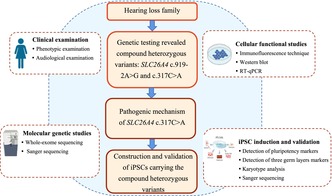 Figure 1
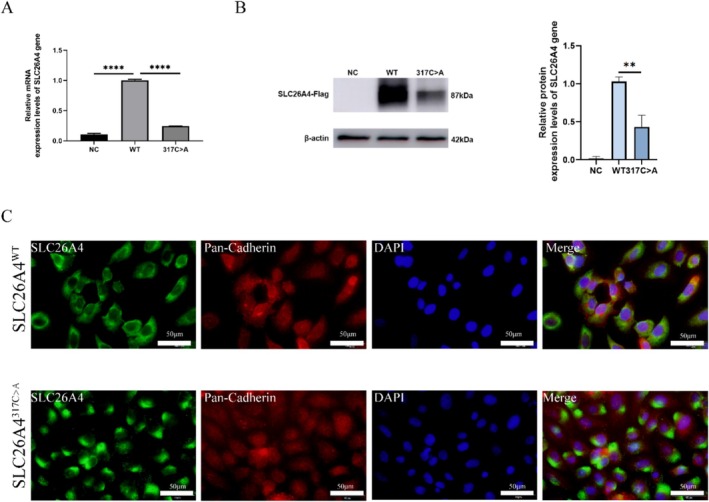 Figure 2
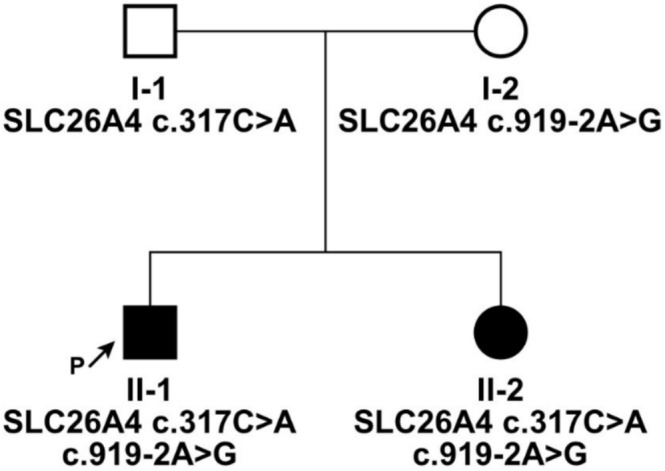 Figure 3
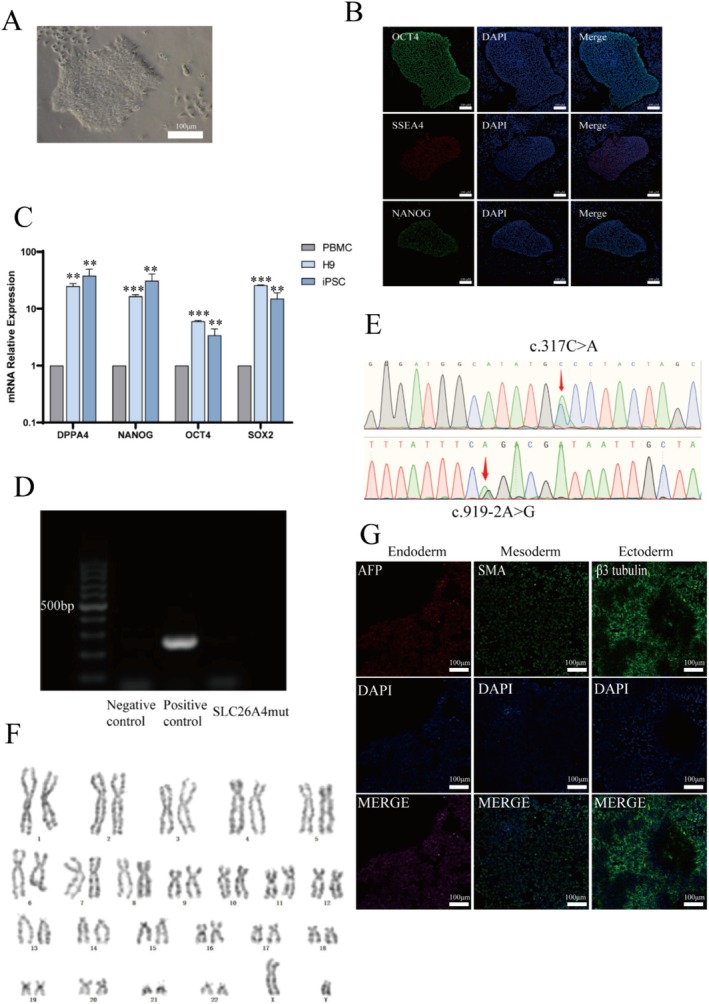 Figure 4
Peer Reviews
No public reviews on file for this paper yet. If you reviewed it on a platform where reviews are public (OpenReview, ICLR, NeurIPS, ICML), you can paste yours below so the community can read it here.
Videos
No videos yet. Explain this paper in a talk, walkthrough, or lecture? Add one.
Taxonomy
TopicsHearing, Cochlea, Tinnitus, Genetics · RNA regulation and disease · CRISPR and Genetic Engineering