Genomic Characterization of NDM-1 Harboring Extensively-Drug Resistance Klebsiella pneumoniae Isolate From ICU-Admitted Patient With COVID-19
Abolfazl Rafati Zomorodi, Himen Salimizand, Niloufar Mohseni, Maryam Hafiz, Helia Nikoueian, Tahereh Gholamhosseini-Moghaddam, Fatemeh Aflakian

TL;DR
This study reports a drug-resistant Klebsiella pneumoniae strain from a hospitalized COVID-19 patient, highlighting its genomic features and resistance profile.
Contribution
The paper provides a genomic characterization of an NDM-1-producing XDR K. pneumoniae isolate from an ICU-admitted COVID-19 patient.
Findings
The isolate CRKP-51 was identified as extensively drug-resistant, with resistance to all antibiotics except tigecycline.
The strain belonged to sequence type 15 (ST15) and carried multiple resistance genes on the IncHI1B plasmid.
High resistance was observed against sulfamethoxazole-trimethoprim, nitrofurantoin, and piperacillin-tazobactam.
Abstract
Currently, carbapenem-resistant Klebsiella pneumoniae (CR-KP) strains, particularly those producing New Delhi metallo-beta-lactamase (NDM), are increasingly recognized as a significant threat to global health. The present study aimed to conduct a genomic analysis of an NDM-1-producing CR-KP strain isolated from patients with coronavirus disease of 2019 (COVID-19) admitted to the intensive care unit (ICU). The K. pneumoniae isolate was obtained from the bronchoalveolar lavage fluid of a 68 year-old male patient hospitalized in the ICU with COVID-19 at Besat Hospital in Sanandaj, Iran. The minimum inhibitory concentrations (MICs) for 15 antibiotics were determined using the VITEK 2 system. Genomic analysis of the isolate was performed using whole genome sequencing. The CRKP-51 strain was identified as an extensively drug-resistant (XDR) strain, exhibiting resistance to all tested…
Genes, proteins, chemicals, diseases, species, mutations and cell lines named across the full text — each resolved to its canonical identifier and authoritative record.
Click any figure to enlarge with its caption.
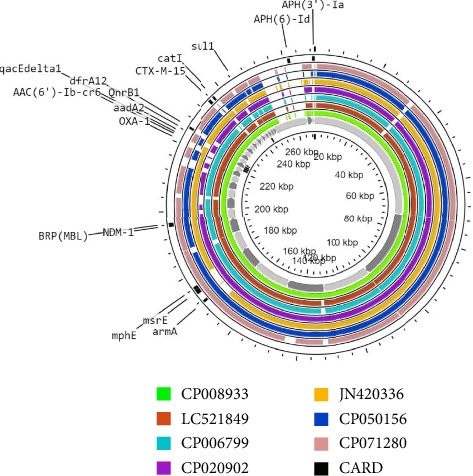 Figure 1
Peer Reviews
No public reviews on file for this paper yet. If you reviewed it on a platform where reviews are public (OpenReview, ICLR, NeurIPS, ICML), you can paste yours below so the community can read it here.
Videos
No videos yet. Explain this paper in a talk, walkthrough, or lecture? Add one.
Taxonomy
TopicsAntibiotic Resistance in Bacteria · Antibiotic Use and Resistance · Antibiotics Pharmacokinetics and Efficacy
1. Introduction
Nowadays, Klebsiella pneumoniae (K. pneumoniae) is mainly taken attention as one of the significant bacteria involved in antibiotic resistance issues; especially carbapenem-resistance K. pneumoniae (CR-KP) strains [1]. Carbapenems are often used as a last resort for treating infections caused by multidrug-resistant (MDR) K. pneumoniae isolates. Consequently, the sharp increase in CR-KP isolates has been identified as a significant global health concern by the World Health Organization (WHO) [2, 3].
Hydrolyzing most β-lactams (except aztreonam, a monobactam), not inhibited by available β-lactamase inhibitors (such as sulbactam, avibactam, and tazobactam), and harboring several plasmid replicon types, as well as disseminating widely through horizontal gene transfer (HGT) among bacteria, are reasons that highlight the emergence of New Delhi metallo-β-lactamase (NDM)-producing CR-KP strains. Several studies have indicated that IncX3, IncFII, and IncC are the predominant plasmid replicon types harboring the blaNDM−1 gene [4, 5]. Additionally, CR-KP isolates are generated through the acquisition of virulent or resistant plasmids that are commonly transferred among Gram-negative bacteria, particularly members of the Enterobacteriaceae family, which can lead to more severe infections [3, 6].
On the other hand, in September 2019, the health and clinicians' system faced a terrible medical challenge since emerging of severe acute respiratory syndrome coronavirus 2 (SARS-CoV-2). The identical symptoms and laboratory abnormalities between patients with SARS-CoV-2 pneumonia and community-acquired pneumonia resulted in using empirical antibiotics treatment; however, prolonged hospitalization, especially in an intensive care unit (ICU), and consumption of a high proportion of board-spectrum antibiotics led to raising MDR and extensively-drug resistant (XDR) bacteria [7, 8]. Therefore, the present study aimed to genomic analysis of a blaNDM−1 carrying CR-KP isolate from ICU admitted patients with SARS-CoV-2 in Sanandaj, west Iran.
2. Materials and Methods
2.1. Bacterial Isolation
The K. pneumoniae isolate was recovered in December 2022 from bronchoalveolar lavage (BAL) fluid of a 68 year-old male patient hospitalized in the ICU at Besat Hospital, a teaching hospital with 350 beds in Sanandaj, Iran. The isolate was identified as K. pneumoniae using standard biochemical tests, and confirmation was performed by amplifying the 16S rRNA gene [9].
2.2. Antimicrobial Susceptibility Testing
The CRKP-51 strain has sought to determine the minimum-inhibitory concentration (MIC) against 15 antibiotics using VITEK 2 (bioMérieux, Marcy l'Étoile, France). The antimicrobial agents tested were as follows amikacin (AMK), ampicillin (AMP), cefazolin (CFZ), cefepime (FEP), cefoxitin (FOX), ceftazidime (CAZ), ceftriaxone (CRO), ciprofloxacin (CIP), ertapenem (ETP), gentamicin (GEN), imipenem (IMP), levofloxacin (LVX), nitrofurantoin (NIT), piperacillin/tazobactam (TZP), tigecycline (TGC), and trimethoprim-sulfamethoxazole (SXT). The interpretation was performed regarding CLSI 2023 guidelines [10].
2.3. DNA Extraction and Whole-Genome Sequencing and De Novo Assembly
The bacterial DNA was extracted using a FavorPrep™ Tissue Genomic DNA Extraction Mini Kit (Favorgen, Taiwan). The Genomic library preparation was performed using the Illumina Novaseq6000 platform, and 150 bp paired-end reads were generated with an insert size of around 350 bp (Illumina Inc., San Diego, CA). The short reads were trimmed, and de novo assembly was performed using CLC workbench 20.0.
2.4. Post De Novo Assembly
The obtained contigs were assessed further using different online website tools as follows: using DFAST (https://dfast.ddbj.nig.ac.jp/) to demonstrate the genomic statistic information of assembled contigs such as genome length, GC content, N50, and number of coding sequences (CDSs), rRNA and tRNA as well as gene annotation. The contigs were categorized as chromosomal and extra-chromosomal using mlplasmids—version 1.0.0 (https://sarredondo.shinyapps.io/mlplasmids/). Multilocus-sequence typing (MLST) was determined using MLST Server 2.0 (https://cge.cbs.dtu.dk/services/MLST/). Evaluation of plasmid incompatibility (Inc) was accomplished using PlasmidFinder 2.0 server (https://cge.cbs.dtu.dk/services/PlasmidFinder/). The antimicrobial resistance genes profile was determined using the antibiotic resistance database (CARD) (https://card.mcmaster.ca/analyze/rgi). Capsular typing (K-typing) and allelic were detected using the Kaptive web-tool (https://kaptive-web.erc.monash.edu/). Multiple circular alignments of plasmid carrying NDM-1 with other similar genomes was conducted and visualized using a CG view server (https://cgview.ca/).
2.5. Accession Number
This Whole Genome Shotgun project has been deposited at DDBJ/ENA/GenBank under the accession JARGDG000000000. The version described in this paper is version JARGDG010000000.
3. Results
3.1. Antimicrobial Susceptibility Testing
The isolated strain was resistant to all tested antibiotics except for TGC (MIC = 2 μg/mL). The highest resistance value was recorded against SXT, NIT, and TZP (MIC ≥ 320 μg/mL, MIC = 256 μg/mL, and MIC ≥ 128 μg/mL), respectively. Also, the isolate was identified as a carbapenemase-producing strain. The complete results are available in Table 1.
3.2. Chromosomal Characterization
3.2.1. Genomics Properties
The analysis of the whole-genome purified contigs determined 174 contigs comprised of 5,906,552 bp genome. Totally, 5625 features were recorded, followed by 67 tRNAs, 3 rRNAs, and 2 CRISPR regions on the whole genome. 80 out of 174 contigs were identified as chromosomal contigs (total length = 5,144,305 bp, GC content = 57.5%, N50 = 113,131, No. of CDSs = 4773, No. of rRNA = 3, No. of tRNA = 66 and coding ratio = 88.0%).
3.2.2. MLST and Capsular Typing
The CRKP-51 strain belonged to ST 15 (gapA: 1, infB: 1, mdh: 1, pgi: 1, phoE: 1, rpoB: 1, tonB: 1). Also, the K. pneumoniae capsular locus KL-112 was detected for the CRKP-51 strain, the cps locus length was 24,370 bp consisting of 18 open reading frames (ORFs) from galF to ugd. The allelic types were recorded as follows wzc-923 and wzi-23. The six identified genes on the 5′ and 3′ conserved ends were galF, cpsACP, wzi, wza, wzb, wzc and ugd, manB, manC, gnd, wzx, wcuV, respectively, with coverage of 100% and identity of > 99%.
3.2.3. Antimicrobial Resistance Genes (ARGs)
The analysis of chromosomal contigs has revealed nine ARGs as follow: blaSHV−28 and blaSHV−106 (β-lactam resistance); gyrA, parC (quinolone resistance); fosA (fosfomycin resistance); ramR (tigecycline resistance); oqxA, oqxB, ompK36 (MDR).
3.3. Plasmid Data
Totally four plasmids have determined among WGS data: in which Plasmid-1, as the biggest one, consisting of 269,316 bp length (CDSs = 278) belonged to the IncHI1B replicon type and harboring blaNDM−1, armA, msrE, mphE, BRP (MBL), blaOXA−1, aadA2, dfrA12, qnrB1, blaCTX−M−15, and catl. This is followed by Plasmid-2 (210,792 bp; CDSs = 184; belonged to IncFIB and IncFII), Plasmid-3 (178,789 bp; CDSs = 185; belonged to IncFIB), and Plasmid-4 (111,545 bp; CDSs = 133; belonged to IncFII and repB). In addition, Plasmid-3 and Plasmid-4 harbored the tetD and dfrA14, respectively. No resistance genes were detected for Plasmid-2. Figure 1 illustrates the alignment results of Plasmid-1 with six highly similar containing the blaNDM−1 plasmid sequences. Also, multiresistance genes were determined on alignment plasmids of which explain the role of NDM harboring plasmid in development MDR, XDR, or even pan-drug-resistant (PDR) strains.
4. Discussion
During coronavirus disease of 2019 (COVID-19) pandemic ICU admissions were remarkably raised; it is estimated up to 5% patients with COVID-19 were admitted to ICU. This overcrowding and overusing antibiotics promote dissemination of MDR and XDR pathogens including K. pneumoniae [11]. Interestingly, emerging CR-KP isolates have been significantly reported in several investigations. For instance, in Italy, an increase in CR-KP frequency from 6.7% to 50% was reported between 2019 and 2020 [12]; as such increasing also documented by other study in New York [13]. This finding is consistent with an earlier systematic review and meta-analysis by Abubakar et al. which demonstrated an increase in the incidence of CR-KP following the COVID-19 pandemic compared to the period prior to the pandemic [14].
Notably, CR-KP are of significant concern due to their resistance to a wide range of antibiotics, including carbapenems and colistin. This resistance severely limits available treatment options resulting increasing rate of mortality [15]. The pooled prevalence of the mortality rate associated with CR-KP isolate infections ranged from 37.2% (95% CI, 33.1%–41.4%) to 42.1% (95% CI, 37.1%–47.3%) [16, 17]. Although the frequency of nosocomial infections caused by CR-KP isolates varies among conducted surveys due to factors such as sample size, geographic regions, study duration, and available resources, it is notable that the rate of nosocomial infections caused by CR-KP has increased over the last decade [18, 19].
CR-KP spreading is chiefly accomplished by a few successful clones; high-risk clonal (HiRC) lineages like ST11 and ST15 are as representatives of this phenomena [20]. The CRKP-51 strain isolated from an ICU-admitted patient with COVID-19 determined as ST15. Previous studies around the world, such as Spaine [21], France [22], China [23], and Brazil [24] have stated that K. pneumonia ST15 is one of the most relevant STs in nosocomial infections outbreaks. Furthermore, reviewing situation of antimicrobial resistance in ICUs has listed K. pneumoniae ST15 as a HiRC causes ICU outbreak during COVID-19 pandemic [25].
In this study, CRKP-51 revealed a variety of antibiotic resistance genes. Structurally, the majority of these ARGs are located on plasmids, which facilitate the potential for HGT. As hypothesized in other publications, ST15 is associated with the development of HGT and has a high propensity for the acquisition of resistance genes [9, 26, 27].
According to the available complete sequence in GenBank, 20 replicon types were identified for NDM carrying plasmids. Several studies have reported IncX3, IncA/C, IncFII, IncFIB, and IncFIA as predominant replicon types of blaNDM−1 carrying plasmids among Enterobacteriaceae family [28, 29]. However, in the present study blaNDM−1 carrying plasmid belonged to IncHI1B/IncFIB; also, co-existence of blaCTX−M−15 and blaNDM−1 genes on the same replicon types for CRKP-51 strain. Furthermore, the IncHI1B/IncFIB replicon type was associated with several ARGs, including armA, msrE, mphE, BRP (MBL), blaOXA−1, aadA2, dfrA12, qnrB1, and cat1. These findings align with a previous report by Shelenkov et al. which described ST512 K. pneumoniae isolates carrying IncHI1B/IncFIB plasmids harboring blaNDM−1 and other ARGs [30]. Further investigations confirmed harboring several ARGs along with blaNDM has been [31, 32]. Thus, the high dissemination of bla_NDM_ genes among Gram-negative bacteria likely promotes MDR, XDR, and even PDR strains worldwide. This promotes a significant limitation in the available therapeutic options because there are not any β-lactamase inhibitors for preventing NDM activity, even though ceftazidime/avibactam, as well as aztreonam (as only active β-lactam agent against NDM variants) hydrolyses by CTX-M-15.
Although additional research is required to elucidate the full range of mobile genetic elements contributing to blaNDM gene spread and antimicrobial resistance development, inhibiting plasmid dissemination may offer a viable approach to mitigate bacterial resistance. This study was not designed to examine the broader distribution and characterization of CR-KP across Iran due to sample size limitations. Furthermore, conjugation assays are recommended to assess the potential for HGT among Gram-negative bacteria.
In summary, antimicrobial resistance has increased in ICUs mainly due to HiRC spread, which has played a significant role in the global spread of MDR bacteria. K. pneumoniae ST15 has recently taken attention as a HiRC associated with global dissemination of NDM enzyme, particularly among ICU-admitted patients. Also, genomic analysis of CRKP-51 demonstrated that NDM carrying plasmid promotes MDR strains through harboring other mediated multiresistance genes. In addition, there is a lack of knowledge about the impact of overusing antimicrobial agents during COVID-19 pandemic, so monitoring local epidemiology is essential for antimicrobial stewardship programs.
The reference list from the paper itself. Each links out to its DOI / PubMed record.
- 1Navon-Venezia S. Kondratyeva K. Carattoli A. Klebsiella pneumoniae: A Major Worldwide Source and Shuttle for Antibiotic Resistance FEMS Microbiology Reviews 201741325227510.1093/femsre/fux 0132-s 2.0-8502016711128521338 · doi ↗ · pubmed ↗
- 2Chen T.-A. Chuang Y.-T. Lin C.-H. A Decade-Long Review of the Virulence, Resistance, and Epidemiological Risks of Klebsiella pneumoniae in IC Us Microorganisms 20241212 p. 254810.3390/microorganisms 12122548 PMC 1167839739770751 · doi ↗ · pubmed ↗
- 3Yao Y. Zha Z. Li L. Healthcare-Associated Carbapenem-Resistant Klebsiella pneumoniae Infections Are Associated With Higher Mortality Compared to Carbapenem-Susceptible K. pneumoniae Infections in the Intensive Care Unit: A Retrospective Cohort Study Journal of Hospital Infection 2024148303810.1016/j.jhin.2024.03.00338513959 · doi ↗ · pubmed ↗
- 4Wu W. Feng Y. Tang G. Qiao F. Mc Nally A. Zong Z. NDM Metallo-β-Lactamases and Their Bacterial Producers in Health Care Settings Clinical Microbiology Reviews 2019322 e 00115-18e 0011810.1128/cmr.00115-182-s 2.0-8506095069530700432 PMC 6431124 · doi ↗ · pubmed ↗
- 5Ahmadi N. Salimizand H. Zomorodi A. R. Genomic Diversity of β-Lactamase Producing Pseudomonas aeruginosa in Iran; The Impact of Global High-Risk Clones Annals of Clinical Microbiology and Antimicrobials 2024231 p. 510.1186/s 12941-024-00668-538218982 PMC 10790247 · doi ↗ · pubmed ↗
- 6Zomorodi A. R. Mohseni N. Hafiz M. Investigation of Mobile Colistin Resistance (Mcr) Genes Among Carbapenem Resistance Pseudomonas aeruginosa Isolates From Bovine Mastitis in Mashhad, Iran Gene Reports 202229 p. 10169510.1016/j.genrep.2022.101695 · doi ↗
- 7Cataño-Correa J. C. Cardona-Arias J. A. Porras Mancilla J. P. García M. T. Bacterial Superinfection in Adults With COVID-19 Hospitalized in Two Clinics in Medellín-Colombia, 2020 P Lo S One 2021167 p. e 025467110.1371/journal.pone.0254671 PMC 827702534255801 · doi ↗ · pubmed ↗
- 8Meshkat Z. Salimizand H. Amini Y. Detection of Efflux Pump Genes in Multiresistant Acinetobacter Baumannii ST 2 in Iran Acta Microbiologica et Immunologica Hungarica 202168211312010.1556/030.2021.0131433533731 · doi ↗ · pubmed ↗