Prevention practices of hepatitis B virus and its associated factors among barbers in East Gojjam Zone, Northwest Ethiopia
Baye Tsegaye Amlak, Benalfew Lake Mengistie, Seblework Abraham Teshale

TL;DR
This study found that most barbers in Ethiopia use unsafe practices to prevent hepatitis B virus infections, with factors like low education and poor sterilization contributing to the problem.
Contribution
The study identifies specific factors associated with unsafe HBV prevention practices among barbers in Ethiopia, where such data was previously lacking.
Findings
79.8% of barbers exhibited unsafe hepatitis B virus prevention practices.
Low education levels, lack of sterilization tools, and negative attitudes were strongly linked to unsafe practices.
Barbers working fewer than 8 hours per day had lower odds of unsafe practices.
Abstract
Barber-related infections, including hepatitis B virus (HBV), continue to be a major cause of illness and death. Numerous beauticians use razors and scissors on multiple customers without adequately sanitizing these tools. There is a lack of published research on the prevention practices and associated factors of hepatitis B virus infection among barbers in Ethiopia. Therefore, this study aimed to assess the practice and associated factors of hepatitis B virus infection among barbers. A cross-sectional study was carried out involving 411 barbers selected through simple random sampling. Data collection was performed using an interviewer-administered questionnaire and an observational checklist. The collected data were first cleaned and entered into EpiData version 4.6 and then exported to SPSS version 25 for analysis. Model fitness was assessed using the Hosmer–Lemeshow test, and…
Genes, proteins, chemicals, diseases, species, mutations and cell lines named across the full text — each resolved to its canonical identifier and authoritative record.
Click any figure to enlarge with its caption.
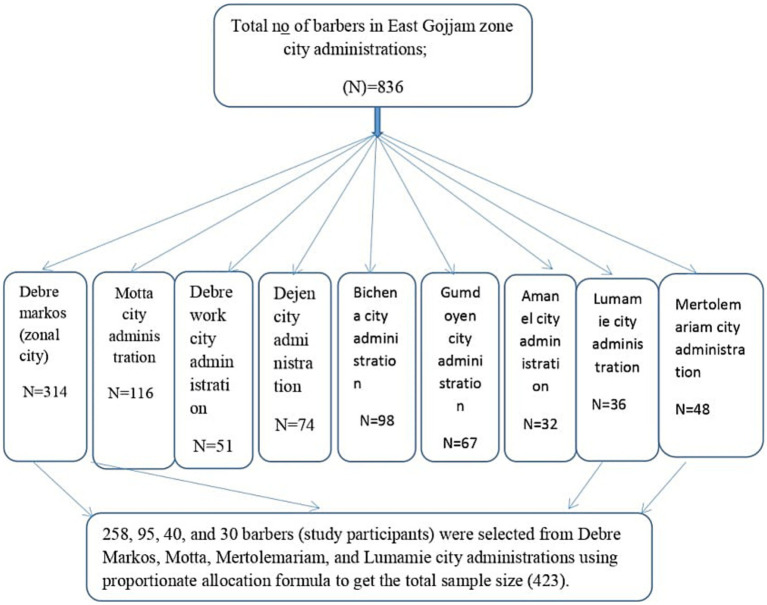 Figure 1
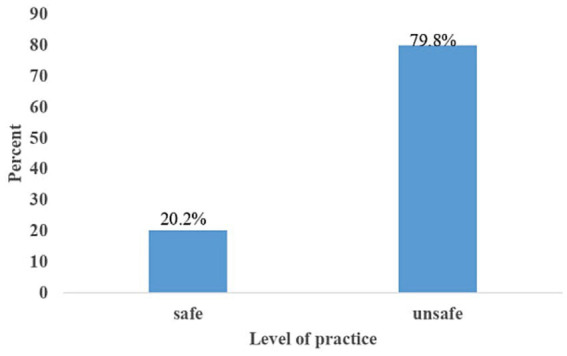 Figure 2
| Factors | CI | Power | Ratio | % Outcome in unexposed | % Outcome in exposed | Sample size | After adding 10% non-response rate | Reference |
|---|---|---|---|---|---|---|---|---|
| Working hours | 95% | 80% | 1 | 92.74% | 77.18% | 190 | 209 | ( |
| Residence | 95% | 80% | 1 | 75.27% | 93.97% | 136 | 150 | ( |
| Variable | Category | Frequency | Percent |
|---|---|---|---|
| Sex | Male | 335 | 81.50 |
| Female | 76 | 18.50 | |
| Age in years | 15–20 | 29 | 7.10 |
| 20–29 | 164 | 39.90 | |
| 30–39 | 134 | 32.60 | |
| 40–49 | 67 | 16.30 | |
| ≥50 | 17 | 4.10 | |
| Religion | Orthodox | 380 | 92.50 |
| Muslim | 25 | 6.10 | |
| Protestant | 6 | 1.50 | |
| Education | Unable to read and write | 48 | 11.70 |
| Primary and secondary school | 261 | 63.50 | |
| College | 95 | 23.10 | |
| Degree and above | 7 | 1.70 | |
| Marital | Single | 169 | 41.10 |
| Married | 234 | 56.90 | |
| Divorced | 7 | 1.70 | |
| Widowed | 1 | 0.20 | |
| Working hours | <8 | 89 | 21.70 |
| > = 8 | 322 | 78.30 | |
| Experience in years | <5 | 249 | 60.60 |
| 5–10 | 103 | 25.10 | |
| >10 | 59 | 14.40 | |
| Income in Ethiopian birr | <3,000 | 51 | 12.40 |
| 3,000–5,000 | 259 | 63.00 | |
| >5,000 | 101 | 24.60 | |
| Ultraviolet use | Yes | 310 | 75.40 |
| No | 101 | 24.60 |
| Knowledge | Level | Frequency | Percentage |
|---|---|---|---|
| Is hepatitis viral disease? | No | 287 | 69.80 |
| Yes | 124 | 30.20 | |
| Is hepatitis B transmitted by blood and body fluid? | No | 338 | 82.20 |
| Yes | 73 | 17.80 | |
| HBV transmitted by blades? | No | 191 | 46.50 |
| Yes | 220 | 53.50 | |
| HBV spread via sexual contact? | No | 338 | 82.20 |
| Yes | 73 | 17.80 | |
| Is jaundice one of the common symptom of HBV? | No | 311 | 75.70 |
| Yes | 100 | 24.30 | |
| HBV mostly affects liver? | No | 218 | 53.00 |
| Yes | 193 | 47.00 | |
| HBV can lead to cancer | No | 368 | 89.50 |
| Yes | 43 | 10.50 | |
| HBV can be transmitted from mother to child during pregnancy? | No | 359 | 87.30 |
| Yes | 52 | 12.70 | |
| HBV leads to lifelong infection? | No | 315 | 76.60 |
| Yes | 96 | 23.40 | |
| HBV has laboratory test? | No | 211 | 51.30 |
| Yes | 200 | 48.70 | |
| HBV has vaccine? | No | 389 | 94.60 |
| Yes | 22 | 5.40 | |
| HBV has post exposure prophylaxis? | No | 385 | 93.70 |
| Yes | 26 | 6.30 | |
| HBV has treatment? | No | 180 | 43.80 |
| Yes | 231 | 56.20 | |
| HBV infection can be prevented? | No | 182 | 44.30 |
| Yes | 229 | 55.70 | |
| Knowledge level | Adequate knowledge | 56 | 13.6 |
| Inadequate knowledge | 355 | 86.4 |
| Questions | Scale | Frequency | Percent |
|---|---|---|---|
| Do you agree to be personally tested for HBV infection? | Strongly disagree | 30 | 7.30 |
| Disagree | 109 | 26.50 | |
| Neutral | 63 | 15.30 | |
| Agree | 198 | 48.20 | |
| Strongly agree | 11 | 2.70 | |
| Do you agree new blades to be used for each customer? | Strongly disagree | 21 | 5.10 |
| Disagree | 64 | 15.60 | |
| Neutral | 43 | 10.6 | |
| Agree | 230 | 56.00 | |
| Strongly agree | 53 | 12.90 | |
| Do you agree having tattoos can be a risk factor for HBV? | Strongly disagree | 22 | 5.40 |
| Disagree | 100 | 24.30 | |
| Neutral | 101 | 24.60 | |
| Agree | 165 | 40.10 | |
| Strongly agree | 23 | 5.60 | |
| Do you agree to take vaccination against HBV? | Strongly disagree | 40 | 9.70 |
| Disagree | 147 | 34.80 | |
| Neutral | 78 | 19.00 | |
| Agree | 139 | 33.80 | |
| Strongly agree | 7 | 1.70 | |
| Do you agree avoiding cuts can be preventive for HBV? | Strongly disagree | 6 | 1.50 |
| Disagree | 46 | 11.20 | |
| Neutral | 72 | 17.50 | |
| Agree | 221 | 53.80 | |
| Strongly agree | 66 | 16.10 | |
| Do you agree antiseptic use is necessary for barbershop? | Strongly disagree | 3 | 0.70 |
| Disagree | 30 | 7.30 | |
| Neutral | 71 | 17.30 | |
| Agree | 226 | 55.00 | |
| Strongly agree | 81 | 19.70 | |
| Do you believe using PPE is essential during shaving? | Strongly disagree | 5 | 1.20 |
| Disagree | 27 | 6.50 | |
| Neutral | 68 | 16.50 | |
| Agree | 223 | 54.30 | |
| Strongly agree | 88 | 21.40 | |
| Do you agree vaccination of family member is necessary? | Strongly disagree | 38 | 9.20 |
| Disagree | 83 | 20.20 | |
| Neutral | 95 | 23.11 | |
| Agree | 163 | 39.70 | |
| Strongly agree | 32 | 7.80 | |
| Do you agree avoiding intravenous drug abuse is preventive for HBV? | Strongly disagree | 23 | 5.60 |
| Disagree | 74 | 18.00 | |
| Neutral | 112 | 27.32 | |
| Agree | 173 | 42.10 | |
| Strongly agree | 29 | 7.10 | |
| Do you agree avoiding extramarital sex is protective against HBV? | Strongly disagree | 11 | 2.70 |
| Disagree | 61 | 14.80 | |
| Neutral | 113 | 27.50 | |
| Agree | 194 | 47.20 | |
| Strongly agree | 32 | 7.80 | |
| Attitude level | Favorable | 228 | 55.5 |
| Unfavorable | 183 | 45.5 |
| Practice questions | Category | Frequency | Percent |
|---|---|---|---|
| Do you wash your hands before each customer? | No | 312 | 75.90 |
| Yes | 99 | 24.10 | |
| Do you use glove for each client? | No | 390 | 94.90 |
| Yes | 21 | 5.10 | |
| Do you change blades after each client? | No | 109 | 26.50 |
| Yes | 302 | 73.50 | |
| Do you reuse towels without sterilization? | No | 64 | 15.60 |
| Yes | 347 | 84.40 | |
| Do you disinfect/sterilize instruments between customers? | No | 142 | 34.50 |
| Yes | 269 | 65.50 | |
| Do you use razor for shaving? | No | 31 | 7.50 |
| Yes | 380 | 92.50 | |
| Do you change comb for each client? | No | 308 | 74.90 |
| Yes | 103 | 25.10 | |
| Do you use apron during shaving? | No | 77 | 18.70 |
| Yes | 334 | 81.30 | |
| Have you ever undergone screening for HBV infection? | No | 391 | 95.10 |
| Yes | 20 | 4.90 | |
| Have you ever vaccinated against HBV infection? | No | 402 | 97.80 |
| Yes | 9 | 2.20 | |
| Do you properly dispose blades? (burial/burn) | No | 211 | 51.30 |
| Yes | 200 | 48.70 | |
| Do you manage cuts by antiseptics? | No | 195 | 47.20 |
| Yes | 216 | 52.60 | |
| Practice level | Safe | 83 | 20.2 |
| Unsafe | 328 | 79.8 |
| Variable | Category | Unsafe | Safe | COR(95%CI) | AOR (95%CI) | ||
|---|---|---|---|---|---|---|---|
| Educational status | Unable to write and read | 41 | 7 | 3.20 (1.30–7.85) | 0.011 |
|
|
| Primary and secondary | 221 | 40 | 3.01 (1.78–5.11) | <0.001 |
|
| |
| College and above | 65 | 36 | 1 | 1 | |||
| Working hours | <8 h | 60 | 29 | 0.42 (0.25–0.71) | 0.001 |
|
|
| >8 h | 268 | 54 | 1 | 1 | |||
| Income | <3,000 | 36 | 15 | 0.59 (0.27–1.29) | 0.186 | 0.60 (0.24–1.48) | 0.268 |
| 3,000–5,000 | 211 | 48 | 1.09 (0.61–1.94) | 0.782 | 1.09 (0.57–2.09) | 0.797 | |
| >5,000 | 81 | 20 | 1 | 1 | |||
| Ultraviolet use | No | 92 | 9 | 3.21 (1.54–6.67) | 0.002 |
|
|
| Yes | 236 | 74 | 1 | 1 | |||
| Knowledge | Inadequate | 296 | 59 | 3.76 (2.068–6.85) | <0.001 |
|
|
| Adequate | 32 | 24 | 1 | 1 | |||
| Attitude | Unfavorable | 160 | 23 | 2.48 (1.47–4.21) | 0.001 |
|
|
| Favorable | 168 | 60 | 1 | 1 |
Peer Reviews
No public reviews on file for this paper yet. If you reviewed it on a platform where reviews are public (OpenReview, ICLR, NeurIPS, ICML), you can paste yours below so the community can read it here.
Videos
No videos yet. Explain this paper in a talk, walkthrough, or lecture? Add one.
Taxonomy
TopicsHepatitis B Virus Studies · Liver Disease Diagnosis and Treatment · Hepatitis Viruses Studies and Epidemiology
Introduction
Hepatitis B virus (HBV) is a serious and potentially life-threatening infection that affects the liver (1). It is a major global public health problem (1).The highest burden of hepatitis B infection is observed in the WHO Western Pacific Region and the WHO Africa Region, with approximately 116 million and 81 million chronically infected people, respectively (2).
Barber-related infections, including hepatitis B virus (HBV), remain a significant cause of illness and death, particularly in emerging and impoverished countries. These challenges are worsened by factors such as poverty and poor sanitation (3, 4). The prevalence of HBV among barbers in Sudan is 10.1% (5).
In regions where unsafe hair-cutting practices are prevalent, there is an increased risk of HBV transmission among various populations, particularly those who frequently visit barbershops. It has been highlighted that individuals who are living in areas with high HBV prevalence are particularly vulnerable as regular visits to barbershops with inadequate infection control measures put them at heightened risk (6).
Unsafe hair-cutting practices are increasingly recognized as a significant risk factor for the transmission of HBV, especially in settings where hygiene standards are not adequately maintained. Studies have shown that barbers and hairdressers often use sharp tools, such as razors and clippers, which may come into contact with blood. If these tools are not properly sterilized, there is a high risk of transmitting HBV through minor cuts, nicks, or shared equipment (7).
Despite the significant occupational risks faced by barbers, those in developing countries often have limited knowledge about HBV (8–10). A study in Pakistan showed only moderate awareness among barbers about the various modes of transmission of hepatitis (10).
Shaving is a widely practiced cultural activity in barbershops and roadside barber setups across much of Africa. This common practice can potentially facilitate the spread of HBV (11). Compared to the human immunodeficiency virus (HIV), HBV is 50 to 100 times more contagious (12).
Despite their vital role in the community and the continuous support, many barbers do not follow proper and hygienic haircutting practices (13). This activity can promote the spread of certain viruses, thereby contributing to a higher incidence of infectious diseases in many developing countries (14).
Barbers engage in cutting different types of hair, shaving, and trimming beards as part of their work. They are especially vulnerable to infections due to frequent exposure to wounds and scratches caused by sharp tools (11). Hair salons can act as centers for the spread of various contagious diseases, making them potentially hazardous environments. The risk increases significantly if equipment is not thoroughly decontaminated between clients (15).
Many barbers use razors and scissors on multiple customers without properly cleaning them, reflecting a lack of awareness about the risks of spreading germs and viral hepatitis (16). Instruments used in barbershops include trimmers, scissors, hair clippers, razors, blades, shavers, capes, and scarves. Proper sterilization or disinfection of these instruments is important to prevent the transmission of health hazards, including HBV (17).
In many barbershops, the risk of infection is high due to the use of equipment that has not been properly cleaned or decontaminated. This risk extends from patrons to other customers and is further exacerbated if the barber has unprotected cuts or bruises (14). Many individuals use barbershop services in their communities without being aware of these risks. As a result, barbers’ workplaces and activities may become hidden sources of community transmission of communicable diseases (14, 16).
Barbers often have inadequate practices for preventing HBV infections. A lack of awareness about health risks leads to poor habits, insufficient decontamination, and ineffective preventive measures in the barbering industry, creating an environment that facilitates the transmission of HBV (17, 18).
Key risk factors for the transmission of HBV include sharing razors, inadequate sterilization and decontamination of equipment, use of ineffective or questionable cleaning solutions, barbers lacking proper personal protective equipment, and careless handling of sharp objects (11, 14, 16, 17, 19, 20). Barbers in Ethiopia have minimal training and experience in managing the biological hazards associated with their profession (16).
In low-resource countries, most barbers are not vaccinated against HBV, putting them at risk of contracting the virus through unintentional contact with a customer’s blood or bodily fluids while cutting or styling hair (21).
National and municipal health departments, public health agencies, and professionals are highlighting the serious implications of infectious diseases such as hepatitis B associated with this profession through national campaigns and initiatives, including print and electronic media. Despite these efforts, standards in hairdressing practices remain insufficiently high (20).
Despite its significant impact, severity, and adverse consequences, there are limited published studies on the practices and associated factors related to the prevention of HBV among barbers, specifically in the East Gojjam Zone. Therefore, this study aimed to determine the level prevention practice of HBV and identify factors associated with it in Northwest Ethiopia.
Materials and methods
Study design
Cross-sectional study was employed.
Study area and period
The study was carried out in the East Gojjam Zone, located in the Amhara Regional State of Northwest Ethiopia, with its central city being Debre Markos. Debre Markos is approximately 299 kilometers from Addis Ababa, the capital city of Ethiopia, and approximately 268 kilometers from Bahir Dar, the capital of the Amhara Regional State. According to the 2014 Census by the Central Statistical Agency of Ethiopia, the zone has a population of 2,451,959 total population (1,199,952 males and 1,252,006 females) (22). Within the zone, there are 9 city administrations and a total of 836 barbers. The study took place from 1 April 2023 to 15 June 2023.
Source population
All barbers who were working in East Gojjam Zone city administrations.
Study population
Barbers who were working in randomly selected cities in East Gojjam city administrations.
Inclusion criteria
All barbers who were working in East Gojjam Zone city administrations.
Exclusion criteria
Participants whose barbershops were closed during the data collection period were excluded from the study.
Sample size determination
The sample size was calculated to assess both the level of prevention practices toward HBV and its associated factors. The calculation for the level of practice was based on the single population proportion formula. As the practice of HBV infection prevention and its associated factors had not been previously studied in Ethiopia, an assumption was made that 50% of barbers engaged in unsafe practices (23). With a confidence level of 95%, a margin of error of 5%, and considering a 10% non-response rate, the sample size was determined accordingly. The sample size was calculated by using the statistical formula for the practice level:
where n = desired sample size
Z*a/*2 = Z score at d = 95% confidence level = 1.96,
p = 50% = 0.5.
D = margin of error = 0.05.
n = (1.96)^2^ (0.5) (0.5)/(0.05)^2^ n = 384
A sample size of 384 was used and after adding a non-response rate of 10%, the final sample size was 423. Sample size for associated factors was calculated (Table 1).
The largest sample size was found on using single population proportion formula, which was 423.Therefore, the final sample size was 423.
Sampling technique and procedure
Among the nine city administrations, four of them, namely, Debre Markos, Motta, Mertolemariam, and Lumamie, were randomly selected using a lottery method. The proportionate allocation formula was used to distribute the sample size across the selected city administrations. Within each barbershop, one barber was randomly selected to participate in the study using a lottery method (Figure 1).
Sampling procedure for practice and associated factors toward prevention of hepatitis B virus among barbers in East Gojjam Zone city administrations, Northwest Ethiopia, 2023.
Variables
Dependent variable
Barbers prevention practices regarding hepatitis B virus prevention (safe vs. unsafe practices).
Independent variables
The independent variables of this study included sociodemographic factors, such as age, sex, educational level, marital status, religion, income, working hours, and work experience, the presence of an ultraviolet sterilizer, and the participants’ knowledge and attitude levels.
Operational definitions
Adequate knowledge
Fourteen knowledge-related questions were used to measure the level of knowledge. These questions were structured as Yes or No, with participants earning a score of ‘1’ for a correct answer and ‘0’ for an incorrect one. The total possible score ranged from 0 to 14. Participants who correctly answered more than 50% (7 out of 14) of the questions were categorized as having adequate knowledge (24, 25).
Inadequate knowledge
Respondents who correctly answered 50% or fewer of the knowledge questions correctly were considered to have inadequate knowledge (24, 25).
Favorable attitude
Attitude was assessed using 10 Likert-type questions, with responses ranging from 1 (strongly disagree) to 5 (strongly agree). The maximum possible score was 50, whereas the minimum score was 10. Respondents who correctly answered more than the mean score of 10 attitude questions of the respondents after calculating the mean using SPSS were considered to have a favorable attitude (26).
Unfavorable attitude
Respondents who correctly answered at or below the mean score of attitude questions of the respondents after calculating the mean using SPSS were considered to have an unfavorable attitude (26).
Safe practice
The practice level of the respondents was evaluated using 12 Yes or No questions related to practice. Participants received a score of 1 for each correct answer and 0 for each incorrect or unanswered question. The total possible score ranged from 0 to 12. Respondents who correctly answered more than 50% (more than six questions) of the practice questions were classified as having safe practices (24–26).
Unsafe practice
Respondents who answered 50% or fewer of the practice questions correctly were classified as having unsafe practices (24–26).
NO answer: in the knowledge, and practice questions No refers to the combined response of “No” and “Do not know.”
Clean
A barbershop is considered clean if there is no visible dust or dirt on the floor or walls, and if the instruments are shiny, and properly organized (27).
Attractive
A barbershop is considered attractive if it draws interest through high-quality products, product displays, and a good location or accessibility (28).
Ventilated
A typical situation where outdoor air is exchanged with indoor air through a single window opening (29).
Data collection tools and procedure
An interviewer-administered questionnaire was used to gather data on respondents’ socio-demographic characteristics (such as age, sex, educational status, and work experience), their practices regarding HBV prevention (using 12 questions), and their knowledge (using 14 Yes or No questions) and attitudes (using 10 Likert-scale questions) toward HBV transmission and prevention methods. Additionally, an observational checklist was used to collect data.
Data collection was carried out by four BSC nurses under the supervision of two BSC supervisors.
Data quality control
Training was provided to both data collectors and supervisors. A pretest was conducted on a 5% sample of the population in Basoliben Woreda 1 week prior to the actual data collection. This pretest aimed to assess the clarity of the data collection tools. Data collectors were trained to reduce ambiguity when respondents required assistance and to enhance the clarity of the information gathered. After data collection, each questionnaire was reviewed for errors and completeness. The collected data were properly handled and stored until analysis. The reliability of the questionnaires was checked using Cronbach alpha with the value of 0.741. This was very important to identify the clarity of the questions in the questionnaire, the time taken to complete the questions, and also, modification has been done.
Data processing and analysis
First, the data were checked for completeness and consistency. Then, it was coded and entered into EpiData version 4.6. After that, the data were exported to SPSS version 25 for analysis. Model fit was assessed using the Hosmer–Lemeshow test, which indicated good fit with a p-value of 0.48. Multicollinearity was checked using variance inflation factors, with a maximum value of 1.75.
A binary logistic regression model was used to identify factors associated with the status of practices among barbers. This was done by calculating the odds ratio and p-value.
Explanatory variables with a p-value less than 0.25 in the bivariable logistic regression were entered into the final multivariable logistic regression analysis to control for possible confounding and to perform further analysis. Variables with a p-value less than 0.05 were considered significantly associated with the dependent variable.
Descriptive analysis using frequencies, proportions, and graphs was performed to describe the number and percentage of sociodemographic characteristics and other variables in the sample.
Ethical considerations
Ethical clearance was obtained from the Institutional Research Ethics Review Board (IRERC) of Debre Markos University. The IRERC had reviewed the study protocol and approved it. The approval number provided by IRERC was R/C/S/D/102/01/23. Written informed consent was used. The data were not disclosed to any person other than the principal investigator. Confidentiality of the information was maintained throughout the study. An explanation of the objective of the study was given to the study participants. Written informed consent was used. In addition, affirmation that they are free to withdraw consent and to discontinue participation was made. To ensure confidentiality of the patients’ information, their names and address of the patients were not recorded during the data collection. The investigator used the collected data only to answer the stated objectives. This study was conducted in accordance with the Declaration of Helsinki.
Results
Out of 423 participants, 411 actually took part in the study, resulting in a response rate of 97.1%. Among these respondents, 335 (81.5%) were male. Approximately 39.9% of the participants were aged between 20 and 29 years, with a mean age of 31.69 years and a standard deviation of ±8.728. The majority, 380 (92.5%), were followers of the Orthodox Christian religion. Approximately 249 (60.6%) had less than 5 years of experience. Additionally, 322 (78.3%) of the participants worked greater than 8 h a day. Nearly three-fourths of the participants, 310 (75.4%), used UV sterilizers. Nearly two-thirds (63.0%) of the participants had a monthly income ranging from 3,000 to 5,000 Ethiopian birr (Table 2).
Knowledge of barbers about hepatitis B virus
Out of the total participants, 355 (86.4%) had inadequate knowledge, whereas 56 (13.6%) had adequate knowledge, based on the knowledge questions they answered according to the operational definitions provided above (Table 3).
Attitude of barbers about hepatitis B virus infection prevention
Approximately 228 (55.5%) of the barbers had a favorable attitude, whereas 183 (44.5%) had an unfavorable attitude. The attitudes of barbers were assessed through 10 questions, each rated from 1 to 5, with a total score range of 10 to 50. The mean score was used to classify attitudes: barbers who scored below or equal to the mean of 33.98 were considered to have an unfavorable attitude, whereas those who scored above the mean were regarded as having a favorable attitude (Table 4).
Prevention practice of barbers toward HBV infection prevention
In this study, 328 (79.8%) of the respondents had unsafe practices (95% CI [75.6–83.6%], Figure 2). Among the respondents, 99 (24.1%) washed their hands before and after cutting and shaving, 21 (5.1%) used gloves, 302 (73.5%) used a new blade for each customer, and 347 (84.4%) reused towels without sterilization. Additionally, 269 (65.5%) disinfected or sterilized instruments, 380 (92.5%) used razors for shaving, 103 (25.1%) changed combs, and 334 (81.3%) used an apron during shaving. Only 20 (4.9%) were screened for HBV, and 9 (2.2%) were vaccinated for HBV. Furthermore, 200 (48.7%) properly disposed of blades, and 216 (52.6%) managed cuts with antiseptics (Table 5).
Hepatitis B virus prevention practice status among barbers in East Gojjam Zone city administrations, 2023.
Observed results for barbers prevention practice toward HBV infection
From the observations
Approximately 284 (69.1%) of the barbershops were well ventilated, 222 (54.0%) of the barbershops were clean, 233 (56.7%) of the barbershops were considered attractive, and 212 (51.6%) had their own water supply. Nearly all participants (408) had an electricity supply; those without electricity used manual shavers.
Regarding practices
Approximately 359 (87.3%) of the respondents did not wash their hands. Almost all participants (408 or 99.3%) did not use gloves. Approximately 42 (10.3%) did not use a new blade for each customer. Approximately 130 (31.6%) reused towels without sterilization. Approximately 144 (35%) did not disinfect or sterilize instruments. Approximately 334 (81.3%) did not change combs; 388 (94.4%) used razors for shaving; approximately half of them, 223 (54.3%), did not properly dispose of blades; and 220 (53.5%) did not manage cuts with antiseptics.
Factors associated with prevention practices of barbers toward HBV infection
In the bi-variable logistic regression analysis, the following variables were deemed eligible for inclusion in the multivariable logistic regression model based on a p-value of <0.25: educational status, income, working hours, knowledge, attitude of barbers, and ultraviolet sterilizer use.
In the multivariable logistic regression analysis, the predictor variables that were significantly associated with practice included educational status, working hours, knowledge, attitude of barbers, and the use of ultraviolet sterilizers.
This study found that barbers who could not read or write were nearly four times more likely to engage in unsafe practices (AOR 3.75, 95% CI [1.39–10.12]) than those with college education or higher. Additionally, barbers with primary and secondary school education were 3.4 times more likely to have unsafe practices (AOR 3.44, 95% CI [1.89–6.27]) than those with college education or higher.
Barbers who were using ultraviolet sterilizers were nearly three times more likely to have unsafe practices (AOR 2.85, 95% CI [1.30–6.27]) than those who did not use ultraviolet sterilizers.
This study revealed that barbers with inadequate knowledge were more than four times more likely to engage in unsafe practices (AOR 4.23, 95% CI [2.13–8.40]) than those with adequate knowledge. Additionally, barbers with an unfavorable attitude were more than two times as likely to have unsafe practices (AOR 2.40, 95% CI [1.34–4.31]) than those with a favorable attitude.
Furthermore, barbers who worked less than 8 h were 3.7 times less likely to practice unsafe methods (AOR 0.27, 95% CI [0.15–0.50]) than those working more than 8 h (Table 6).
Discussion
The aim of this study was to evaluate the prevention practices and associated factors related to the prevention of hepatitis B virus among barbers in East Gojjam, Northwest Ethiopia. In this study, 79.8% (95% CI: 75.6–83.6%) of the respondents had unsafe practice. This high prevalence of unsafe practices suggests the need for urgent intervention to improve awareness, training, and infection control measures in study setting.
This level of practice was higher than studies in Hawassa, Ethiopia 28.5% (30); Woldia, Ethiopia 59.5% (24); Mosul 58.33% (18); and Fiji (64.1%) (17). This discrepancy may be attributed to differences in socio-demographic factors, sample size, and economic status between regions (31). The sample size in the current study was relatively small, with 117 participants in Fiji and 60 participants in Mosul. In contrast, the sample size in Hawassa was larger, but there were differences in the items used to assess the practice level.
The findings of this study indicated that the level of unsafe practices was lower than those observed in studies conducted in Sudan (5), Yemen (32), Izmir (33), and Punjab (34). This discrepancy may be due to differences in access to healthcare infrastructure, resources, and technology among the countries, influenced by economic and other social factors. For example, barbers in more developed countries may have better access to sterilization equipment (e.g., ultraviolet sterilizers) and more disposable income to invest in these tools. In contrast, in developing countries like Ethiopia, economic constraints may limit access to such resources, leading to unsafe practices.
This study shows that barbers who did not use ultraviolet sterilizers (AOR 2.85, 95% CI: 1.30–6.27) were significantly associated with unsafe practices. This finding is supported by studies in Gondar, Ethiopia (16) and Hawassa, Ethiopia (30). This is because barbers who use ultraviolet sterilizers understand the significance of these devices. Ultraviolet sterilizers are highly effective in eliminating all types of microorganisms as they use light with a wavelength of at least 253.7 nanometers to disinfect bacteria, viruses, and other microorganisms (35, 36), thus preventing infections. However, if barbers do not use this equipment, they may transmit microorganisms from one customer to another, potentially even to themselves. Moreover, the use of proper sterilization equipment is essential for preventing HBV transmission in barbershops. Inadequate sterilization practices, including the failure to use ultraviolet sterilizers, have been documented as major risk factors for the spread of bloodborne infections (37). This highlights the need for policies to ensure barbershops have access to and use effective sterilization tools, particularly in resource-limited settings. Poor knowledge is likely to be associated with unfavorable attitudes (38).
In this study, Barbers who cannot read and write [AOR, 3.75, 95% CI (1.39–10.12)] and barbers who were at primary and secondary levels [AOR, 3.44, 95% CI (1.89–6.27)] were significantly associated with unsafe practice. This result was supported by studies in Gondar, Ethiopia (39), and Italy (40). This is because when barbers have inadequate knowledge about the causes, risk factors, and transmission routes of infections, they fail to properly clean, disinfect, and sterilize barbering instruments to eradicate microorganisms. Additionally, they may not use personal protective equipment to minimize cross-contamination for both their customers and themselves (41). As a result, infectious diseases can spread from person to person.
Moreover, it is obvious that improving the educational status of barbers may be a crucial intervention for bettering HBV prevention practices as education plays a crucial role in fostering the use of health-promoting habits. These results recommends the importance of ensuring that barbers receive adequate education and training, particularly in the areas of infection control and disease prevention.
This study found that barbers with inadequate knowledge (AOR 4.23, 95% CI: 2.13–8.40) and unfavorable attitudes toward infection control (AOR 2.40, 95% CI: 1.34–4.31) were more likely to be engaged in unsafe practices. This is due to a lack of awareness about HBV transmission and prevention methods can lead to negligent practices that increase the risk of infection (20). Similarly, unfavorable attitudes toward infection control may reflect a lack of motivation or perceived importance of adhering to safety procedures. These findings emphasize the need for organized training programs that maintain barbers with the necessary knowledge about HBV transmission, prevention strategies, fostering positive attitudes toward infection control, and the importance of infection control measures.
Barbers who worked fewer than 8 h were 3.7 (1/2.70) times less likely to practice unsafe methods (AOR 0.27, 95% CI 0.15–0.50) than those working more than 8 h, contrary to studies in Gondar (16) and Hawassa (30). Barbers who work less hours may have more time to devote to infection control practices, like properly sterilizing instruments and following hygiene guidelines. However, extended workdays may result in exhaustion, rushed processes, and a disregard for safety precautions.
Conclusion
Barbers’ practices regarding the prevention of hepatitis B virus infection were found to be substandard. Unsafe practices were significantly associated with several factors, including lower education levels among barbers, non-use of ultraviolet sterilizers, inadequate knowledge, working less than 8 h, and having an unfavorable attitude toward hepatitis B infection prevention.
To improve the knowledge and practices of barbers, specific actions should be implemented, such as providing training on infection control. Barbers should use ultraviolet sterilizers and appropriate personal protective equipment to prevent the transmission of infectious diseases, including HBV. Qualitative studies could also be conducted to gain a deeper understanding of the poor attitudes and practices observed.
The reference list from the paper itself. Each links out to its DOI / PubMed record.
- 1Poordad FF. Presentation and complications associated with cirrhosis of the liver. Curr Med Res Opin. (2015) 31:925–37. doi: 10.1185/03007995.2015.1021905, PMID: 25697811 · doi ↗ · pubmed ↗
- 2Iannacone M Guidotti LG. Immunobiology and pathogenesis of hepatitis B virus infection. Nat Rev Immunol. (2022) 22:19–32. doi: 10.1038/s 41577-021-00549-4, PMID: 34002067 · doi ↗ · pubmed ↗
- 3Wazir MS Mehmood S Ahmed A Jadoon HR. Awareness among barbers about health hazards associated with their profession. J Ayub Med Coll Abbottabad. (2008) 20:35–8. PMID: 19385454 · pubmed ↗
- 4Ambadekar N Wahab S Zodpey S Khandait D. Effect of child labour on growth of children. Public Health. (1999) 113:303–6. doi: 10.1016/S 0033-3506(99)00185-7, PMID: 10637524 · doi ↗ · pubmed ↗
- 5Nafi M Elmonzir M Elkhair A Abdeen N. Prevalence of hepatitis B virus and hepatitis C virus among barbers at South Khartoum. Sudan Med Lab J. (2022) 10:45–51. doi: 10.52981/smlj.v 10i 1.2773 · doi ↗
- 6Adjei-Gyamfi S Asirifi A Asobuno C Korang FK. Knowledge and occupational practices of beauticians and barbers in the transmission of viral hepatitis: a mixed-methods study in Volta region of Ghana. P Lo S One. (2025) 20:e 0306961. doi: 10.1371/journal.pone.0306961, PMID: 39821157 PMC 11737681 · doi ↗ · pubmed ↗
- 7Yang J Hall K Nuriddin A Woolard D. Risk for hepatitis B and C virus transmission in nail salons and barbershops and state regulatory requirements to prevent such transmission in the United States. J Public Health Manag Pract. (2014) 20:E 20–30. doi: 10.1097/PHH.0000000000000042, PMID: 25250760 · doi ↗ · pubmed ↗
- 8Mutocheluh M Kwarteng K. Knowledge and occupational hazards of barbers in the transmission of hepatitis B and C was low in Kumasi, Ghana. Pan Afr Med J. (2015) 20:20. doi: 10.11604/pamj.2015.20.260.4138, PMID: 26161183 PMC 4484403 · doi ↗ · pubmed ↗