Parp3 assists muscle function and skeletal muscle differentiation by selectively adjusting H3K27me3 enrichment
Zuleyha Yildirim, Aurélia Noll, Kathline Martin-Hernandez, Jean-Christophe Amé, Najat Hanini, Nadia Messaddeq, Isabelle Robert, Bernardo Reina San Martin, Gunn Hildrestrand, Magnar Bjoras, Françoise Dantzer

TL;DR
This study shows that Parp3 helps muscle development and function by controlling a specific histone modification that affects gene expression.
Contribution
The study identifies Parp3 as a novel regulator of skeletal muscle differentiation and function through epigenetic mechanisms.
Findings
Parp3 promotes skeletal muscle integrity and myogenic differentiation.
Parp3 increases H3K27me3 enrichment on specific genes and interacts with Ezh2.
Parp3 ADP-ribosylates Ezh2 in vitro, linking it to epigenetic control of gene expression.
Abstract
Poly(ADP-ribose) polymerase 3 (Parp3) is known for its role in DNA repair, mitotic division, and cancer aggressiveness. Still, its physiological roles have yet to be defined. Here, we combined in vivo studies using Parp3-deficient mice with in cellulo studies to explore the involvement of Parp3 in skeletal muscle function and muscle differentiation. We show that Parp3 contributes to skeletal muscle integrity and promotes myogenic differentiation. Mechanistically, we show that Parp3 promotes the enrichment of the repressive histone mark H3K27me3 onto a panel of selected genes. For some genes, Parp3 also helps the binding of Ezh2, the histone methyltransferase that catalyzes H3K27me3. Moreover, Parp3 ADP-ribosylates Ezh2 in vitro. Altogether, these findings unveil Parp3 as a driver of efficient murine skeletal myogenesis in vitro and muscle function in young adults, and highlight an…
Genes, proteins, chemicals, diseases, species, mutations and cell lines named across the full text — each resolved to its canonical identifier and authoritative record.
Click any figure to enlarge with its caption.
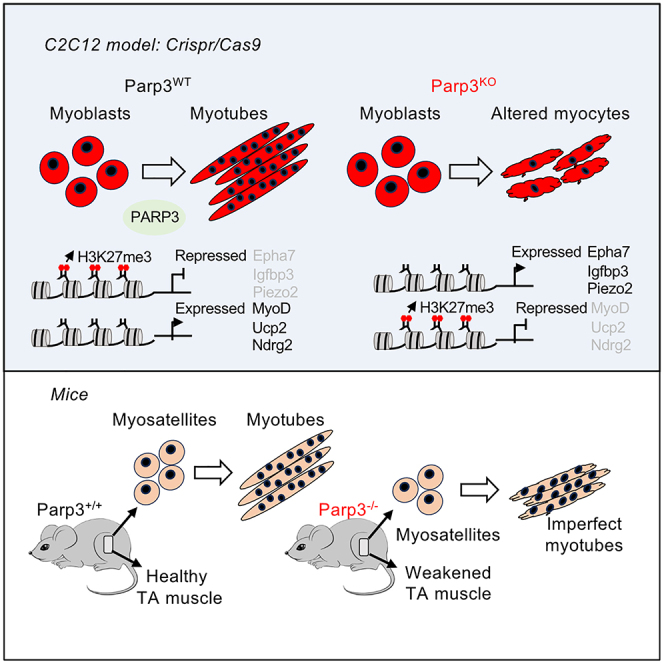 Figure 1
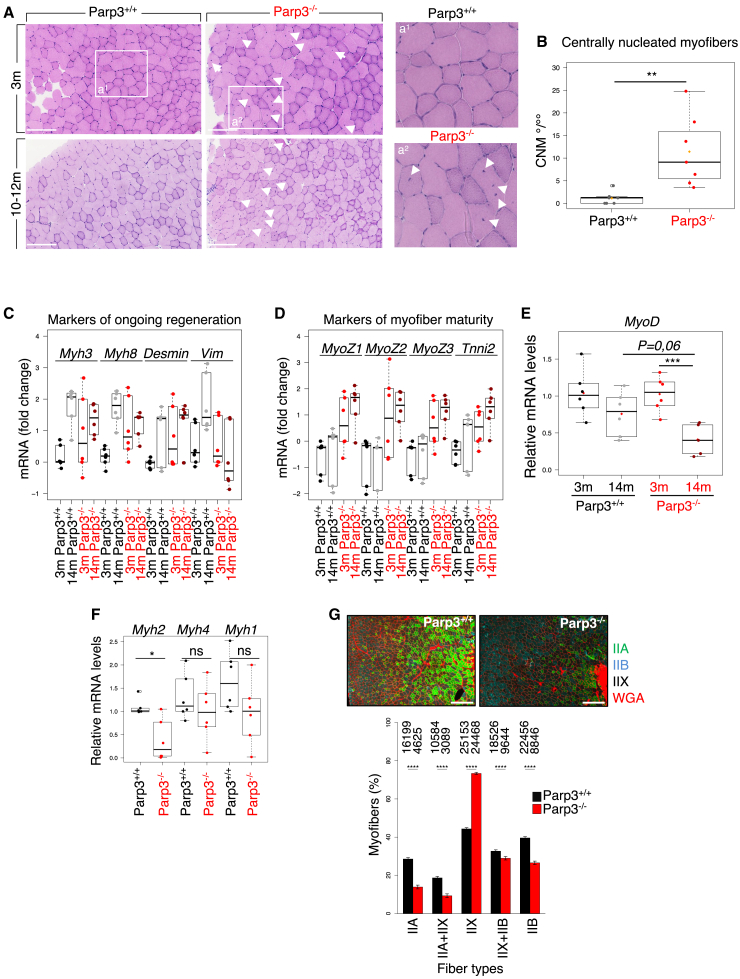 Figure 2
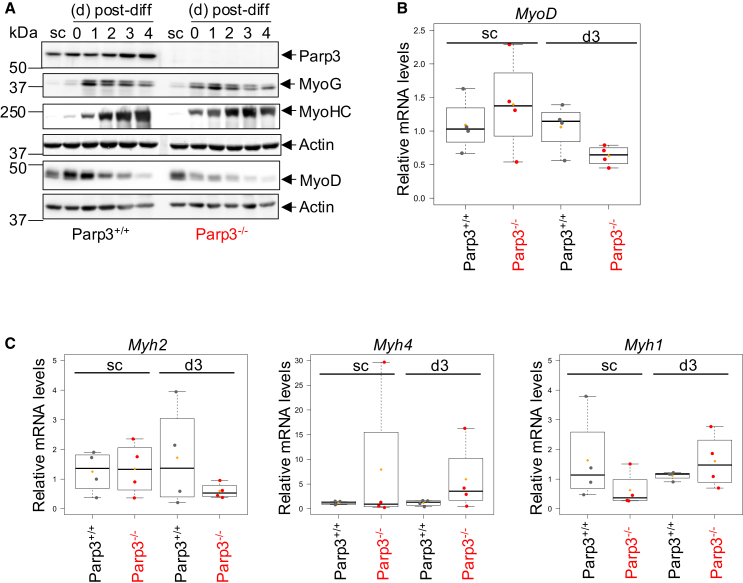 Figure 3
 Figure 4
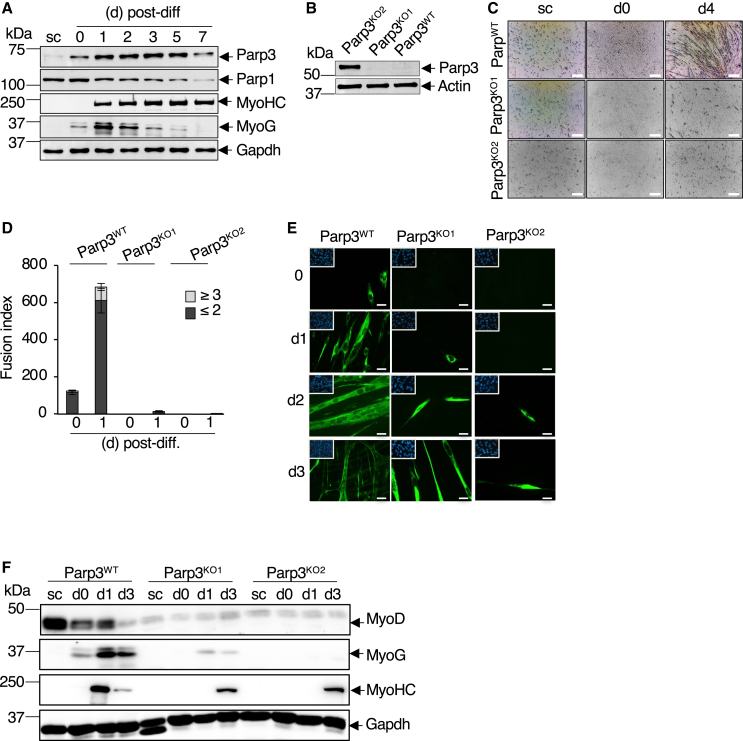 Figure 5
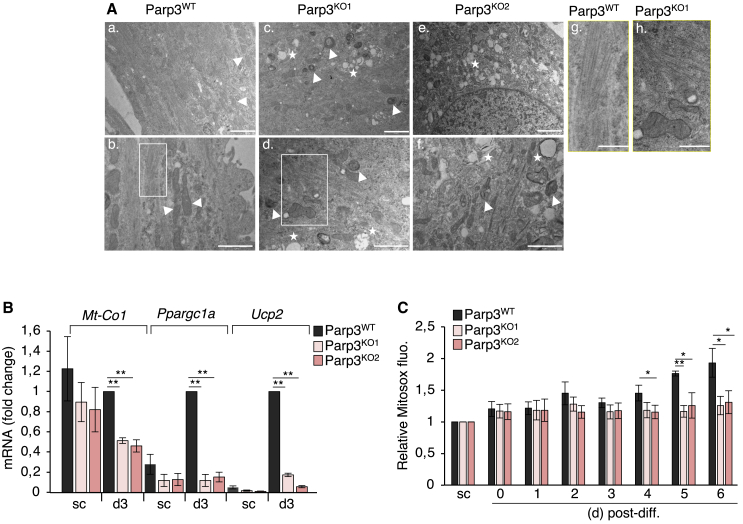 Figure 6
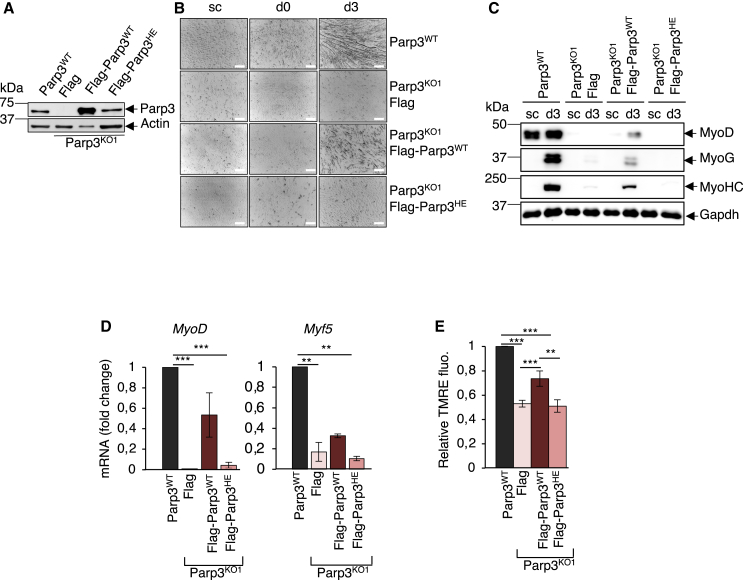 Figure 7
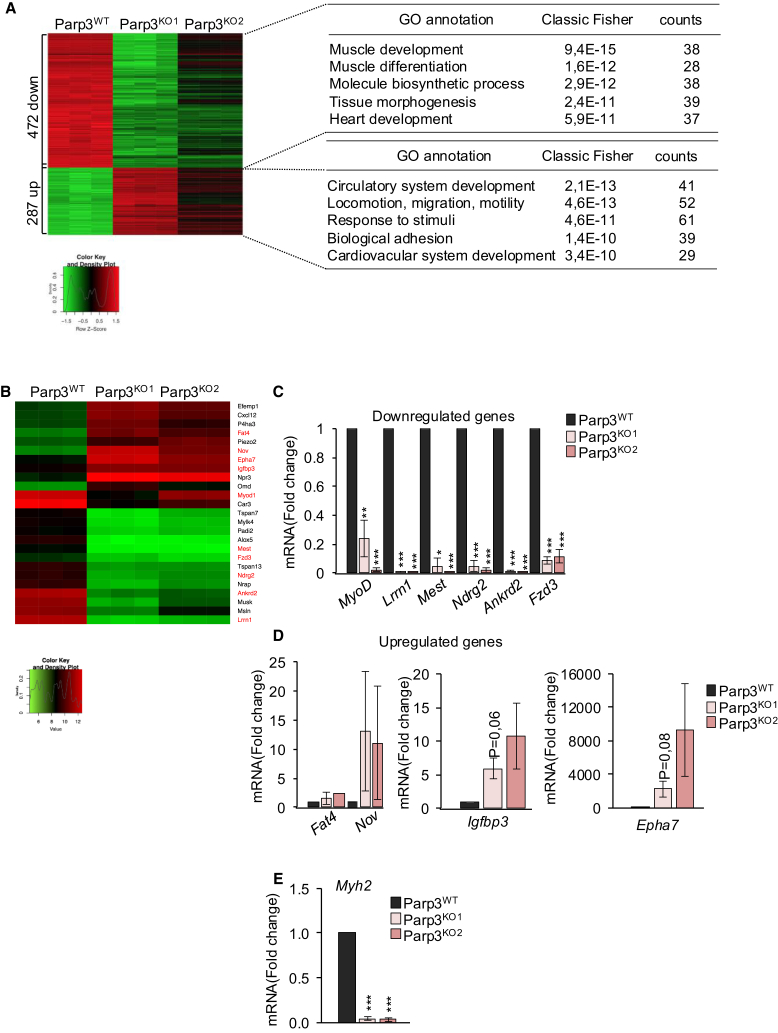 Figure 8
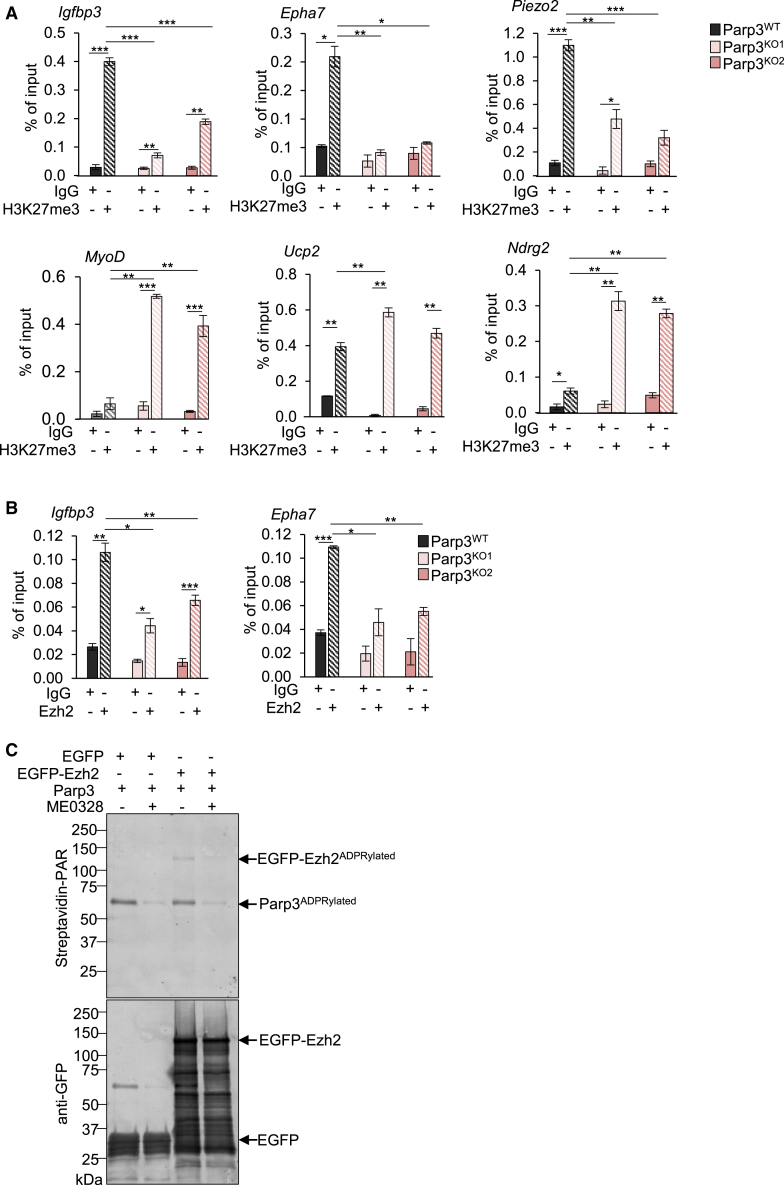 Figure 9
Peer Reviews
No public reviews on file for this paper yet. If you reviewed it on a platform where reviews are public (OpenReview, ICLR, NeurIPS, ICML), you can paste yours below so the community can read it here.
Videos
No videos yet. Explain this paper in a talk, walkthrough, or lecture? Add one.
Taxonomy
TopicsMitochondrial Function and Pathology · Histone Deacetylase Inhibitors Research · RNA modifications and cancer