GOT2: New therapeutic target in pancreatic cancer
Jiarui Bu, Zeyu Miao, Qing Yang

TL;DR
This paper explores GOT2 as a potential new target for treating pancreatic cancer by examining its role in metabolism and immunity.
Contribution
The paper highlights GOT2's potential as a novel therapeutic target in pancreatic cancer.
Findings
GOT2 is part of the malate-aspartate shuttle system and affects cellular redox balance.
GOT2 influences amino acid metabolism and may impact cancer progression.
GOT2's metabolic and immune effects could lead to new treatment strategies.
Abstract
In recent years, the incidence and mortality rates of pancreatic cancer have been steadily increasing, and conventional therapies have shown a high degree of tolerance. Therefore, the search for new therapeutic targets remains a key issue in current research. Mitochondrial glutamic-oxaloacetic transaminase 2 (GOT2) is an important component of the malate-aspartate shuttle system, which plays an important role in the maintenance of cellular redox balance and amino acid metabolism, and has the potential to become a promising target for anti-cancer therapy. In this paper, we will elaborate on the metabolic and immune effects of GOT2 in pancreatic cancer based on existing studies, with a view to opening up new avenues for the treatment of pancreatic cancer.
Genes, proteins, chemicals, diseases, species, mutations and cell lines named across the full text — each resolved to its canonical identifier and authoritative record.
Click any figure to enlarge with its caption.
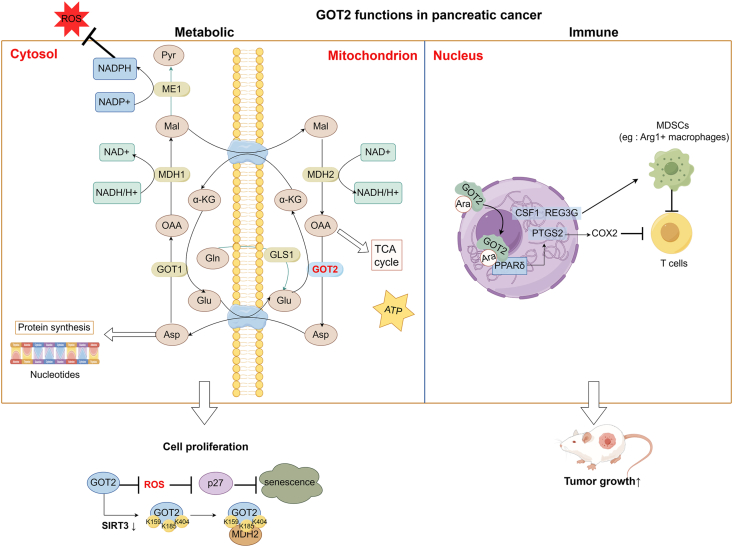 Figure 1
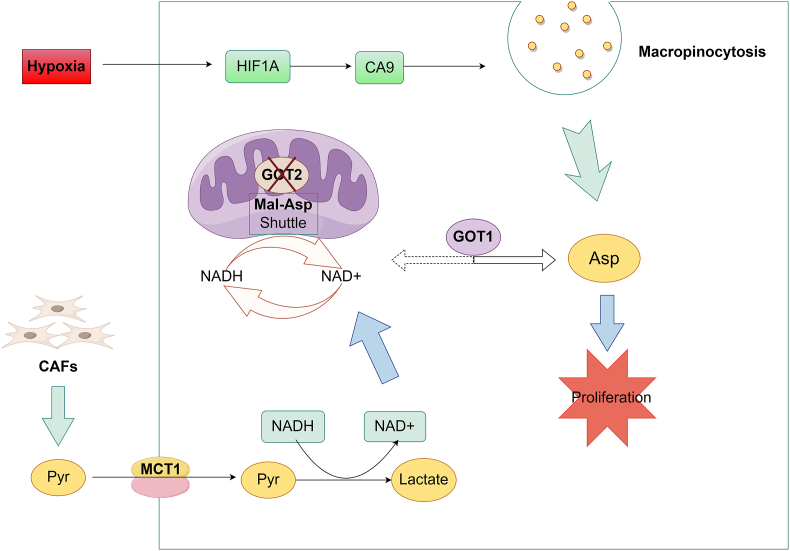 Figure 2
Peer Reviews
No public reviews on file for this paper yet. If you reviewed it on a platform where reviews are public (OpenReview, ICLR, NeurIPS, ICML), you can paste yours below so the community can read it here.
Videos
No videos yet. Explain this paper in a talk, walkthrough, or lecture? Add one.
Taxonomy
TopicsCancer, Hypoxia, and Metabolism · Pancreatic and Hepatic Oncology Research · Cancer Research and Treatments