LDL cholesterol burden in elderly patients with familial hypercholesterolemia: Insights from real-world data
Torunn Melnes, Martin P. Bogsrud, Jacob J. Christensen, Amanda Rundblad, Kjetil Retterstøl, Ingunn Narverud, Pål Aukrust, Bente Halvorsen, Stine M. Ulven, Kirsten B. Holven

TL;DR
This study uses real-world data to show that elderly patients with FH who develop heart disease have higher lifetime LDL cholesterol exposure, emphasizing the need for early treatment.
Contribution
The study introduces LDL-C burden as a novel metric to assess cardiovascular risk in elderly FH patients using real-world data.
Findings
FH patients with CHD had significantly higher LDL-C burden at ages 45, 50, and 60 compared to those without CHD.
Women had higher time-weighted average LDL-C during follow-up at the Lipid Clinic.
The median LDL-C burden at CHD onset was 352 mM-years, with a trend toward lower values in women.
Abstract
Familial hypercholesterolemia (FH) is a genetic disorder characterized by elevated low-density lipoprotein cholesterol (LDL-C) and increased risk of premature coronary heart disease (CHD). While current LDL-C levels usually guides therapy, the cumulative exposure to LDL-C (the LDL-C burden) is suggested to offer a more precise estimate of cardiovascular risk in people with FH. Therefore, using real-world data, this study aimed to estimate the LDL-C burden at different ages in elderly FH patients with and without CHD, and to assess the LDL-C burden at CHD onset. Data was retrospectively collected from the medical records of elderly (>60 years) FH patients at the Lipid Clinic in Oslo. The LDL-C burden (mM-years) was estimated based on repeated LDL-C measurements and information on lipid-lowering medication. Time-weighted average (TWA) LDL-C was calculated as LDL-C burden divided by…
Genes, proteins, chemicals, diseases, species, mutations and cell lines named across the full text — each resolved to its canonical identifier and authoritative record.
Click any figure to enlarge with its caption.
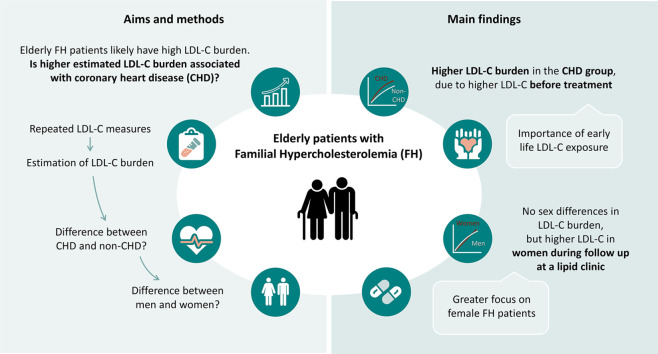 Figure 1
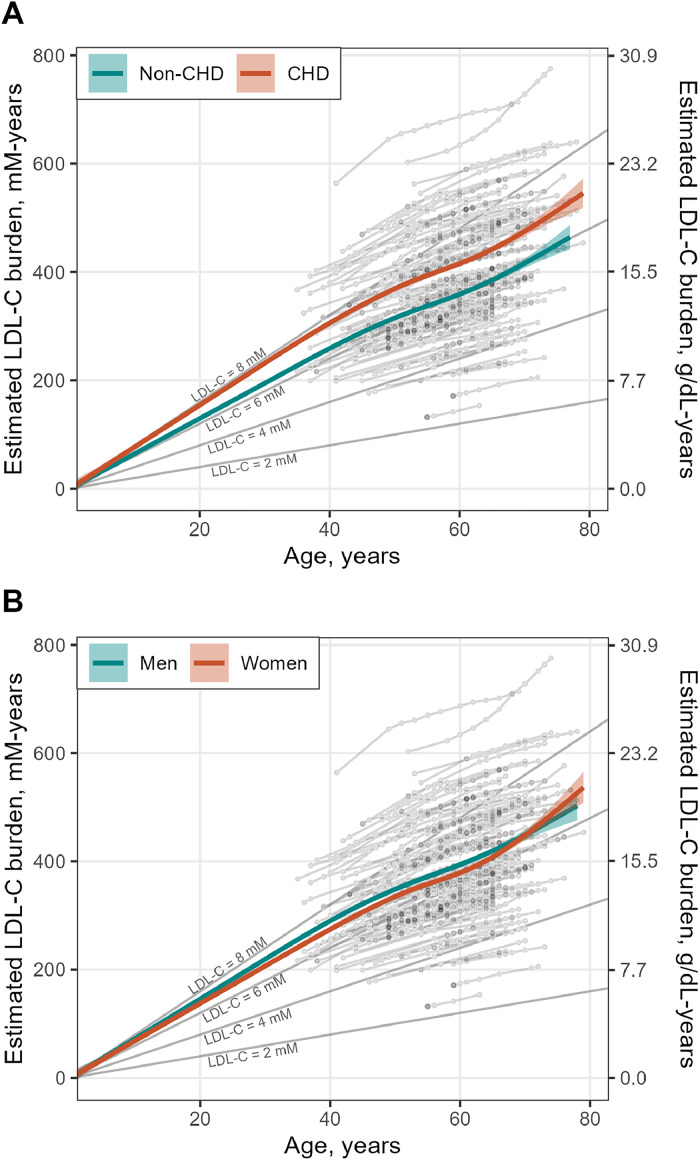 Figure 2
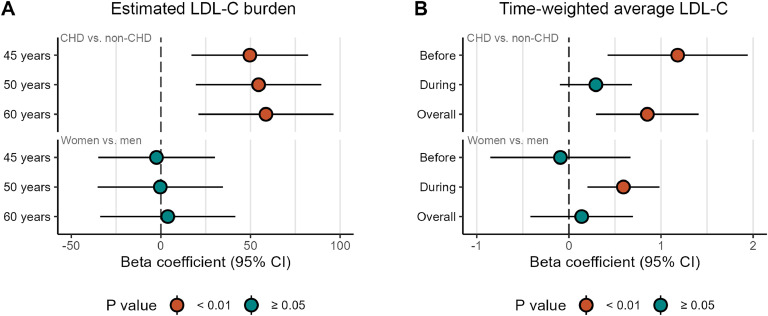 Figure 3
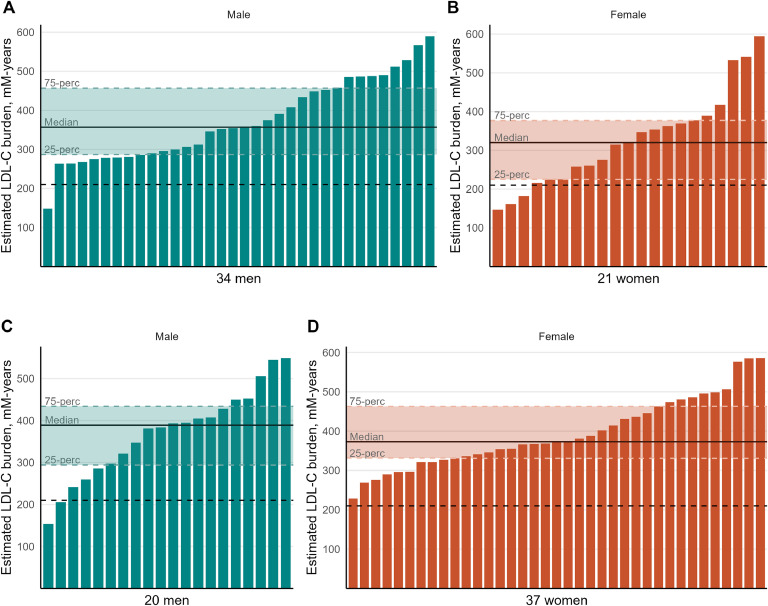 Figure 4
Peer Reviews
No public reviews on file for this paper yet. If you reviewed it on a platform where reviews are public (OpenReview, ICLR, NeurIPS, ICML), you can paste yours below so the community can read it here.
Videos
No videos yet. Explain this paper in a talk, walkthrough, or lecture? Add one.
Taxonomy
TopicsLipoproteins and Cardiovascular Health · Diabetes, Cardiovascular Risks, and Lipoproteins · Cancer, Lipids, and Metabolism