Understanding the Relationship Between Ecological Momentary Assessment Methods, Sensed Behavior, and Responsiveness: Cross-Study Analysis
Diane Cook, Aiden Walker, Bryan Minor, Catherine Luna, Sarah Tomaszewski Farias, Lisa Wiese, Raven Weaver, Maureen Schmitter-Edgecombe

TL;DR
This study analyzes how factors like time of day and activity levels affect responses to real-time well-being surveys using mobile devices.
Contribution
The study provides new insights into how EMA response rates and quality are influenced by demographics, behavior context, and study design.
Findings
EMA response rates were highest in the evening and on weekdays, but varied by age group.
Response quality declined over time, with more careless responses and less variance.
EMA prompts timed near activity transitions and shorter surveys improved response rates.
Abstract
Ecological momentary assessment (EMA) offers an effective method to collect frequent, real-time data on an individual’s well-being. However, challenges exist in response consistency, completeness, and accuracy. This study examines EMA response patterns and their relationship with sensed behavior for data collected from diverse studies. We hypothesize that EMA response rate (RR) will vary with prompt time of day, number of questions, and behavior context. In addition, we postulate that response quality will decrease over the study duration and that relationships will exist between EMA responses, participant demographics, behavior context, and study purpose. Data from 454 participants in 9 clinical studies were analyzed, comprising 146,753 EMA mobile prompts over study durations ranging from 2 weeks to 16 months. Concurrently, sensor data were collected using smartwatch or smart home…
Genes, proteins, chemicals, diseases, species, mutations and cell lines named across the full text — each resolved to its canonical identifier and authoritative record.
Click any figure to enlarge with its caption.
 Figure 1
 Figure 2
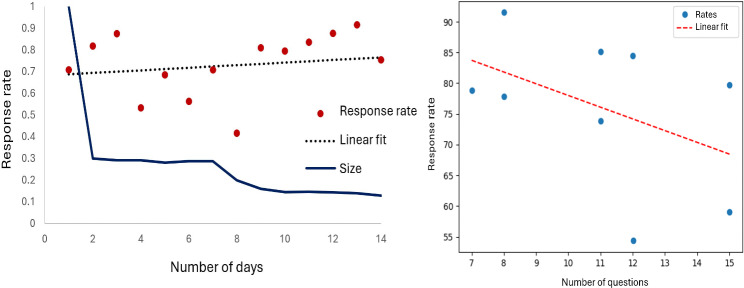 Figure 3
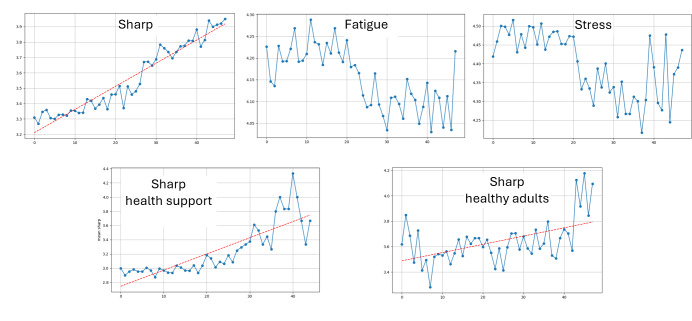 Figure 4
Peer Reviews
No public reviews on file for this paper yet. If you reviewed it on a platform where reviews are public (OpenReview, ICLR, NeurIPS, ICML), you can paste yours below so the community can read it here.
Videos
No videos yet. Explain this paper in a talk, walkthrough, or lecture? Add one.
Taxonomy
TopicsParanormal Experiences and Beliefs · Literature Analysis and Criticism · Sociology and Cultural Identity Studies