Expected outcomes of stratified post‐donation testing in whole blood donation in England: A discrete event simulation modeling study
Hongchao Qi, Angela M. Wood, Stephen Kaptoge, Amy McMahon, Susan Mehenny, Nathalie Kingston, Willem H. Ouwehand, John Danesh, David J. Roberts, Emanuele Di Angelantonio, Lois G. Kim

TL;DR
The study uses simulation to compare blood donation strategies in England, finding that post-donation testing can reduce deferrals while managing donation quality.
Contribution
A discrete event simulation model is used to evaluate novel post-donation testing strategies for blood donation in England.
Findings
Strategy A eliminated deferrals but increased under-threshold donations in both men and women.
Strategies B–D reduced deferrals while slightly increasing under-threshold donations compared to the current approach.
Incorporating on-session testing for low/medium hemoglobin at previous visits balances donor safety and efficiency.
Abstract
In England, blood donors with low hemoglobin concentration are deferred following on‐session testing to prevent donations below regulatory thresholds, thereby protecting donors' health and blood supply quality. However, deferrals are costly, time‐consuming and may discourage donors. Post‐donation testing (PDT), where hemoglobin levels are measured after donation, offer potential alternatives as used in some European countries. We compared four PDT strategies to the current approach: (A) no on‐session testing, (B) on‐session testing if low hemoglobin at previous visit, (C) on‐session testing if low/medium hemoglobin at previous visit, all with delayed reinvitation if low hemoglobin at previous donation, and (D) on‐session testing if low/medium hemoglobin at previous visit without delayed reinvitations. We employed discrete event simulation modeling, informed by data collected from…
Genes, proteins, chemicals, diseases, species, mutations and cell lines named across the full text — each resolved to its canonical identifier and authoritative record.
Click any figure to enlarge with its caption.
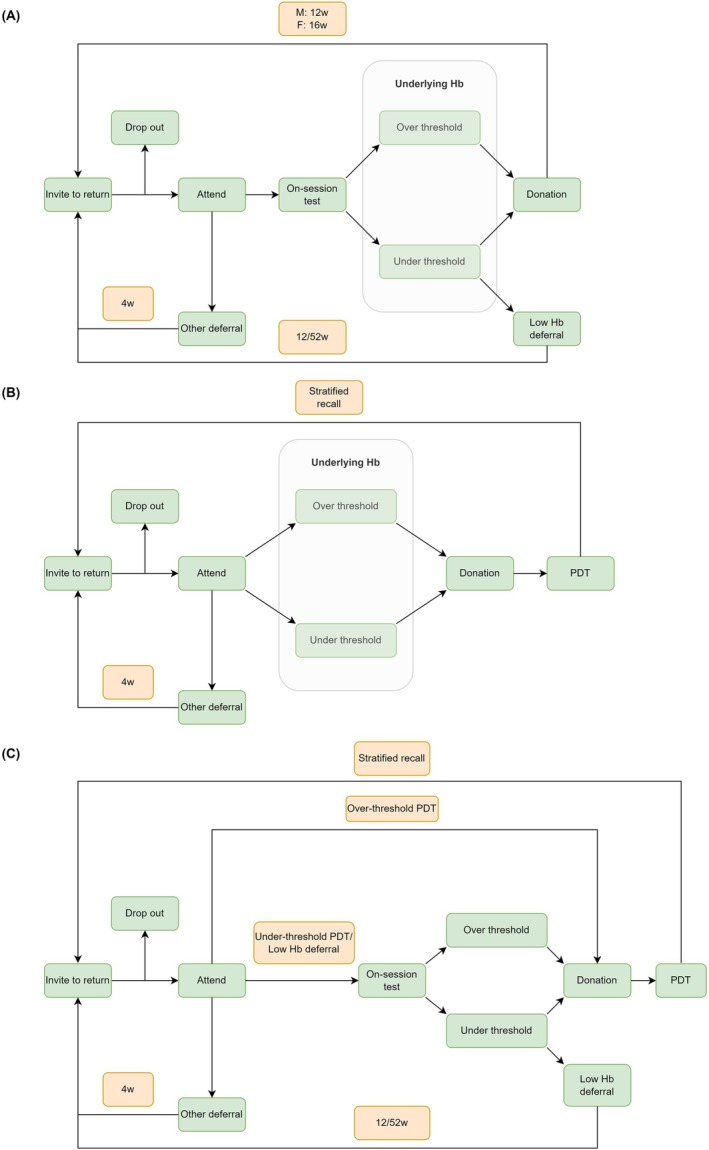 Figure 1
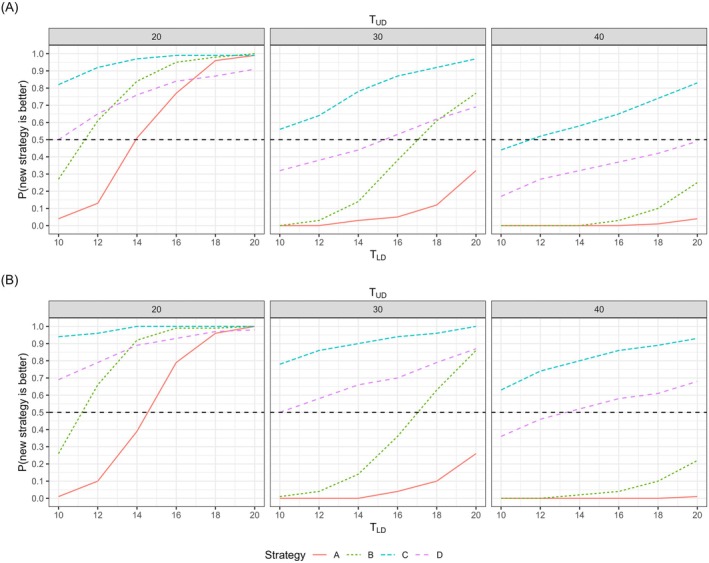 Figure 2
Peer Reviews
No public reviews on file for this paper yet. If you reviewed it on a platform where reviews are public (OpenReview, ICLR, NeurIPS, ICML), you can paste yours below so the community can read it here.
Videos
No videos yet. Explain this paper in a talk, walkthrough, or lecture? Add one.
Taxonomy
TopicsBlood donation and transfusion practices · Hemoglobinopathies and Related Disorders · Blood transfusion and management