Increased Stretching of Mechanoreceptors in Superior Tarsal Muscle Reflexively Contracts Upper Trapezius Muscle as well as Levator Palpebrae Superioris and Occipitofrontalis Muscles as Eye-Eyelid-Eyebrow-Head Coordinated Movements: A Case Series
Kiyoshi Matsuo, Ai Kaneko, Tae Otsuka

TL;DR
This case series explores how stretching of mechanoreceptors in the superior tarsal muscle causes reflexive muscle contractions leading to headaches and neck pain.
Contribution
The study introduces a novel hypothesis linking aponeurosis disinsertion to reflexive muscle contractions and associated symptoms.
Findings
Aponeurosis disinsertion increases mechanoreceptor stretching, causing reflexive contractions in the OFM and UTM.
Surgical correction reduced symptoms by decreasing mechanoreceptor stretching.
Unilateral and bilateral interventions both showed symptom relief in patients.
Abstract
To maintain a vertical visual field, fast-twitch fibers in the levator palpebrae superioris muscle (LPSM) stretch mechanoreceptors in the superior tarsal muscle (STM), which contracts the slow-twitch fibers in both the LPSM and the occipitofrontalis muscle (OFM). Exceeding the upgaze limit without head movement increases reflex contraction of the OFM to raise the eyebrows and pull the scalp backward while also causing involuntary contraction of the upper trapezius muscle (UTM) to extend the head backward, resulting in tension-type headaches (TTH) and neck pain. Due to aponeurosis disinsertion from the tarsus, we hypothesized that increased mechanoreceptor stretching in the STM reflexively contracts both the OFM and UTM. We report a case series of five patients whose aponeurosis disinsertion caused tonic eyebrow-raising, TTH, and neck pain. In the first case, asymmetrical disinsertion…
Genes, proteins, chemicals, diseases, species, mutations and cell lines named across the full text — each resolved to its canonical identifier and authoritative record.
Click any figure to enlarge with its caption.
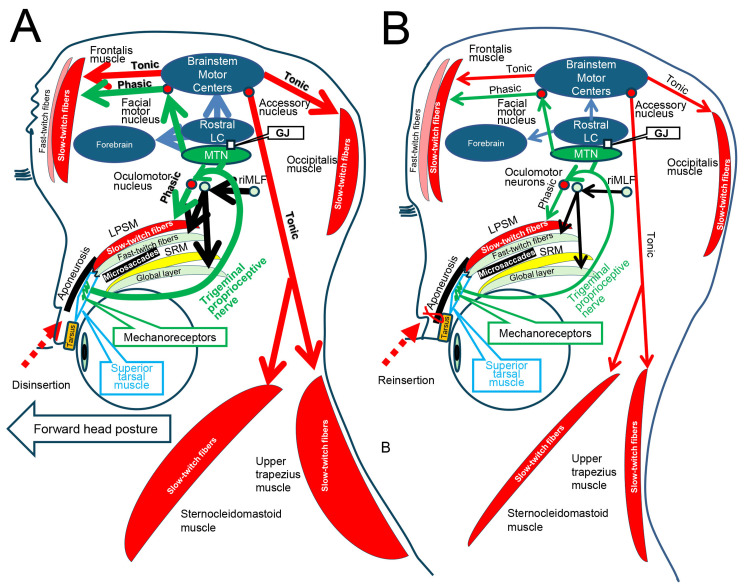 Figure 1
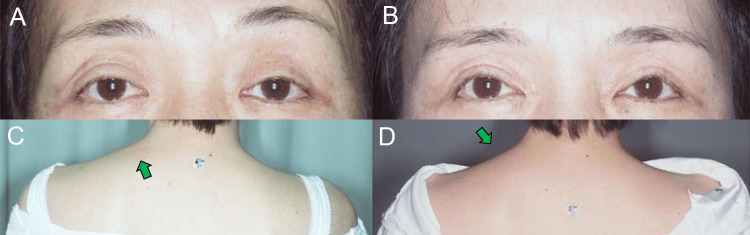 Figure 2
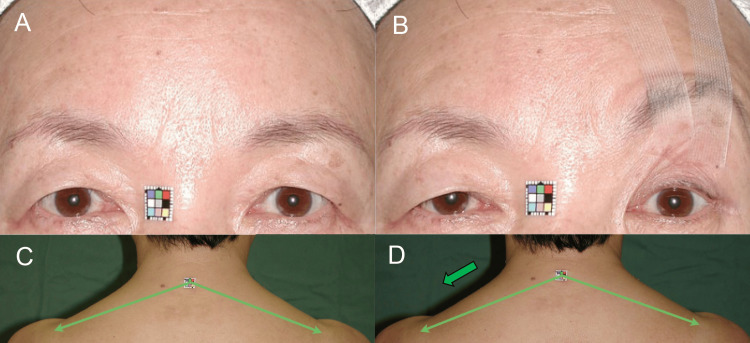 Figure 3
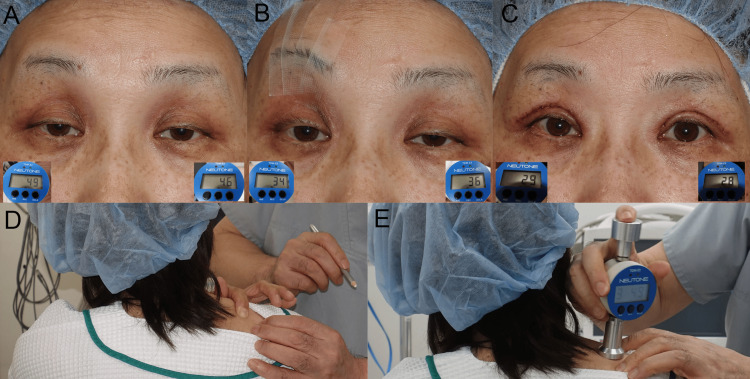 Figure 4
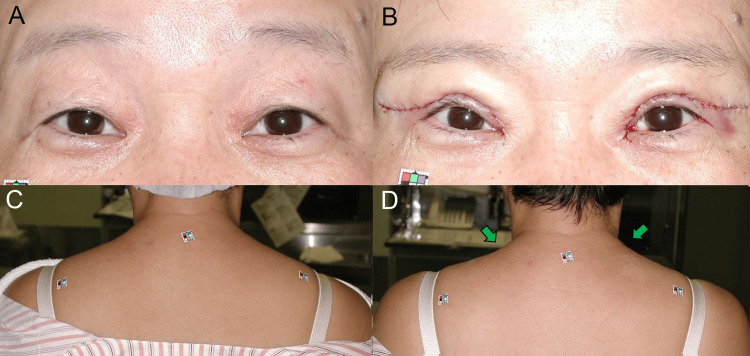 Figure 5
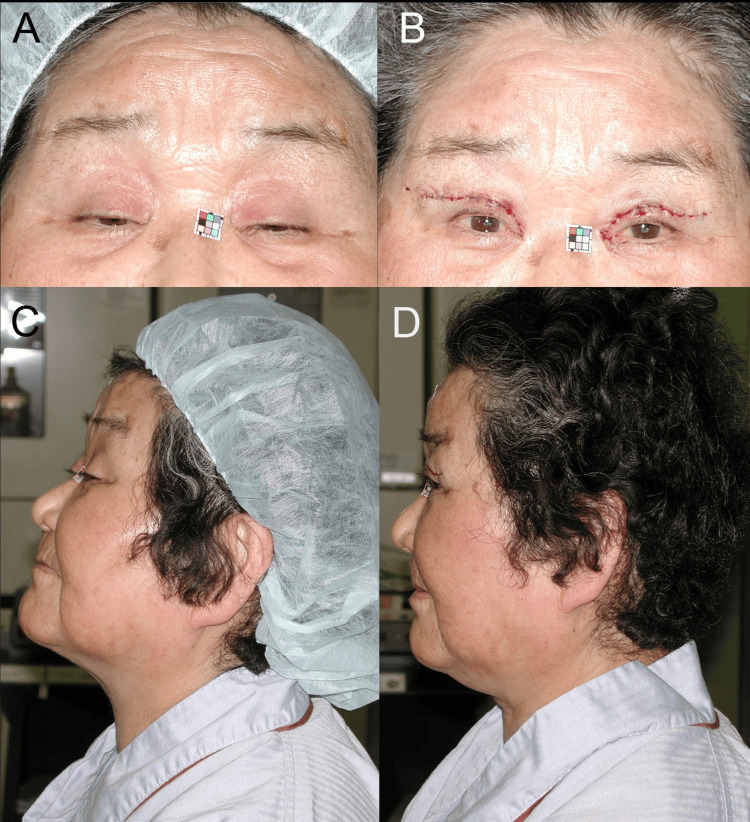 Figure 6
Peer Reviews
No public reviews on file for this paper yet. If you reviewed it on a platform where reviews are public (OpenReview, ICLR, NeurIPS, ICML), you can paste yours below so the community can read it here.
Videos
No videos yet. Explain this paper in a talk, walkthrough, or lecture? Add one.
Taxonomy
TopicsBotulinum Toxin and Related Neurological Disorders · Transcranial Magnetic Stimulation Studies · Psychosomatic Disorders and Their Treatments