Insights into the implementation of a whole genome sequencing report form (SRF) to reduce nosocomial SARS-CoV-2 in UK hospitals within an unfolding pandemic: A qualitative process evaluation using normalisation process theory
Ruth Leiser, Julie McLeod, Fiona Mapp, Oliver Stirrup, James Blackstone, Christopher J.R. Illingworth, Gaia Nebbia, James R. Price, Luke B. Snell, Tranprit Saluja, Judith Breuer, Paul Flowers, Miquel Vall-llosera Camps, Nivedita Jaiswal, Nivedita Jaiswal

TL;DR
This study evaluates how a new report form using whole genome sequencing was implemented in UK hospitals to reduce SARS-CoV-2 spread during the pandemic.
Contribution
The study provides insights into the implementation of a whole genome sequencing report form using normalisation process theory in a real-world hospital setting.
Findings
Factors like healthcare professional passion and WGS infrastructure enabled SRF implementation.
The Alpha-variant overwhelmed hospitals, limiting the SRF's routinisation.
The SRF showed potential as a scalable tool for enhancing IPC for viral respiratory infections.
Abstract
Here we report on a process evaluation conducted as part of a large multisite non-randomised trial of the effectiveness of a novel whole genome sequence report form (SRF) to reduce nosocomial SARS-CoV-2 through changing infection prevention and control (IPC) behaviours during the COVID –19 pandemic. We detail how the SRF was implemented across a heterogeneous purposive sub-sample of hospital trial sites (n=5/14). We conducted in-depth interviews from diverse professional staff (N=39). Deductive and inductive thematic analysis initially explored participants’ accounts of implementing the SRF. The resulting themes, concerning the way the SRF was used within sites, were then coded in relation to the key tenets of normalisation process theory (NPT). Factors that enabled the implementation of the SRF included: elements of the context such as health care professional passion; the existence…
Genes, proteins, chemicals, diseases, species, mutations and cell lines named across the full text — each resolved to its canonical identifier and authoritative record.
Click any figure to enlarge with its caption.
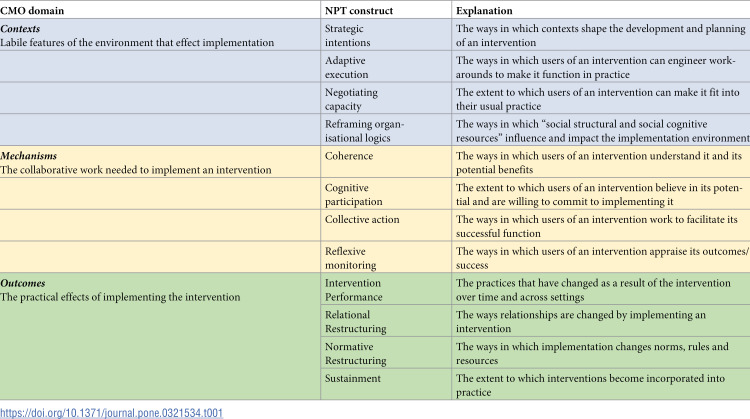 Figure 1
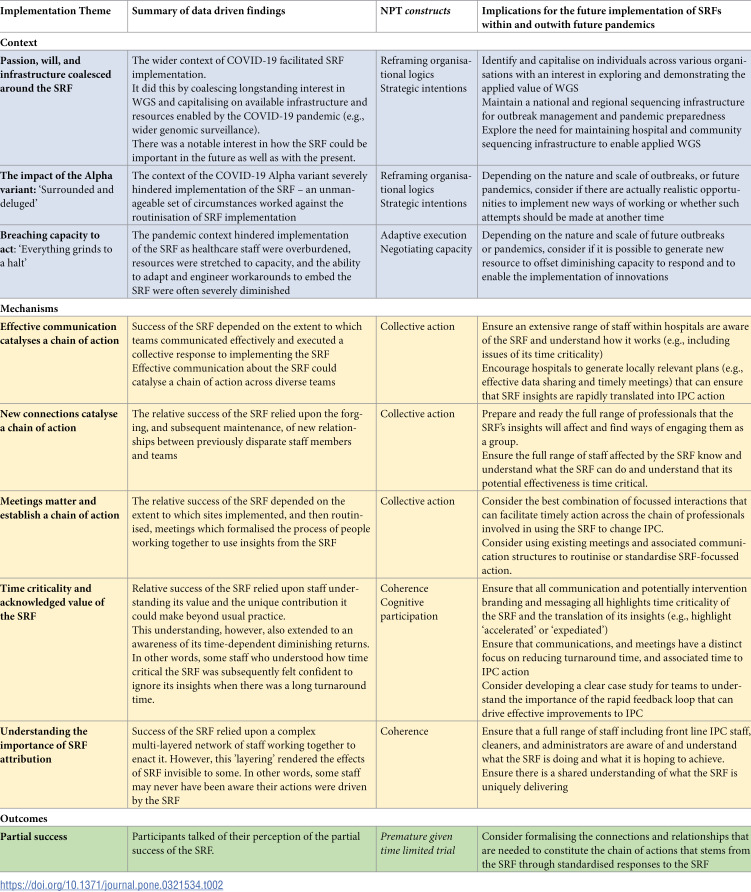 Figure 2
Peer Reviews
No public reviews on file for this paper yet. If you reviewed it on a platform where reviews are public (OpenReview, ICLR, NeurIPS, ICML), you can paste yours below so the community can read it here.
Videos
No videos yet. Explain this paper in a talk, walkthrough, or lecture? Add one.
Taxonomy
TopicsGenomics and Rare Diseases · Ethics in Clinical Research · SARS-CoV-2 detection and testing