Exploring mobility patterns and social health of older Canadians living at home to inform decision aids about housing: A mixed-methods study
Diogo Mochcovitch, Allyson Jones, Joshua Goutte, Karine V. Plourde, Roberta de Carvalho Corôa, Marie Elf, Louise Meijering, Jodi Sturge, Pierre Bérubé, Stéphane Roche, Sabrina Guay-Bélanger, France Légaré, Li-Pang Chen, Li-Pang Chen, Li-Pang Chen, Li-Pang Chen, Li-Pang Chen

TL;DR
This study explores how mobility and social health affect housing decisions for older Canadians, using mixed methods to gather insights.
Contribution
The study introduces a mixed-methods approach combining GPS tracking, interviews, and spatial analysis to inform housing decision tools for older adults.
Findings
Participants made an average of 10.4 trips per 14 days, primarily for shopping or walking.
Winter weather was the most common barrier to mobility among participants.
Social assets like family support and neighborhood familiarity were key to participants' social health.
Abstract
Many tools support housing decisions for older adults but often overlook mobility patterns and social health. We explored these factors in older Canadians living at home to inform housing decisions. We conducted a mixed-methods study with 20 older adults (65+) from Quebec and Alberta living independently or in senior residences with outdoor mobility. Data collection included sociodemographic information, GPS tracking, walking interviews, daily journals, and in-depth interviews. Data from interviews, which explored physical and social assets and barriers to social health and mobility, were analyzed using deductive content analysis in NVivo 12. GPS data were subjected to spatial analysis in QGIS (Quantum Geographic Information System) to map activity spaces and mobility patterns by the number and distance of activities, activity types, and modes of transportation. Daily journals were…
Genes, proteins, chemicals, diseases, species, mutations and cell lines named across the full text — each resolved to its canonical identifier and authoritative record.
Click any figure to enlarge with its caption.
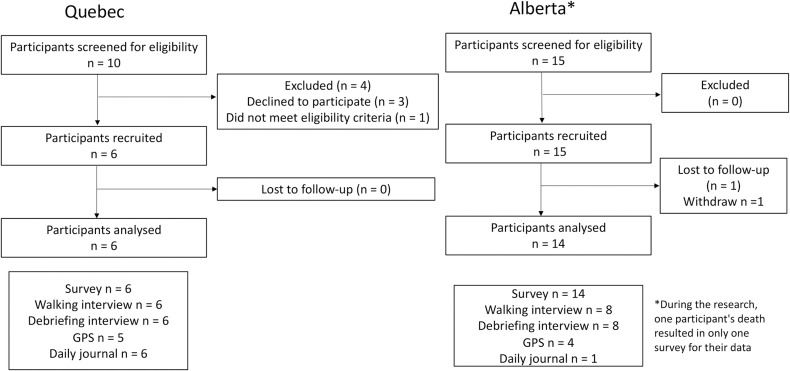 Figure 1
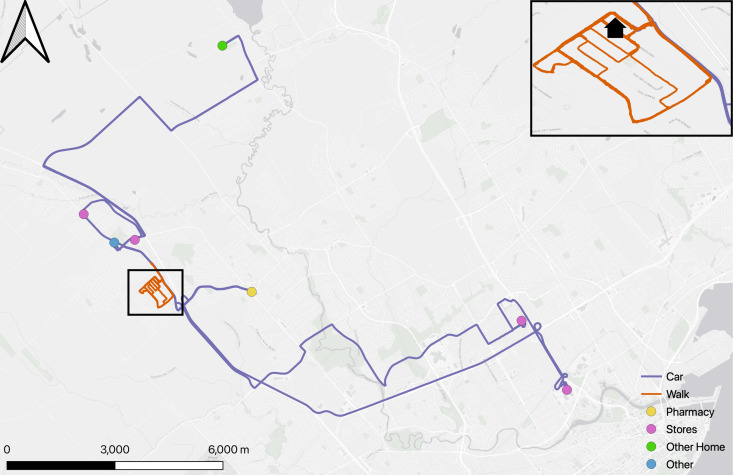 Figure 2
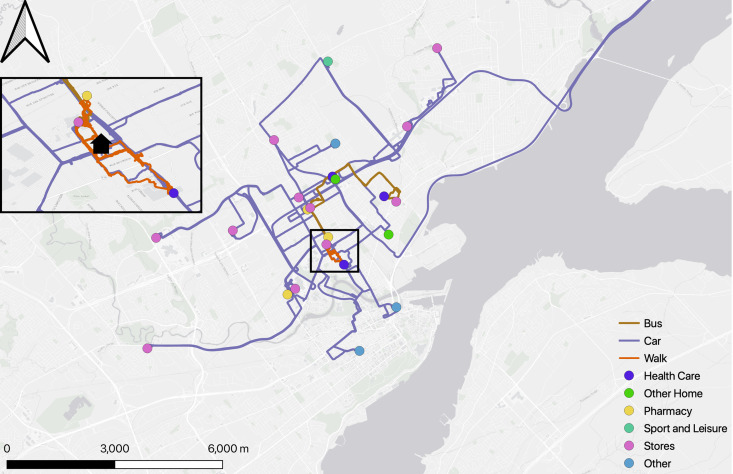 Figure 3
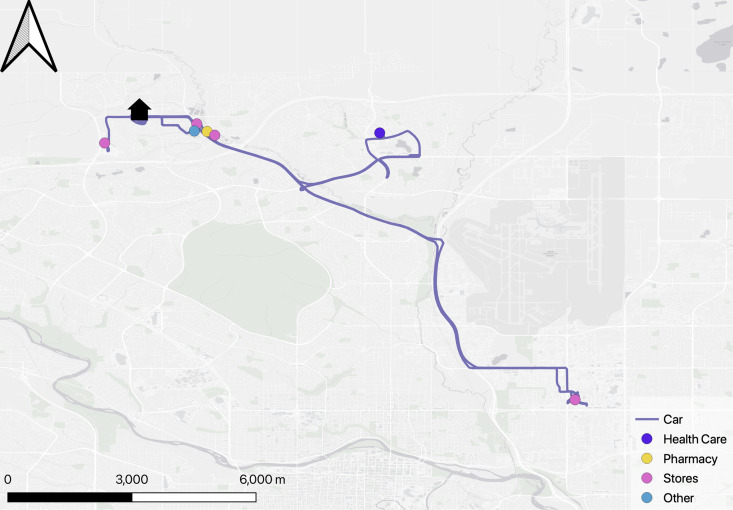 Figure 4
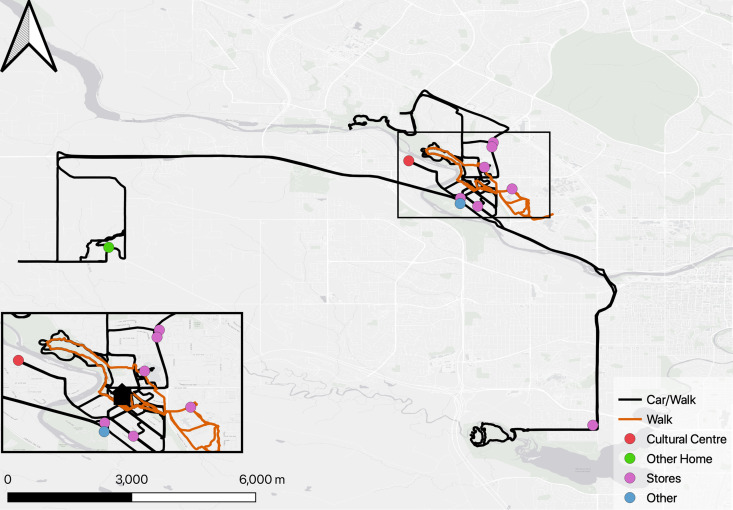 Figure 5
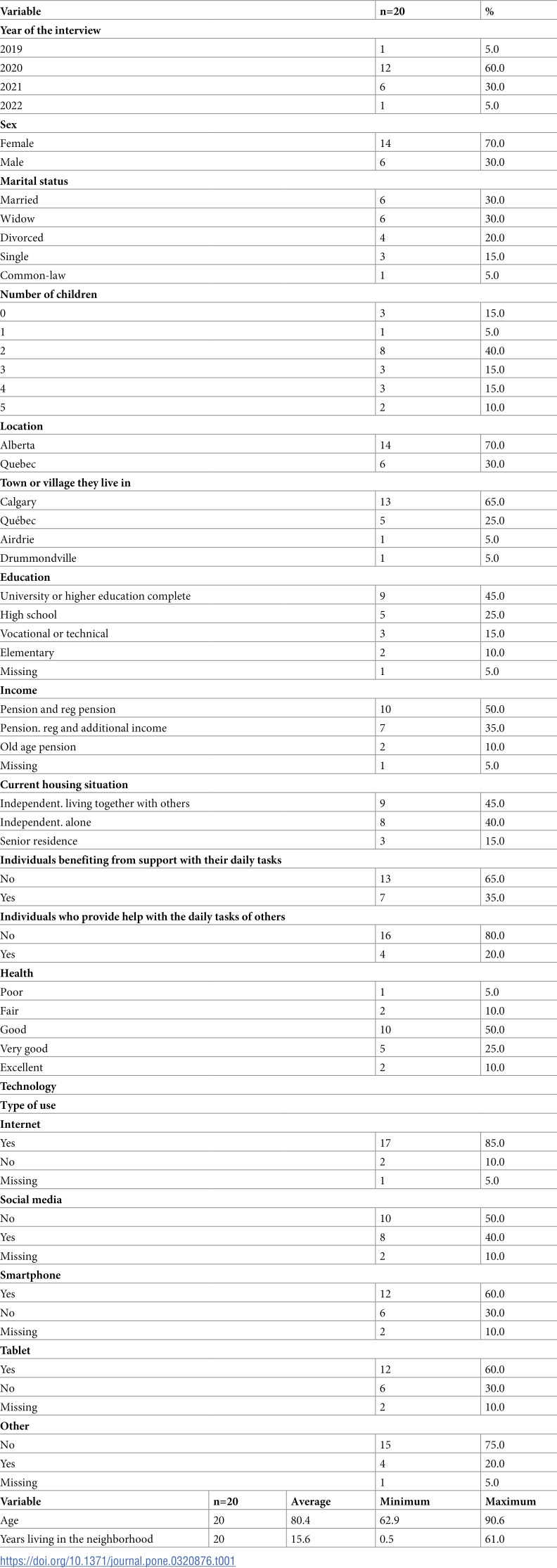 Figure 6
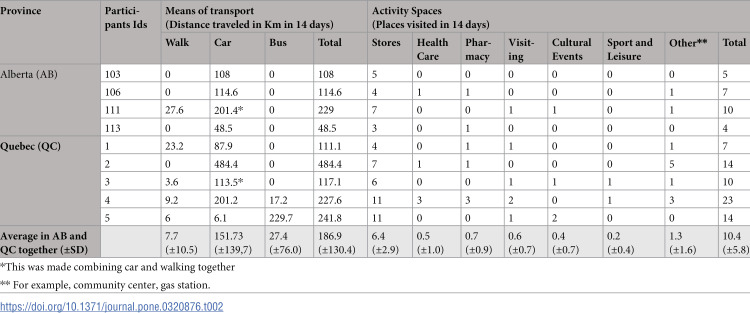 Figure 7
Peer Reviews
No public reviews on file for this paper yet. If you reviewed it on a platform where reviews are public (OpenReview, ICLR, NeurIPS, ICML), you can paste yours below so the community can read it here.
Videos
No videos yet. Explain this paper in a talk, walkthrough, or lecture? Add one.
Taxonomy
TopicsUrban Transport and Accessibility · Health disparities and outcomes · Older Adults Driving Studies